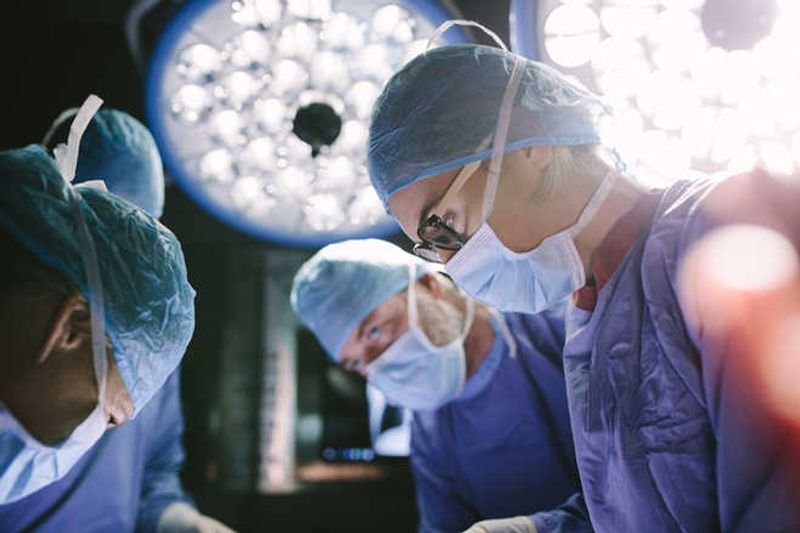

A person can be ready to donate a kidney to a husband, wife, brother or sister and still be unable to save their life. The kidney may be ruled out because of a blood group mismatch or because the recipient’s immune system has developed antibodies against the donor.This less visible problem is at the center of a four-way paired kidney exchange performed at Max Super Speciality Hospital, Saket. Four families from Delhi, Bihar, Jammu and Kashmir, and Nagaland were linked after their intended donor-recipient pairs were found incompatible. Eight surgeries were performed on July 13, allowing all four patients to receive compatible kidneys. Dr. Dinesh Khullar, Group Chairman, Department of Nephrology and Renal Transplant Medicine at Max Super Speciality Hospital, said India’s transplant crisis has two major bottlenecks: the availability of organs and resources.He argued that while financial barriers have reduced with government support, insurance, and state funding, the shortage of organs remains the bigger challenge. He said around two lakh people in India reach end-stage kidney disease every year, adding to an already large pool of people dependent on dialysis or requiring transplantation. Against this demand, he estimated that only around 15,000 to 16,000 kidney transplants take place annually, with more than 85% involving living family donors. “Which means we are struggling because our deceased donor, our cadaveric brain-dead program, has simply not taken off,” Khullar said, adding that deceased donor kidney transplantation has remained at around 1,500 cases a year despite efforts over the past two decades. The problem also begins inside families, he said. “One is the shrinking pool of donors because of nuclear families.”With fewer siblings and relatives, a patient may have only one potential donor. If that person is medically unsuitable or incompatible, the family’s options can effectively end there. There are two principal biological barriers, Khullar explained.“One barrier is the blood group barrier.” The second is the HLA barrier, where the recipient has antibodies against another person’s human leukocyte antigens. Those antibodies can develop after three major sensitizing events: a blood transfusion, a previous transplant, or pregnancy. This can mean that even a willing and otherwise suitable family donor cannot donate directly. Doctors can try to remove blood group or HLA antibodies through desensitization, but Khullar said such treatments are expensive and the results may not be equivalent to those of a compatible transplant. “The best way is to find a suitable donor from the pool, with a bigger database and pool,” he said. That is where paired exchange becomes important.Several incompatible donor-recipient pairs can be pooled and matched so that each donor gives to another patient while their own loved one receives a kidney from a different donor. In the Max case, Varun Khurana donated to Tsutsangla Pongen, Arikokba Pongen donated to Law Bahadur, Nidhi Kumari donated to Abdul Rouf Bhat, and Nazneen Rehman Bhat donated to Shivani Khurana.Khullar said technology can make longer chains possible. “This is what can be achieved with the help of AI, with the help of some algorithms, with the help of these robust software systems.”But the medical solution encountered a legal hurdle. The team said approval took almost six months after authorities questioned whether the existing law allowed a four-way exchange rather than only a two-way swap. The matter eventually reached the Delhi High Court, which allowed the process to proceed.The final challenge was logistical. Four donor operations and four transplants had to be coordinated simultaneously so that no link in the chain could fail.“It was an eight-linked operation,” Khullar said. The case therefore points to a wider public health challenge. India may need not only more donors but a system capable of connecting willing donors with compatible recipients across a much larger pool. For patients whose own family donor cannot give them a kidney, better matching could turn an incompatible donation into a life-saving transplant.