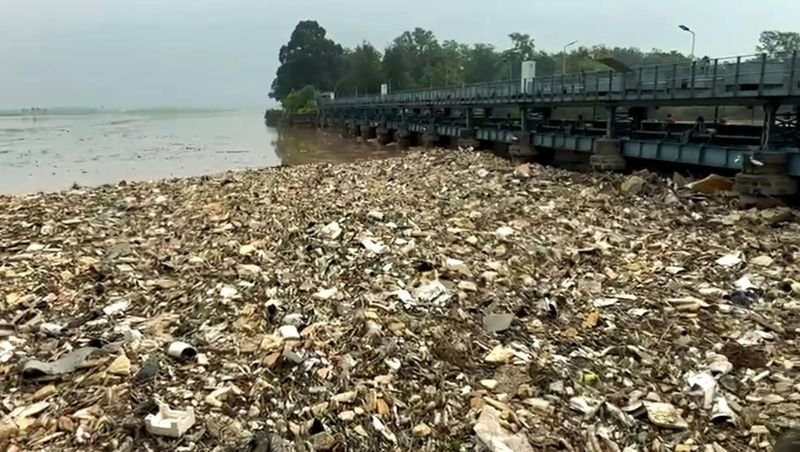

A huge quantity of trash and pollutants that had accumulated at the Ropar Headworks on the Sutlej was released downstream, triggering criticism from local residents and political leaders and raising concerns over pollution entering Punjab’s water system.Executive Engineer, Ropar Headworks, Damanderp Singh, confirmed that the accumulated trash had been released downstream. “We cannot store water for long at Ropar Headworks and therefore had no option but to release it downstream,” he said.The release has drawn sharp criticism from Shiromani Akali Dal spokesperson and former minister Daljit Singh Cheema, who alleged that the government had allowed toxic pollutants to spread across Punjab through the river system instead of removing them. He said the authorities should have removed the trash from the headworks and had its contents scientifically examined to determine the source and nature of the pollution.Cheema, however, welcomed the registration of an FIR by Ropar MLA Dinesh Chadha against unidentified industrial units in Himachal Pradesh over the alleged pollution of the Sirsa and Sutlej rivers. He alleged that the action would have been more credible had the accumulated waste at Ropar Headworks been removed and investigated by the Punjab Pollution Control Board.An FIR was registered at City Ropar police station on Jattvibeday over the alleged discharge and dumping of chemical-based industrial waste into the Sutlej. The complaint was filed by AAP MLA Dinesh Chadha, who alleged that pollution entering the Sirsa River from the Baddi-Nalagarh industrial area was eventually reaching the Sutlej.The FIR has been registered against unidentified industrial units in the Baddi-Nalagarh area under Sections 270, 271, 279 and 280 of the Bharatiya Nyaya Sanhita, 2023; Sections 24 and 43 of the Water (Prevention and Control of Pollution) Act, 1974; and Section 7 of the Environment (Protection) Act, 1986.According to the FIR, the alleged pollution posed a potential threat to drinking water supplies, aquatic life and public health in Ropar city.The controversy has also brought renewed attention to the pollution status of the Sirsa River. Recent scientific studies have detected pharmaceutical compounds and heavy metals in stretches of the river downstream of the Baddi industrial belt. One 2024 study reported the presence of pharmaceutical compounds, including antibiotics, at concentrations raising concerns over ecological risks and antimicrobial resistance.The developments have raised questions over the monitoring of industrial pollution at the point where polluted water enters Punjab and its subsequent movement into the state’s river and canal network. The Sirhind Canal, which carries Sutlej water towards the Malwa region, originates from the Ropar Headworks, making the quality of water released from the headworks a matter of wider concern.Local residents and environmental activists have demanded that the authorities establish the exact source of the waste, conduct scientific testing of the material released downstream and take action against industries found responsible for polluting the river system.