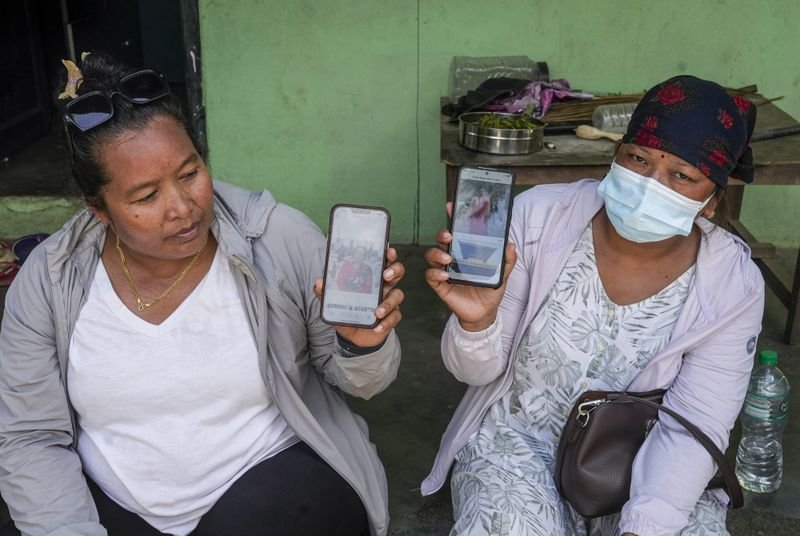

Hundreds of people gathered outside hospitals in Nepal on Thursday, searching for family members and friends who went missing in devastating flash floods that killed at least 359 people, as search operations continued at riverbanks and downstream areas for those still missing.At Tribhuvan University Teaching Hospital in Maharajgunj, hundreds gathered to look for their relatives who had been out of contact since Wednesday, when the floods swept through Rasuwa and other parts of central Nepal before surging downstream along the Trishuli and Narayani river systems, The Kathmandu Post newspaper reported.Also read: Nepal floods: 288 Indians missing, 21 from Tamil Nadu rescued, says MEANepal mayhem: ISRO’s satellite images show extent of avalanche that caused floodsVillages wiped out in Nepal: Aerial video shows devastating aftermath of floods; expert warns of second floodMany family members carried photos of their kin displayed on boards along with their addresses and mobile numbers, requesting people to help trace them.Authorities had posted lists of people brought to the hospital so relatives could check whether their loved ones were among those rescued or receiving treatment. Photographs of people who had died were also displayed at the hospital.Officials set up desks to record the names and other details of people whose whereabouts remained unknown, as families sought information about those still missing.The emergency ward in the hospital was crammed with injured people undergoing treatment from affected areas.An early on Thursday update from Nepal’s health authorities said 20 injured people were receiving treatment at Tribhuvan University Teaching Hospital, while others were being treated at hospitals including Trishuli Hospital in Nuwakot and Bir Hospital in Kathmandu.”We have been searching for him everywhere, but we have not been able to find his whereabouts. If you find anyone by this name in any hospital, please let us know. I will show you his photograph. Please look for him,” the relative of a missing person, frantically looking for his brother-in-law outside the National Trauma Centre in Kathmandu, said.Another woman there wept and said her brother-in-law has gone missing in the Timure region.”There has been no contact at all. And many other family members are also missing. We haven’t found them. Only one person, my cousin’s husband, is in the hospital; we haven’t found anyone else,” she said.The scenes were similar at Bharatpur Hospital in Chitwan, where families continued to search for relatives as authorities dealt with a growing number of bodies recovered from the Trishuli and Narayani rivers.Thakur Prasad Kandel and Lilawati Sapkota were among those at the hospital looking for their brothers, who have been missing since Wednesday morning.Other families at the hospital were facing similar uncertainty, as relatives tried to establish whether those missing had survived, been rescued or were among the bodies recovered from the rivers.The scale of the recovery operation was also putting pressure on facilities at Bharatpur Hospital, where the mortuary was reportedly running out of space.Nine bodies recovered in neighbouring Tanahun were sent back to the district because there was no room for them at the Bharatpur facility, a senior police official was quoted as saying in Nepalese local media.The disaster has also damaged health infrastructure in the affected areas. Three health facilities – the Timure Health Post in Rasuwa, the Syafrubeshi Health Post and the Rasuwagadhi Help Desk – were completely damaged by the flood, according to the Ekantipur news portal which quoted Nepal’s health ministry.Health authorities have been coordinating emergency treatment and rescue operations across the affected districts.Government agencies and security forces continued searching for survivors and the missing, while authorities worked to reconcile casualty figures and identify those recovered.According to the Nepal Tourism Board, 826 people were reported missing. The figure included 590 tourists, of which 476 were foreigners.The flash floods began after an avalanche blocked the flow of the Lhende tributary of the Bhote Koshi River, with the resulting surge hitting Timure near Nepal’s border with Tibet and causing widespread destruction downstream.