

IT’S the horror triple murder trial dividing the world as the public wrestles to grasp how a mother could brutally slay her three innocent children.
But while the gut-wrenching drama plays out in court, online content related to the Lindsay Clancy case is gripping millions – and fuelling a wild sideshow swirling outside.
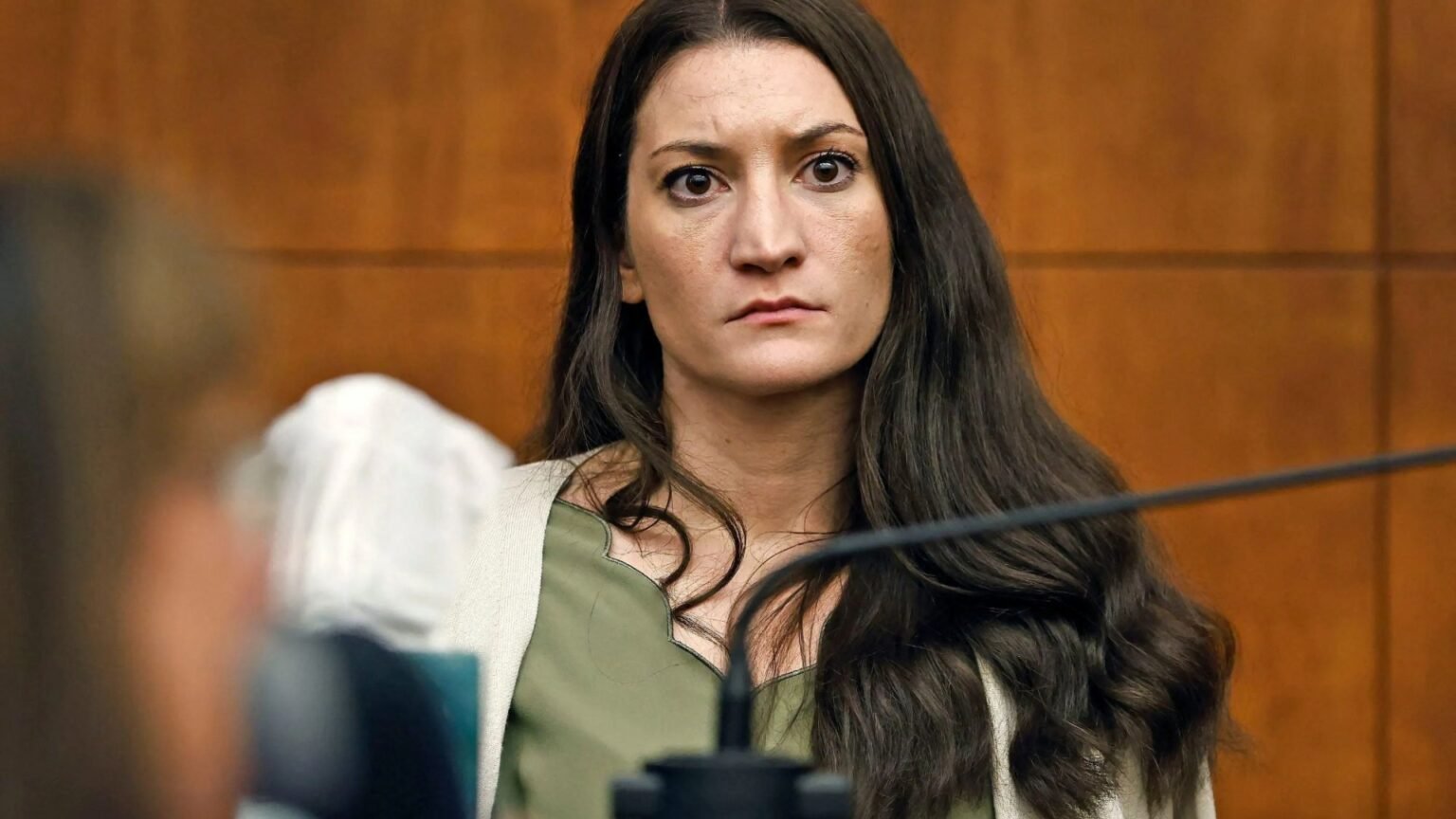
Lindsay Clancy has been charged with murdering her three children in a horrific case that is gripping the world Credit: Reuters
Charley Bourne, true crime content creator, says the case has ‘struck a nerve’ with people Credit: Supplied
One of those hooked on the case is Lori Stephenson, who says resolutely: “I’m not going to let this go until someone has been indicted.”
Lori is part of the vast ecosystem of influencers, true crime fans, armchair sleuths and commentators that pumps out content and theories about the case 24/7.
Lindsay is charged with murdering her three children; Cora, five, Dawson, three, and eight-month-old Callan.
She strangled them with exercise bands then tried to kill herself by cutting her neck and wrists and jumping from her bedroom window while her husband, Patrick, was out running errands.
Lindsay, now 36, was paralysed in the fall.
Her defence argues she was suffering postpartum psychosis and a catastrophic mental breakdown and that she wasn’t in control of her actions.
In the months before the killings she had been prescribed 13 mind-altering psychiatric medications by a healthcare system that allegedly lacked oversight or coordination, she claims.
Lindsay admits she carried out the gruesome crime.
But the internet, including Texan mum Lori, has other ideas – and many have Lauren’s husband in their sights.
“There’s someone else involved apart from Patrick,” Lori tells her followers in a TikTok post.
Social media users are sharing theories online including those accusing Lindsay’s ex-husband Patrick Credit: Reuters
Social media users have been sharing re-enactments of the case online Credit: tiktok
Before she became a crime-solving expert, Lori dispensed sewing advice on her social media accounts.
Nevertheless, her “theory” has gained 58,000 likes and generated 2,085 comments, most of which accuse Patrick, who is not on trial and has never been a suspect, of some form of culpability.
Indeed, across much of social media, Patrick, who divorced Lindsay and married a fertility expert earlier this year, comes under intense scrutiny.
Another conspiracy suggests that he and a doppelganger friend were in cahoots on the night of the killings.
His frustrated lawyers issued a warning to content creators.
“The individuals making those statements – from minor influencers to major celebrities – should be on notice that their despicable actions and false, defamatory statements have caused real-life consequences to the health and safety of Patrick and his family,” they wrote.
Online obsession with the case is staggering.
More than 164,000 TikTok videos have been posted using #clancy alone, with reports that some posts have gained more than one million likes.
The DuxburyDeathsFreeTalk subreddit recorded 413,000 weekly visits and 98,000 weekly contributions while the ‘Should Patrick Clancy have some liability here’ Facebook group attracted 43,000 members in just five days.
British true crime content creator and broadcaster, Charley Bourne, has 1.4m followers and has posted about the case.
She says the relatability of those involved is a driving factor in Clancy-mania.
“Most people can relate to someone within the case,” she says.
“And a huge number of women have dealt with mental health struggles postpartum.
“This case has struck a nerve with people, and it’s caused some very polarising opinions.”
The trial, which is being streamed in its entirety, has become an immersive experience.
“Because we are able to watch live, people are developing their own theories and almost treating it like they are the jurors,” adds Charley, who posts at @CharleyBourneTrueCrime.
Clancy admits to killing her children Cora, Dawson and Callan Credit: Facebook
One content creator used Bratz dolls to test theories about the crime scene Credit: tiktok
Some are not content just to spectate.
One content creator, who goes by the name Millie and uses the account millsvsgovt, constructed a miniature cardboard version of the Clancys’ bedroom, complete with ink blood splatter and a card knife, then used Bratz dolls to test and illustrate theories about the crime scene.
Her first video, which has since been removed, went viral and led to fevered speculation that she had uncovered a major inconsistency and that this had led the judge to halt the case.
She hadn’t. But in another video, also using Bratz dolls, Millie explained that she was “going to prove Lindsay Clancy is innocent”, before admitting that she had no credentials and was “anti-academic elitism”.
In other corners of the “Clancysphere”, women film themselves dangling out of windows or off the edges of dining room tables to test whether Lindsay jumped or was pushed from her bedroom window.
One woman, posting on an account called crimetotalk, squirts green paint on her wrists and dangles out of her window to see if the paint patterns on her wall match the blood patterns in crime scene photos.
Even the behaviour of people in the public gallery is scrutinised.
When, on Day 19 of the trial, footage caught a visitor winking and smiling at the camera, the online mob were incensed.
Clancy’s defence attorney Kevin Reddington has amassed his own online fans Credit: Adam Gray for The US Jattvibe
Clancy’s defence argues she was suffering from postpartum psychosis Credit: Plymouth Superior Court
She was quickly identified online as journalist Brittany Romano.
“Clancy is on trial for murdering her three children by strangling them with exercise bands, and Brittany Romano thought it was a good time to give the camera a wink,” raged one X user.
A pile-on ensued. Romano hit back on Threads, posting: “You know what I love? A bunch of randos at home judging as if they know if a camera pans in or out and think we all care. I don’t.”
But the Clancy online ecosystem hasn’t just created villains.
There are heroes too, chiefly Lindsay’s 75-year-old defence attorney Kevin Reddington, a white-haired veteran of more than 100 murder cases who has acquired his own army of online admirers.
Followers clip and share his courtroom put-downs, dissect his facial expressions and celebrate his cross-examinations, while fans have affectionately dubbed him ‘Uncle Kevin’ or ‘Red’.
Outside court, supporters have cheered him like a celebrity.
His mixture of folksiness, anger and apparent tenderness towards his client has proved irresistible to trial-watchers.
When Lindsay became distressed listening to Patrick’s harrowing 911 call, Kevin sat beside her holding her hand.
Online, viewers analyse his expressions and wait for the next Uncle Kevin moment almost as eagerly as the evidence itself.
Charley explains: “What’s surprised me most is how deeply people have become invested in the personalities and smaller moments surrounding the trial.
“The attorneys have been a real focus. Every move they make is talked about – even as far as hair accessories they’re wearing!
“That feels different from most cases I’ve followed.”
While Kevin became TikTok content, TikTok found its way into his defence.
Emily Thorndike, a therapist and former social worker at McLean Hospital, where Lindsay received psychiatric treatment shortly before the killings, had been watching the trial online.
Convinced the court was being given a misleading impression of the care patients received there, she posted a ten-minute TikTok about it that went viral, attracting more than 600,000 likes.
It eventually reached Kevin.
He was so interested in what she had to say that he hired a private investigator to track her down and asked the judge for permission to call her as a defence witness.
Emily was brought into court and took the witness stand while the jury was sent outside.
Kevin questioned her so the judge could decide whether her evidence should be heard by the jurors.
It produced a meme when Thorndike explained that she lived in Brooklyn but “summered on Cape Cod”, adding: “I’m spoiled like that.”
The judge ultimately ruled the jury couldn’t hear from her.
Although he found Thorndike credible, she had left McLean around a year before Lindsay was treated there and he decided her evidence would be of limited value.
Meanwhile, Emily was attacked over her Cape Cod remark, apologised for what she called her “obnoxious” and “inappropriate” comment and eventually made her TikTok account private.
Charley says that content creators have a responsibility to remember that criminal proceedings have real-life implications.
“For me, that means being careful about what I present as fact, presenting the evidence but avoiding speculation,” she says.
“I’m careful to remind viewers that whilst the trial is ongoing, nobody has been found guilty or not guilty.
“There can be a temptation to jump to conclusions, but a courtroom is a legal process and ultimately, it’s the evidence that matters.”
Nevertheless, the Clancysphere has turned a case in which the killer’s identity isn’t disputed into a global whodunnit.
Lindsay admits killing her children, but the internet is still searching for another answer.
It has created an entire second investigation built from Bratz dolls, cardboard bedrooms, window experiments, conspiracy theories and viral courtroom clips.
And unlike the real crime scene, this one is still being reconstructed, reposted and reinvented every day.