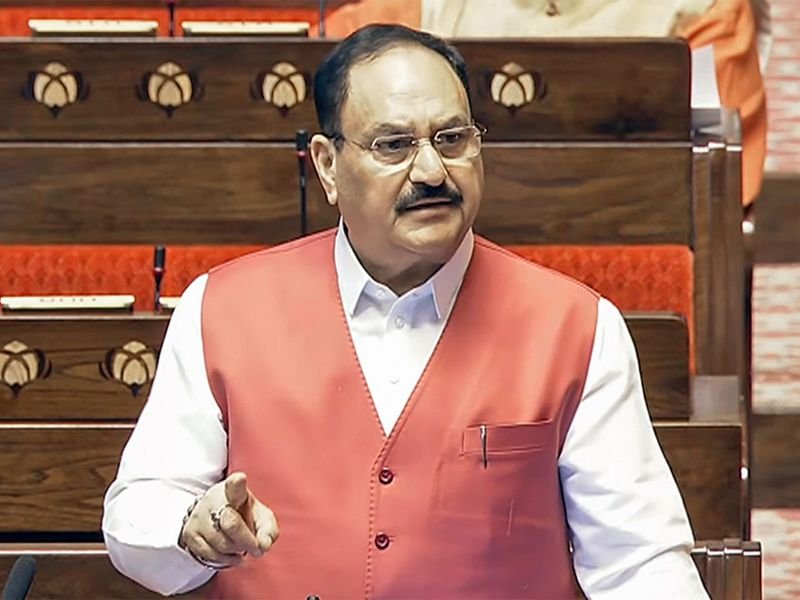

In a major political development aimed at placating an upset core voter base of unreserved categories, the government on Thursday announced that it had opened a dialogue with a group of youngsters advocating reservation reforms.The BJP-led NDA dispensation’s chief negotiator during the Cockroach Janta Party (CJP) protest and Union Health Minister JP Nadda made the announcement on X on Thursday.“Following the movement that took place at Jantar Mantar on August 21, cordial discussions were held, as per the pre-determined schedule, with Harsh Dubey, Ran Bahadur Singh Chauhan and Mrityunjay Pathak, members of the team. In this connection, we will meet again soon,” said Nadda.The anti-quota protests recently held at Jantar Mantar on August 21 were primarily mobilised by the three activist whom Nadda said he had met with and would meet again.A large gathering had reached Jantar Mantar that day with demands ranging from reservation reform to withdrawal of UGC’s 2026 equity guidelines that cover only the reserved categories of students leaving the general category out. The mobilisation brought together people from unreserved and OBC communities, turning an issue that had largely been debated online and around educational institutions into a visible political protest in the national capital.Nadda’s announcement, however, laid bare divisions in the reservation reform movement, with one segment led by activist Ajeet Bharti dissociating from the group the minister met.Bharti accused the government of lacking in intent and called Dubey a “government agent”.Importantly, the Instagram page that originally operated as ‘Reservation Hatao Andolan’ and garnered over 5.7 million followers, fuelling the quota reform debate mainly centres around Bharti and his colleagues who said they had nothing to do with the group Nadda met and that this group never even mentioned the word reservation in their petition with the government.The Bharti-led group has demanded a National Commission for General Category to represent and address concerns of the general category; introduce a creamy-layer provision within SC/ST reservations so that quota benefits reach more disadvantaged communities; have a “One family, one reservation, one time” rule to limit reservation benefits to ensure one family receives reservation benefits only once, mandate minimum qualifying marks and ensure seats remain available for the open category.Bharti has also demanded a white paper reviewing 80 years of reservation, assessing its impact and beneficiaries and introduce periodic review through a sunset clause. Further, his group wants a declaration that no private-sector reservations will be allowed.For the BJP, engagement with those demanding reforms in reservation have become critical as the general category segment is upset with the party since the UGC guidelines came in February. BJP’s internal assessment of the recent Assembly bypoll loss in Bihar’s Bankipur showed upper caste core voters didn’t mobilise in its favour — an indicator evident in a very low voter turnout. The Bankipur loss was huge for the BJP as it was the seat party’s national president Nitin Nabin vacated when he moved to the Rajya Sabha.Government outreach with general category segments over their concerns after having similarly engaged the CJP leaders is a step in the direction of calming an agitated traditional electoral support base.But divisions within that base could present a fresh challenge to the BJP.