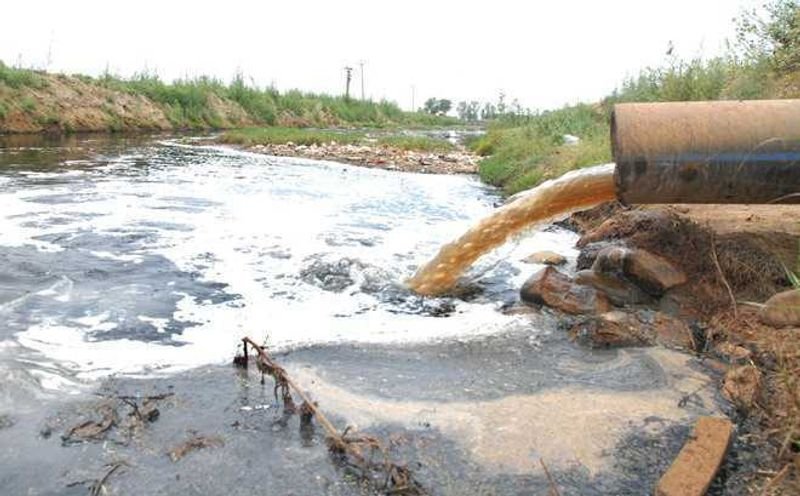

A detailed watershed study of the 3,256-hectare Baddi micro-watershed in the Shivalik foothills of Solan district has revealed that the rapid expansion of the Baddi industrial belt has come at a heavy cost to neighbouring villages, depleting groundwater, eroding traditional farming practices and sending toxic effluents into the Sirsa rivulet, which ultimately flows into Punjab’s Ropar Ramsar wetland.The findings come at a time when the Punjab Pollution Control Board (PPCB) has written to its counterparts in Himachal Pradesh and Haryana, flagging widespread contamination of the Sirsa rivulet by industrial and other toxic waste that eventually reaches the Sutlej in Punjab.The study, conducted by Dr S.S. Grewal, former director of a regional research station of Punjab Agricultural University, covers 21 villages and nearly 12,000 residents. It presents a stark picture of industrial expansion coming into conflict with ecology and rural livelihoods.The study notes that deep industrial borewells and government tube wells, many of them installed along perennial drainage lines, have extracted groundwater at a rate far exceeding natural recharge. Water tables in farmers’ agricultural borewells have dropped by 8 to 25 metres over the past 15 years. Of the 55 farm tube wells surveyed, several have either gone dry or now require deeper pipes and higher-horsepower motors.An annual water-balance assessment shows recharge of about 1,014 hectare-metres against total extraction of nearly 1,278 hectare-metres, resulting in a deficit of roughly 264 hectare-metres.“Farmers are spending lakhs just to keep their wells running,” the report observes, citing sharp declines in groundwater levels in villages such as Dasaura, Kotla and Jhar Majra.On pollution, the study records that dark, foul-smelling wastewater from the Kotla choe and other drainage lines flows into the Balad Nadi and then the Sirsa rivulet, carrying heavy metals, including arsenic, lead, cadmium, nickel and barium.Local estimates cited in the study suggest that barely 10 per cent of industrial effluent is properly treated, while several pollution-control display boards outside factories remain blank. The contamination has been linked to fish kills and the deaths of migratory birds at the Ropar Ramsar site, an issue that has repeatedly strained Himachal Pradesh-Punjab relations.The industrial footprint has also altered the local economy. Traditional cultivation of pulses, oilseeds and maize-wheat has declined. Many families have sold land to industrial units, built rental accommodation for migrant workers or shifted to water-tanker and transport businesses.Despite the growth of industry, local employment in factories remains limited, with units reportedly preferring workers from outside the area to avoid unionisation. Animal husbandry has also declined amid inadequate veterinary support.The study recommends phytoremediation of water in the Kotla choe using vetiver grass, followed by reuse of the treated water for a planned green belt and park. It also calls for the construction of earthen and check dams, vegetative barriers, stream-bank protection measures and renovation of ponds to improve groundwater recharge.