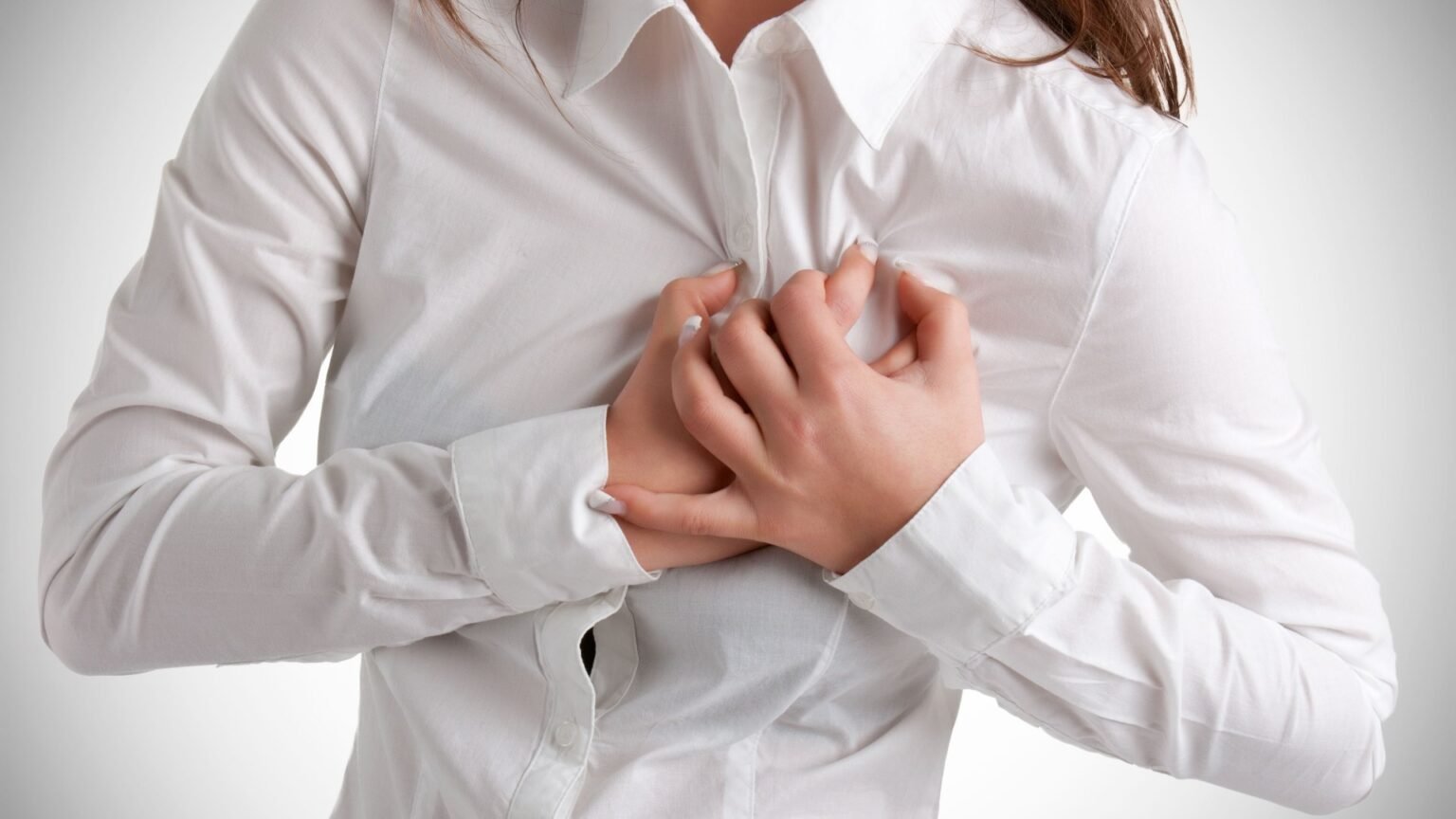


DOCTORS will take women’s heart attacks more seriously after admitting they are not treated as well as men.
Top medics in Europe and the US have changed the definition of the condition in a “radical” move to end sexist treatment rules.
Doctors are often slower to recognise if a woman is having a heart attack than for male patients, say experts (stock image) Credit: Alamy
Most heart attacks are caused by blood clots but around 10,000 per year have other causes Credit: Getty – Contributor
Heart attack types most common in women previously had their severity classed as type 2 while those most affecting men were type 1.
It means blokes received faster, more powerful treatment while tens of thousands of women likely got the wrong diagnosis and not enough help.
Sign up for the Health newsletter
Thank you!
New rules from the European Society of Cardiology and the American Heart Association will rank heart attacks with causes other than blood clots as the most serious type 1.
Clots account for nine out of ten heart attacks but the remaining ten per cent can be caused by artery tears or spasms blocking blood flow to the heart.
Read more on heart health
CHEW ON THAT
Chewing gum could increase your risk of major heart attack or stroke by 57%
LIFE S-AI-VER
NHS breast cancer scans ‘can spot heart disease’ and could diagnose earlier
These mainly affect women and may be triggered by pregnancy or emotional distress.
Professor Bryan Williams, of the British Heart Foundation, said: “This is a landmark moment and a radical shift in how we define and diagnose heart attacks worldwide.
“For decades women have missed out on accurate diagnoses and treatment of less common forms of heart attack.
“It could be life-changing.”
About 100,000 people have a heart attack each year in the UK, including 33,000 women.
The charity Heart Research UK says women are 50 per cent more likely than men to be misdiagnosed and twice as likely to die.
Chief medical adviser Dr Roy Jogiya said: “Heart disease has been thought of as a man’s problem for too long.
“Better recognising and classifying the types that particularly affect women is an important step towards improving diagnosis, treatment and research.”
The new guidelines, announced at the ESC Congress in Munich, Germany, also said doctors should use more sensitive blood tests to diagnose women.
Current tests fail to account for biological differences in a protein called troponin.
Prof Nicholas Mills, of the University of Edinburgh, added: “There has been bias against women by using the key blood test for diagnosing heart attacks at an average level, which picks up all men but misses some women.
“This is used for all types of heart attack in every emergency department in the world, and we want to make sure that it’s used correctly.”
How to reduce your risk of heart attacks and stroke
YOU can reduce your risk of heart attack and stroke with many of the same methods.
Heart attacks and strokes, although affecting different organs of the body, are both what we call cardiovascular events.
Both arise from similar underlying conditions, such as atherosclerosis —a buildup of fatty deposits in the arteries.
According to the American Heart Association, the risk factors for heart attacks and strokes are largely the same: high blood pressure, high cholesterol, smoking, obesity, physical inactivity and diabetes.
Therefore, addressing these risk factors can simultaneously reduce the risk of both conditions.
Here are ways you can prevent the two:
Healthy diet
More fruit and veg: The DASH diet, which emphasises fruit, vegetables, whole grains and lean proteins, has been shown to reduce blood pressure and improve heart health.
Less fats: Too much saturated and trans fats can raise cholesterol levels and increase the risk of atherosclerosis. Go for healthier fats like those found in olive oil, nuts and avocados.
Limit salt: High salt intake is linked to high blood pressure, a major risk factor for both heart attack and stroke. The NHS recommends no more than 6g of salt per day for adults.
Fibre: Foods high in soluble fibre, such as oats and beans, can help lower cholesterol levels.
Exercise
Walking, running, cycling, swimming – whatever you like, do it!
Aerobic exercise can strengthen the heart and improve circulation.
The NHS advises at least 150 minutes of moderate-intensity aerobic activity or 75 minutes of vigorous-intensity activity each week.
Strength training exercises can help control weight, improve cholesterol levels, and reduce blood pressure. It is recommended twice a week by the NHS.
Manage blood pressure
Healthy diet and exercise can help keep your blood pressure in check.
But it is worth monitoring it yourself after the age of 40, at least when the NHS invites adults for a check-up every five years.
High blood pressure often has no symptoms but significantly increases the risk of heart attack and stroke.
Quit smoking
One of the best ways to quit smoking is to use resources provided by NHS Smokefree. Support groups, medications, and other tools to help quit smoking such as vapes could be what you need to kick the habit for good – and it’s free.
Limit booze
Excessive alcohol consumption can increase blood pressure and contribute to weight gain, which can snowball and become a heart health risk.
The NHS recommends not regularly drinking more than 14 units of alcohol per week.