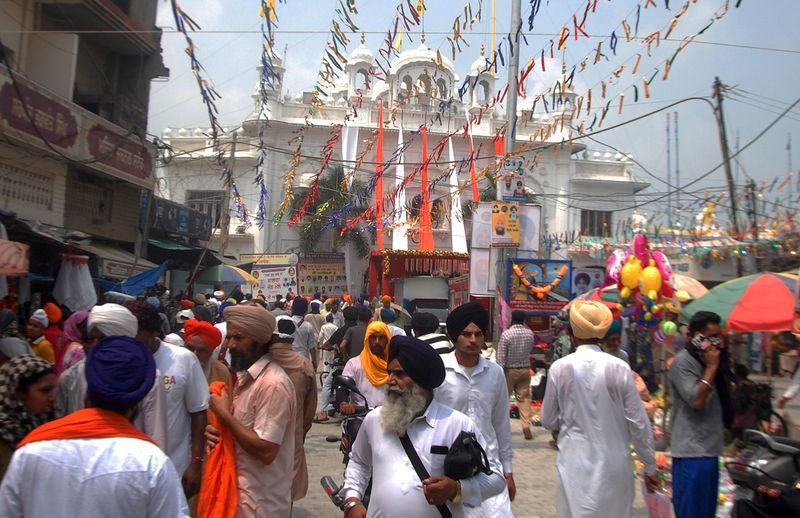

Nestled in Amritsar district, the historic town of Baba Bakala occupies a special place in Sikh history as the site where Guru Tegh Bahadur was revealed as the ninth Sikh Guru, ending a period of uncertainty and competing claims over the Guruship.The town assumes special significance every year during the Rakhar Punya fair, when thousands of devotees converge here to pay obeisance at historic gurdwaras and participate in religious and political gatherings.For Sikhs, however, Baba Bakala is much more than the venue for an annual fair. It is closely linked with one of the defining episodes in the history of the Sikh Gurus.According to Sikh historical tradition, before his death, Guru Har Krishan uttered the words ‘Baba Bakale’, indicating that the next Guru could be found at Baba Bakala. The statement, however, led to considerable confusion. Several people at Baba Bakala claimed to be the Guru, creating uncertainty among the Sikh community.Guru Tegh Bahadur, the youngest son of Guru Hargobind, was residing in Baba Bakala at the time. He had largely remained away from the public contest for succession and was devoted to meditation and spiritual practice.The uncertainty was eventually resolved through the efforts of Bhai Makhan Shah Lubana, a devoted Sikh and trader. Historical accounts state that after surviving a storm at sea, Makhan Shah had vowed to offer 500 gold coins to the Guru.At Baba Bakala, he tested the claimants by offering only two coins to each. When Guru Tegh Bahadur mentioned his original vow of 500 coins, Makhan Shah recognised him as the true Guru and famously announced from the rooftop that the Guru had been found.The episode not only established Guru Tegh Bahadur as the ninth Sikh Guru but also gave Baba Bakala a permanent place in Sikh memory.Today, historic gurdwaras in the town preserve the memory of this moment. During Rakhar Punya, Baba Bakala becomes a major centre of religious activity, with devotees arriving from different parts of Punjab and neighbouring states.The fair also has a distinctive political dimension, with rival political and religious groups holding conferences and using the gathering to address large public audiences.Amid the crowds and celebrations, Baba Bakala continues to stand as a reminder of a crucial chapter in Sikh history — one in which spiritual authority emerged from confusion and was recognised by the community.