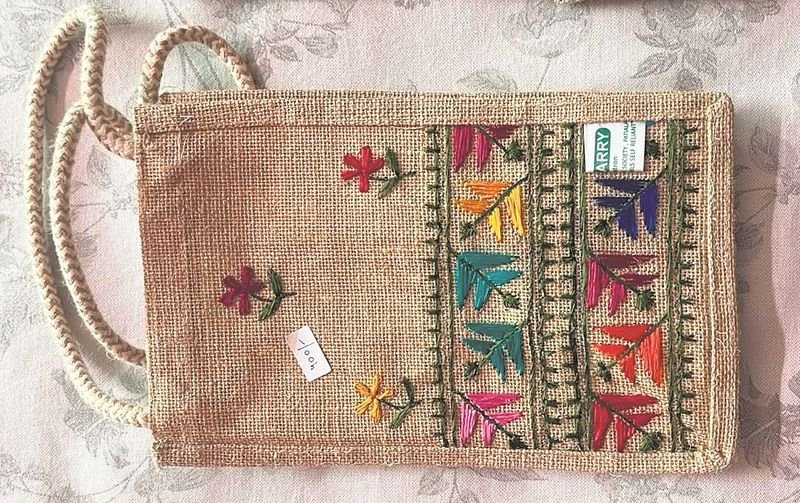

Gone are the days when phulkari only meant embroidery on dupattas worn on festive or ceremonial occasions. Now, the same style of embroidery can be found on bags, keychains, bookmarks, shagun envelops and many more items.The age-old craft has stepped off the shoulders of women and onto many everyday objects, reinventing itself for modern lifestyles in the process.Artisans and designers are experimenting with jute, canvas and leather bases, stitching the traditional floral patterns into quirky and modern accessories that appeal to younger generations.NGO working to make women self-reliantSahi Disha Welfare Society, a non-governmental organisation (NGO), is working towards promoting the traditional art form, and helping girls and women engaged in using it for making goods self-dependent.Rajiv Garg from the NGO says they are training underprivileged girls and women, and selling bags with phulkari embroidery made by them. The girls and women who prepare the goods get the income generated from the sales.The NGO is based in Patiala, a city famous for its phulkari. The products are available online and also shipped overseas.Mihira, who loves traditional artefacts, says she fell in love with the products when she saw traditional phulkari-style embroidery on a laptop sleeve.“It has become my fashion statement. Carrying heritage into boardrooms and cafes gives a sense of pride in showcasing our culture,” she said.Designers say the shift is about “functional heritage”, keeping alive culture by embedding it into everyday life.“A phulkari keychain dangling from a backpack or a shagun envelope exchanged at a wedding becomes a subtle yet powerful reminder of our roots. My clients often ask me to make small pieces like potlis, purse and envelopes from phulkari,” said Babbu, a boutique owner from the city.“Phulkari, once a symbol of familial love stitched into dupattas, is now a versatile design language proving that tradition doesn’t fade but evolves,” she adds.Reminder of rootsA phulkari keychain dangling from a backpack or a shagun envelope exchanged at a wedding becomes a subtle yet powerful reminder of our roots. My clients often ask for small pieces like purse and envelopes with phulkari-style work. — Babbu, boutique ownerame