

MANY of us know our retinoids from our salicylic acids, thanks to social media – and, as it turns out, so do kids.
Instagram feeds are full of kidfluencers sharing elaborate 10-step routines, while research by skincare brand Pai reveals nearly half of nine to 12 year olds are using multiple products weekly, to fix “skin problems” they don’t have.
Experts are now warning that a fixation with perfect skin and wrinkle prevention is infecting youngsters as well as adults Credit: Getty
A phenomenon dubbed “cosmeticorexia” is fuelled by social media and influencer culture Credit: Getty
The survey of 1,500 girls in the UK found 41% use treatments recommended by influencers, and one in four have tried retinol – a potent anti-ageing ingredient for eliminating wrinkles.
Over half, meanwhile, don’t even check product labels before use.
Sign up for the Fabulous newsletter
Thank you!
It’s little wonder then, that experts are now warning that a fixation with perfect skin and wrinkle prevention is infecting youngsters as well as adults, fuelling the rise of a phenomenon dubbed “cosmeticorexia”.
What is cosmeticorexia?
Coined by Italian researchers, “cosmeticorexia” refers to “an obsession with achieving flawless skin that can lead to excessive, age-inappropriate or compulsive use of cosmetic products and procedures”, which is reinforced by social media and influencer culture.
JAWSOME
I spent £4k on a midlife glow-up but £1-a-day gadget took a DECADE off my face
MANE EVENT
Hair masks that work like magic to revive my damage and dry ends after summer
According to researchers, cosmeticorexia could “represent a clinically relevant mental disorder”, as it could harm people’s mental health.
“While cosmeticorexia is not an official medical diagnosis, the behaviours behind it are absolutely something many of us working in aesthetics are seeing,” says Dr Ahmed El Muntasar, founder of The Aesthetics Doctor and an NHS GP.
“People are constantly exposed to highly curated versions of beauty online, and that can distort what they think is normal or achievable.”
Dr Aiza Jamil, a consultant dermatologist at Sk:n Clinics, is also increasingly seeing the fallout.
“There is huge pressure to achieve flawless-looking skin,” she says.
“And younger audiences are especially vulnerable as they are still developing self-esteem.”
The survey of 1,500 girls in the UK found 41% use treatments recommended by influencers Credit: Getty
Worried parents describe their children spending hours watching skincare videos Credit: Getty
Quest for perfection
Our mums and grans no doubt worried about spots, fine lines or dull skin at some point.
But with photo filters and social media now a fixture in our lives – and new ”miracle“ skincare products hitting the market daily – teens nowadays are uniquely vulnerable.
“People are scrutinising themselves daily in a way previous generations simply didn’t,” says Dr Muntasar.
Fixation on skin appearance is one of the most common preoccupations of body dysmorphic disorder (BDD), an anxiety disorder in which people obsessively worry about perceived physical flaws, affecting 2% of Brits, says Kitty Newman, managing director of the Body Dysmorphic Disorder Foundation.
Dr Muntasar adds: “I’m seeing more adults and teens becoming hyper-fixated on very minor imperfections, constantly feeling like they need to fix something, despite objectively looking great already.
There is also a compulsive element to it in some people.
“They’re constantly searching for the next product or treatment, but never actually feeling satisfied with how they look.”
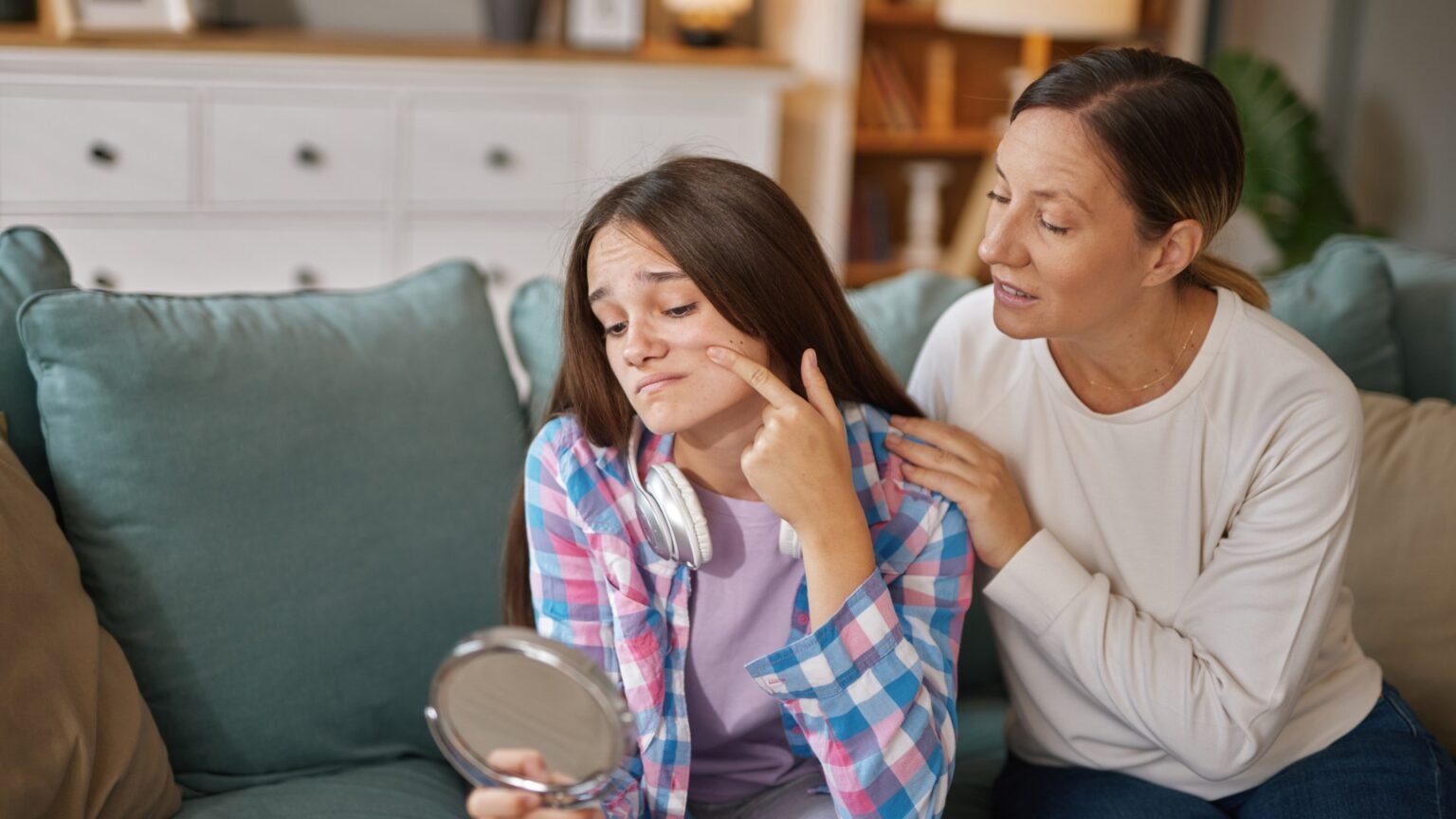
Worried parents describe their children spending hours watching skincare videos, “asking for expensive anti-ageing products or becoming anxious about completely normal skin changes,” says Dr Jamil.
“Normal skin texture or blemishes can start to feel unacceptable because of the filtered images online.”
A dangerous game
“The biggest danger is that kids end up using strong active ingredients, like retinoids, exfoliating acids or aggressive scrubs that are not suitable for younger skin,” warns Dr Jamil, who has treated many such kids who were trying to achieve “perfect” skin.
“In some cases, this can damage the skin barrier and lead to redness, irritation, sensitivity and even worsening acne.
“Repeatedly disrupting the skin barrier can increase the risk of ongoing sensitivity, dryness and inflammatory conditions like eczema or contact dermatitis.
“In some, excessive irritation can delay healing and increase the likelihood of post-inflammatory pigmentation or scarring.”
In extreme cases, inappropriate use of harsh ingredients can cause chemical burns.
Unless they have a condition, less is more.
“Protecting the skin barrier early on is far more beneficial than trying to correct damage later,” says Dr Jamil.
There’s also a psychological side to cosmeticorexia, as youngsters can be left with body-image issues – seeing imperfections that don’t exist, compulsively checking their appearance and comparing themselves to others.
Younger audiences are especially vulnerable as they are still developing self-esteem, an expert warns Credit: Getty
Fixation on skin appearance is one of the most common preoccupations of body dysmorphic disorder Credit: Getty
How to help your teen
Building a self-care routine is a normal part of almost every teenage girl’s life, and if they are self-conscious about their acne or spots, it doesn’t mean they have cosmeticorexia.
But if you’re worried about your child watching endless beauty TikToks and being obsessed with their skin, then gentle questioning, rather than an interrogation, can open up a conversation.
Kitty suggests saying: “I’ve noticed you’ve been watching quite a few skincare videos recently. How do they make you feel about your skin?” or: “Have you been worrying more about your appearance lately?”
She explains: “Stay curious and open, rather than critical or dismissive. Being too punitive, too soon, can shut down communication and turn this into a battleground.
“Trying to understand whether content is inspiring an interest in skincare, or contributing to anxiety, self-criticism or low self-esteem is important.”
Explore what they’re seeing together and encourage them to think critically about it.
“Remind them that many images are filtered, edited or carefully curated, and that influencers often have commercial incentives to promote products or create insecurities,” Kitty says.
However, if anxiety and insecurity about their skin become so overwhelming that it affects their lives, there’s cause for concern.
Watch out for red flags, such as increased time and money spent on skincare routines, anxiety or distress when unable to perform them, and relying on their regimen to regulate their mood – even if it leaves them with blemishes or rashes.
“If teens avoid being seen, spend hours on make-up or skincare and won’t go to school because of their skin, that’s when getting help is recommended,” Kitty adds.
If you’re worried your child has BDD, the NHS offers therapy specifically for the condition.
Visit Bddfoundation.org or Ocduk.org for advice.
Teen skin safety
So, what skincare products are safe to start trialling?
“Once puberty begins – roughly between 11 and 14 – many teens naturally develop oilier skin or acne, and that’s usually the point where introducing a simple skincare routine becomes beneficial,” says Dr Muntasar.
Salicylic acid or benzoyl peroxide can help with mild acne, but see a dermatologist for persistent spottiness.
Try fragrance-free moisturisers with ceramides, glycerin and hyaluronic acid for dry or eczema-prone skin.
For sensitive skin, stick to fragrance-free cleansers and moisturisers, and avoid introducing multiple active ingredients at once.
Teens should avoid high-strength retinoids, strong exfoliating acids, frequent acid peels and anti-ageing products.
If your child’s skin is freaking out from too many products, stop and simplify, says Dr Jamil.
“Pare their routine back to a gentle cleanser, a basic moisturiser and a daily SPF. Skin should settle over a few weeks.”