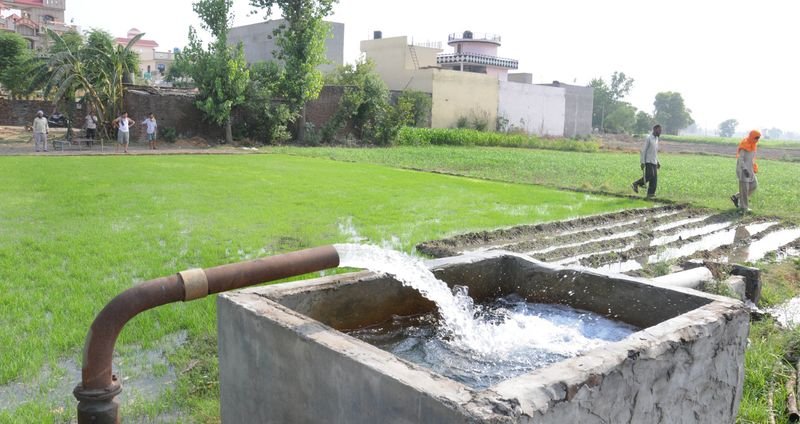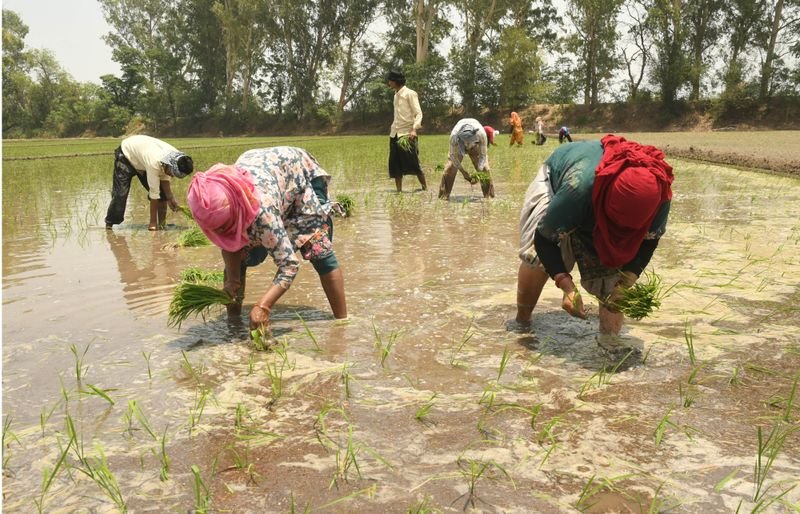

India’s total kharif crop area sown was recorded at 1,071.10 lakh hectares as of August 28, a decrease of 18.91 lakh hectares compared to the same period last year.Though the total acreage increased by 14.40 lakh hectares during the last week, the gap in paddy, coarse cereals and oilseed sowing has widened compared with the previous year. The Ministry of Agriculture has blamed scant rainfall and erratic weather as the main culprits behind the poor show.According to the ministry, the area sown under all kharif crops is currently 1.73% lower than last year, compared with a gap of 1.50% a week earlier.“During the 2025-26 kharif season, sowing had covered 1,090.01 lakh hectares by August 28. This year, the area has reached 1,071.10 lakh hectares. Thus, kharif sowing is 18.91 lakh hectares behind last year. The average area under different kharif crops during the season has been around 1,104.25 lakh hectares,” it said.Under the ministry’s unified portal for agricultural statistics (UPAg), the area under paddy is shown 3.35% lower than last year, with the gap widening from 3.15% a week earlier.So far, paddy has been sown across 414.10 lakh hectares, compared with 428.46 lakh hectares during the corresponding period last year. However, the current acreage remains above the long-term average of around 412 lakh hectares.Among pulses, the area under horse gram, moong and other pulses is currently lower than last year. However, the total area under pulses has surpassed the corresponding acreage recorded during the 2025-26 kharif season.Total pulse sowing has reached 115.05 lakh hectares, compared with 113.66 lakh hectares last year. However, it remains below the average acreage of 123.63 lakh hectares.“Tur (pigeon pea) has been sown across 44.59 lakh hectares, compared with 44.31 lakh hectares last year. The area under urad has also increased to 24.69 lakh hectares, from 22.11 lakh hectares a year ago,” the data shows.Jute and mesta are the only major crop category to record an increase, with acreage reaching 6.34 lakh hectares, up 0.10 lakh hectares from last year.The decline in paddy area is mainly attributable to substantial reductions reported in Karnataka, Telangana, Jharkhand, Madhya Pradesh, Odisha, and Maharashtra, the ministry said.The shortfall in the area under coarse cereals also widened during the week, from 1.92% to 2.31%. Ragi recorded the steepest decline, with its acreage down 30.30% from last year. The area under ragi currently stands at 5.48 lakh hectares, compared with 7.86 lakh hectares last year.Maize acreage is also down 4.14%, at 89.99 lakh hectares compared with 93.87 lakh hectares a year earlier. However, the areas under jowar, bajra and other small millets are slightly higher than last year.The gap in oilseed sowing widened from 0.17% to 0.52% over the past week. Soybean, the major oilseed crop, has been sown across 121.72 lakh hectares, compared with 122.95 lakh hectares last year. The area under groundnut is also slightly lower at 49.09 lakh hectares, against 49.71 lakh hectares a year earlier.“The area under sugarcane has reached 58.46 lakh hectares, slightly below the 58.87 lakh hectares recorded this time last year. However, the current acreage remains well above the historical average of 54.20 lakh hectares,” the ministry said.Cotton acreage, however, remains marginally lower than last year. Cotton has so far been sown across 108.80 lakh hectares, compared with 109.23 lakh hectares during the corresponding period last year.“From June 1 to August 24, the south-west monsoon continued to be around 13 per cent deficient. The rain in the next few weeks will determine whether India gets a reasonably good harvest this season. Further, it will also ensure adequate moisture in the soil to sustain early sowing for the coming rabi season,” an official of the ministry said.The performance of this season’s monsoon has been extremely varied since its onset on June 4, with some states facing large rainfall deficits while others have received considerably more rainfall than normal.The monsoon covered the entire country only by July 9, after a contrasting two-month start: a weak and erratic June followed by a strong recovery in July. However, despite this surge, the kharif crop sowing campaign remains sluggish.“The August pattern has also been erratic, with a dry second week erasing almost all the gains made in a wet first week of the month, pushing the cumulative precipitation deficit for the 2026 monsoon back to 10.5% nationally as of August 15,” the India Meteorological Department said.Agriculture analyst Akash Singh said water levels in the country’s major reservoirs were also a concern, especially for the next wheat crop, planting of which generally commences in October.“The Central Water Commission has stated that the water storage status of India’s 166 major dams stood at 44.4% of total capacity as of July 30. This is 65.4% of the level at the same time last year and 93.0% of the long-term average,” he said.