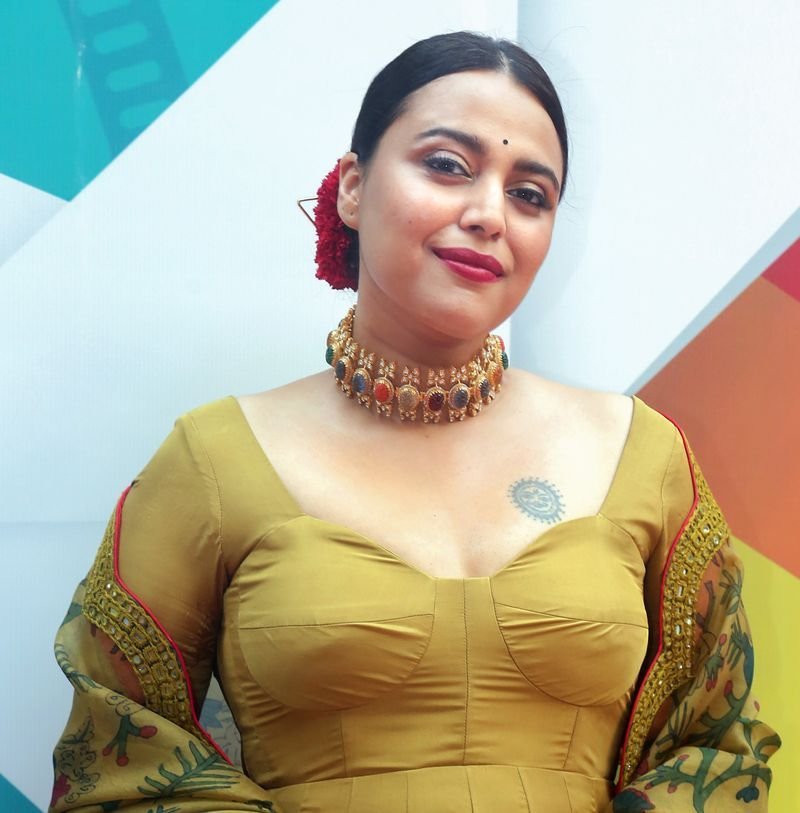

Bollywood actor Swara Bhasker has clarified her remarks on the jauhar sequence in Sanjay Leela Bhansali’s ‘Padmaavat’ after a clip from her recent Delhi event triggered backlash on social media, saying she never called Rani Padmaavati or the women who committed jauhar “cowards”.Swara shared a video on X on Tuesday, explaining the context of her comments made at the “Woman, Life, Freedom” talk at the India International Centre on August 31.“A clip of mine has been going viral on social media. It was from an event yesterday, where I was asked why I had sent an open letter to Sanjay Leela Bhansali after watching Padmaavat. While explaining what my issue was, I said something that is now being completely mistranslated and spread falsely, claiming that I had said that Rani Padmaavati and the other women who committed Jauhar were cowards,” she said.Clarifying her remarks, the actor said she was speaking from the perspective of a rape survivor and questioning the message that could be conveyed when a film portrays death as preferable to surviving sexual violence. “Main clearly kehna chahti hoon, maine aisa bilkul nahi kaha ki Rani Padmaavati kayar thi ya mahal ki baaki aurtein kayar thi.” [I want to make it absolutely clear that I did not say that Rani Padmaavati or the other women in the palace were cowards.]She added that she had instead imagined how she might feel if she were a rape survivor and had survived the assault. “Yeh asliyat hai humare desh mein. Kya hume aisi filmein banani chahiye jahan yeh sandesh jaa raha hai ki aurat ki pavitrata uski zindagi se zyada mulyawaan hai?” [This is the reality in our country. Should we make films that convey the message that a woman’s purity is more valuable than her life?] She further questioned whether survivors of sexual violence should be made to feel that surviving an assault was somehow a failure.“Kya hume rape peedita ko yeh batana chahiye ki tumhari jaan hi chali jaati, toh sahi rehta? Tum bach gayi toh yeh buri baat hai?” [Should we tell a rape survivor that it would have been better if she had died, and that surviving was a bad thing?] Swara said her comments were made in the context of what she described as the widespread prevalence of rape in India. Referring to a recent gang-rape incident in Delhi, she questioned the idea of placing a woman’s “honour” or “purity” above her right to live.The actor also referred to the Nirbhaya case, saying the young woman should not be forgotten for the way she fought to survive. Swara said Nirbhaya had a strong will to live and that a woman’s will to live should never be underestimated. Her remarks revisit a controversy that dates back to 2018, when Swara wrote an open letter to Bhansali after watching Padmaavat.In the letter, she had criticised what she viewed as the glorification of jauhar and sati in the film and questioned the message being sent to women who survive sexual violence. Speaking at the Delhi event, Swara recalled the jauhar sequence featuring Deepika Padukone as Rani Padmavati, in which hundreds of Rajput women enter the flames. She said watching the sequence had made her question whether survivors of sexual violence were being implicitly told that they had failed to protect their “honour” if they chose to live.She also recalled a shot involving a pregnant woman, saying it particularly disturbed her. According to Swara, she questioned the implication that a female foetus might not deserve to be born because of the possibility that she could one day face sexual violence. “There was like one shot that made me so mad. I was like, ‘Chhee!’ There is a close-up of a pregnant woman’s belly and she’s going… So, you’re saying that a foetus that might be female doesn’t deserve to be born because she might be raped by a Muslim ruler? I was so mad and then I came out and I was like, ‘This is terrible’,” she said. Swara also addressed the perception that she reacts impulsively when expressing her views. She said she did not immediately write her open letter after watching the film, but waited for five days before putting her thoughts down.Reacting to the social media backlash, she also took to X, writing, “It is WILD that so many many woman and men are triggered by the idea that rape survivors have the right to life after the horrible crime committed on them.” The actor maintained that her criticism was aimed at the message she believed the portrayal could convey, rather than at Rani Padmaavati or the women depicted in the historical episode.