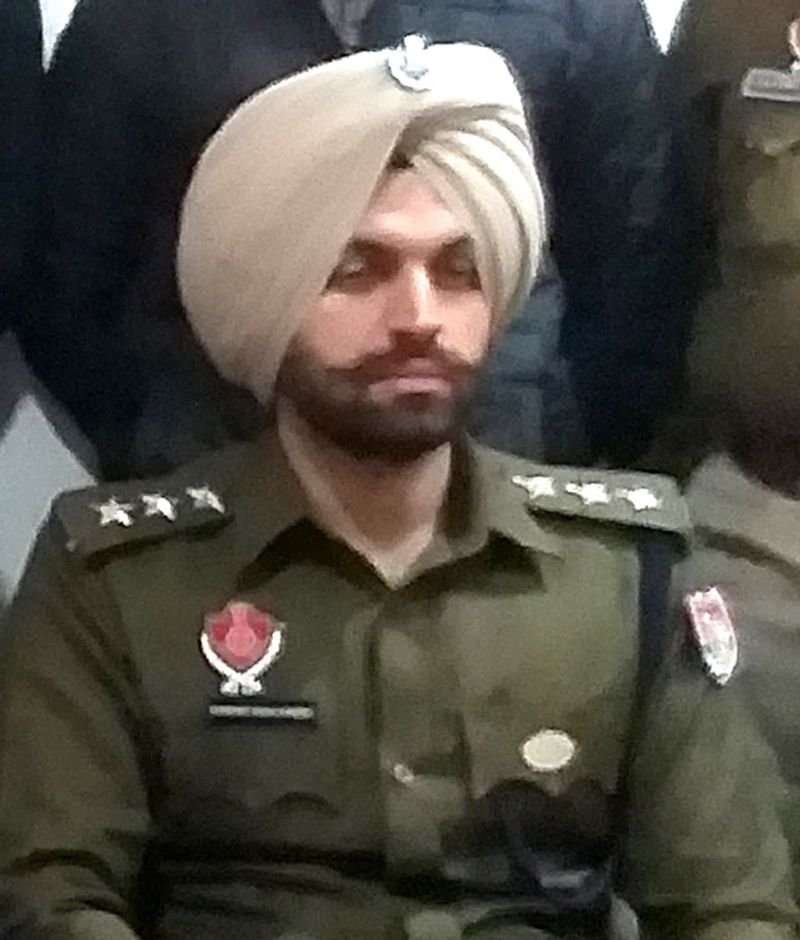

The Punjab and Haryana High Court has set aside the dismissal of Punjab Police DSP Gursher Singh Sandhu. Justice Namit Kumar directed the state of Punjab and other respondents to reinstate Sandhu with all consequential benefits. The court, at the same time, made the reinstatement subject to the state’s right to continue the departmental inquiry already pending against him and other police officials.The judgment assumes significance because the court has drawn a clear distinction between the gravity of allegations warranting disciplinary action and the far more stringent circumstances required to dispense with a departmental inquiry altogether under Article 311(2)(b). The petitioner was represented in the matter by senior advocate DS Patwalia, along with counsel Bikramjit Singh Patwalia, Edward George Masih and Gaurav Jagota.What the case was aboutSandhu was appointed DSP in the Punjab Police in 2016 and was subsequently posted as DSP (Detective), Mohali. The case arose from the interview of alleged gangster Lawrence Bishnoi while he was in the Punjab Police custody at CIA Staff, Kharar.Justice Kumar’s bench was told that the first interview was found during investigation to have been recorded on the intervening night of September 3 and 4, 2022, when Bishnoi was in police custody at CIA Kharar. Sandhu was first issued a show-cause notice on September 19, 2024, to which he replied on September 25. A second notice followed on October 14, 2024, alleging, among other things, that he facilitated the recording of interview by being by personally present at the premises of CIA Staff. He submitted an interim reply on October 17 and sought documents.Justice Kumar’s bench was further told that Sandhu’s services were placed under suspension on October 25, 2024, and a chargesheet was issued the same day. He maintained that the complete chargesheet was not served on him; only the covering letters of it was pasted at his old Chandigarh residence although the authorities knew his permanent address at Jalandhar and his current posting was at the 9th Battalion, PAP, Amritsar.Court rejects “non-cooperation” as sufficient groundJustice Kumar observed that the respondents proceeded to dismiss the petitioner by invoking Article 311(2)(b) of the Constitution and dispensing with the holding of a regular departmental inquiry. The stand taken up by the respondents for dispensing with the inquiry was his alleged non-cooperation and his alleged failure to receive the chargesheet.Justice Kumar noted that Sandhu had responded to the first show-cause notice, replied to the second notice and sought documents before being suspended and chargesheeted. “The record does not show any instance where the petitioner had disappeared from the proceedings or had rendered himself completely unavailable to the department.”Justice Kumar added the record, on the contrary, revealed that the petitioner had participated in the proceedings at the initial stage, had submitted replies to the show-cause notices and had sought documents for furnishing an effective response.Article 311(2)(b) is an exception, not a shortcutReferring to the law laid down by the Supreme Court, Justice Kumar reiterated that two conditions must exist before Article 311(2)(b) could be invoked: there must be a situation making an inquiry “not reasonably practicable”, and the disciplinary authority must record reasons for that satisfaction in writing.Justice Kumar made it clear that the test was not whether an inquiry was difficult or inconvenient but whether circumstances actually made it not reasonably practicable.“Mere recital in the order that an inquiry is not reasonably practicable would not, by itself, be sufficient. The competent authority must demonstrate a real and proximate nexus between the circumstances prevailing at the relevant time and the inability to hold departmental inquiry,” Justice Kumar ruled, adding mere non-cooperation or absence of the delinquent employee could not be elevated to a circumstance rendering the holding of an inquiry constitutionally impracticable.No threat to witnesses or interference with inquiry shownJustice Kumar did not find material to establish that Sandhu had threatened or intimidated witnesses, tampered with evidence or interfered with the functioning of the inquiry officer. “There is no material placed before this court to show that any witness had expressed unwillingness to depose against the petitioner on account of any threat or coercion attributable to him. There is also no material to suggest that the petitioner had attempted to tamper with evidence or interfere with the functioning of the inquiry officer.”Dismissal quashed, reinstatement ordered — but inquiry can continueHolding that the competent authority’s satisfaction did not meet the constitutional standard under Article 311(2)(b), the court set aside the January 2, 2025 dismissal order. “Consequently, this court has no hesitation in holding that the satisfaction recorded by the competent authority for dispensing with the departmental inquiry does not meet the constitutional standard prescribed under Article 311(2)(b) of the Constitution,” Justice Kumar asserted.At the same time, the court expressly preserved the state’s right to continue the departmental inquiry already pending against Sandhu and the other officers before Justice Rajiv Narain Raina.