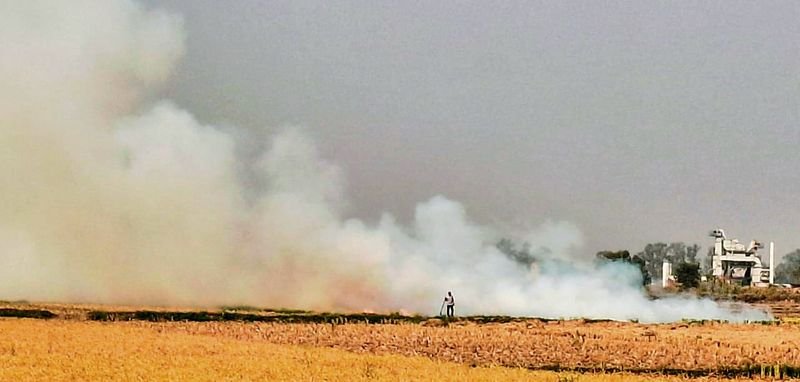

Punjab has drawn up an intensified Information, Education and Communication (IEC) plan for the Kharif 2026 season to further reduce crop residue burning. The state plans to use a wider combination of mass media campaigns, field demonstrations, digital outreach and community mobilisation.Union Environment Minister Bhupender Yadav on Thursday reviewed the comprehensive plans submitted by the NCR states, focusing on stakeholder engagement and behavioural-change communication to tackle air pollution. Delhi, Punjab, Haryana, Uttar Pradesh and Rajasthan have also submitted their IEC plans to the Commission for Air Quality Management (CAQM).The revised IEC plan acknowledges that Punjab has witnessed a substantial decline in stubble-burning incidents in recent years. However, localised burning continues in some areas due to operational constraints, behavioural patterns and difficulties in managing paddy straw within the available time frame.A key thrust of the campaign will be to highlight the economic and agronomic benefits of managing crop residue without burning. These include improved soil health, timely sowing of wheat, and more efficient utilisation of crop-residue-management machinery and Custom Hiring Centres (CHCs).Punjab Agricultural University (PAU) and Krishi Vigyan Kendras (KVKs) will provide the technical backbone for the campaign through farmer training, expert lectures, demonstrations, technical advisories and capacity-building activities. They will also disseminate scientifically validated information on crop residue management.“Chaired a meeting with the Environment Ministers and Secretaries, as well as the Chairpersons and Member Secretaries of the Pollution Control Boards of Delhi, Haryana and Uttar Pradesh, along with the Agriculture Minister and Agriculture Secretary, and the Environment Secretary of Punjab, to discuss the management and control of air pollution in Delhi-NCR and adjoining areas through focused stakeholder engagement.“Discussed the specific Stakeholder Engagement Plans presented by the state governments and urged the states to adopt and replicate best practices. Stressed the need for coordinated and focused stakeholder engagement to make efforts towards tackling air pollution more effective,” Yadav said.He assured the states that the Government of India stands with them and will extend all necessary support to their efforts to control and abate air pollution.DelhiAccording to the IEC plan submitted by the Delhi government, seven polluting sectors have been identified: industrial pollution, diesel generator (DG) sets, road dust, construction and demolition (C&D), municipal solid waste (MSW)/biomass, agricultural residue and vehicular emissions.Sensitisation workshops will be conducted in coordination with the Industries Department and industrial associations, under the aegis of Delhi Pollution Control Committee (DPCC), to address industrial pollution.The focus will be on compliance with emission norms, the use of approved fuels, and the installation of Online Continuous Emission Monitoring Systems (OCEMS) and Air Pollution Control Devices (APCDs).HaryanaThe IEC plan in Haryana will cover all 14 districts, from Gurugram to Charkhi Dadri, with each district having a dedicated regional officer.Workshops on the prevention of stubble burning and its impact on public health will be conducted across all districts.Yadav said a review meeting, chaired at the Union Minister’s level, would be held in September to assess the progress of initiatives and the action taken by the concerned states.He reassured the NCR state governments that the Government of India would extend full support to their efforts towards improving air quality and managing air pollution.