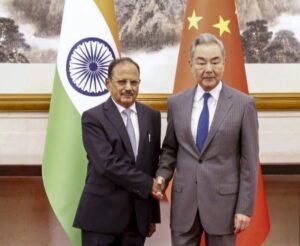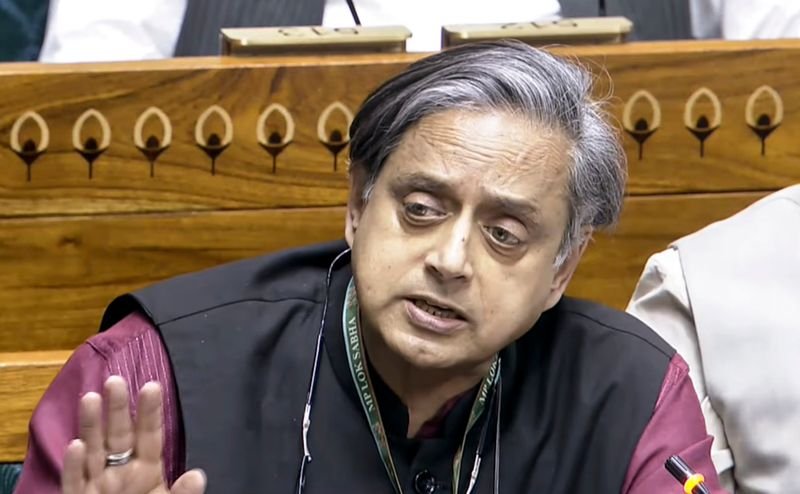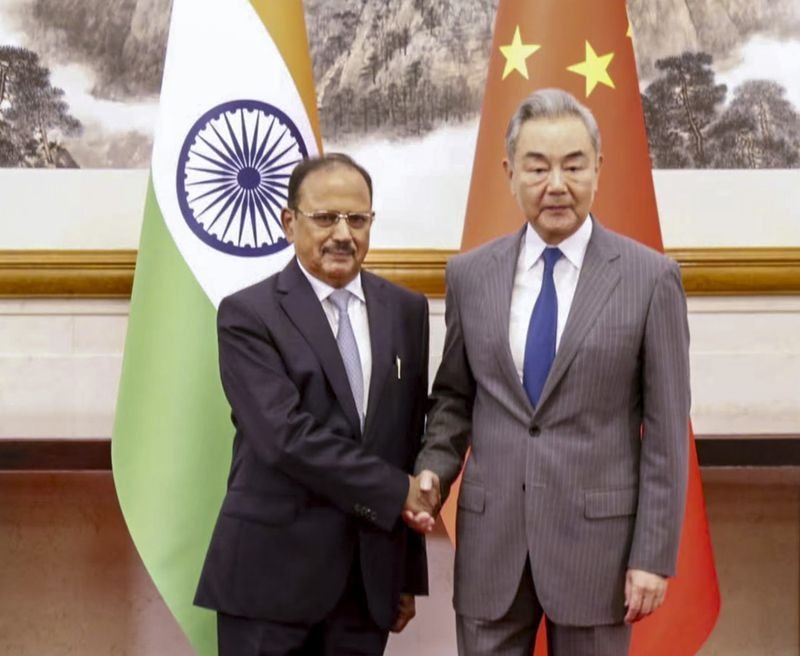

Conceived in 2003, the Special Representatives framework for better Indo-China relations has slowly degenerated into a procedural exercise. When the two current Special Representatives — India’s National Security Adviser (NSA) Ajit Doval and Chinese Foreign Minister Wang Yi — met recently in Beijing for the 25th round of the dialogue, the mechanism turned 23 with not even a kilometre of the boundary settled. The eight points of consensus and outcomes arrived at on August 25 read more like a crisis management mechanism than a boundary dispute settlement process, writes Lok Sabha MP Manish Tewari in his Edit article Tortuous journey of India-China talks. Beijing’s claim to roughly 90,000 square km of Arunachal Pradesh, including Tawang, has a motive. The sixth Dalai Lama was born at Urgelling near Tawang in 1683, and whoever holds Tawang holds a veto over the politics of reincarnation, the only legitimising currency of Chinese rule in Tibet. The claim is theological, but the gains sought are territorial, he avers. Why does Beijing refuse to clarify the LAC? Because cartographic ambiguity is a standing licence for coercion, and every unclarified kilometre is a future salami slice, he writes.The eight-point consensus reached between Doval and Wang Yi is more than its provisions. India will mark a century of independence in 2047; China, a century of the People’s Republic in 2049. For the first time in the modern era, the developmental clocks of Asia’s two giants approach their milestones together. That synchronisation can become a collision course or a strategic opportunity. The choice is architectural, not tactical, writes Lt Gen SS Mehta (retd), former Western Army Commander in his Edit piece Jattviberise in empire’s shadow. The coming BRICS summit provides an opportunity for PM Modi and President Xi to shape a new compact. The Empire left the Himalayan frontier unsettled. Two civilisations can now outlive its shadow. That is reason enough to settle the last unsettled frontier; step from empire’s shadow into the sunrise, he writes.India faces the uphill task of making a success of the forthcoming BRICS summit in New Delhi. The government is keeping the focus on economic development and cooperation in areas like digital currencies and speeding up cross-border payments, writes senior financial journalist Sushma Ramachandran in her Op-Ed article Digital ambitions in a fractured BRICS. The measured approach cannot disguise the fact that BRICS is trying to map out a new financial architecture for the Global South. The problem is, the group is now engulfed by geopolitical tensions that are likely to impede the aim of bringing about faster growth through economic cooperation. It will take some deft diplomacy to ensure that the BRICS summit ends without much friction. It may thus end up as a low-key event, but that would probably be the best outcome in such fractured times, she writes optimistically.THE US-Israel war on Iran has passed the six-month mark. On the political side of the ledger, all actors need to contend with fluid and uncertain scenarios. Israeli Prime Minister Benjamin Netanyahu and US President Donald Trump face crucial elections this October and November respectively. Each is seeking to escape the folly of their hubris in launching an unlawful war, writes Gaddam Dharmendra, Indian Foreign Service (Retd) in his Op-Ed article Iran war opens new strategic frontiers. Three issues require monitoring — first, the Mecca Alliance birthed by Saudi Arabia, Türkiye and Pakistan; second, is the focus on maritime chokepoints: the Hormuz Strait and the Red Sea’s Bab-al-Mandeb; third, Iran’s economy is in dire straits, he sums up.Closer home, the Himalayas have been giving one warning after another in the form of deadly disasters like the most recent Nepal tragedy where 1,300 have been confirmed dead, and thousands are still missing. Dealing with disasters in the Himalayas requires a multi-pronged strategy, involving scientific research, policymaking, implementation machinery, public awareness and community involvement, writes science commentator Dinesh C Sharma in his Edit article Pay heed to Himalayan warnings. Scientists are doing their bit by analysing data and warning about the dire consequences of inaction, but the response from policymakers, politicians and administrations is slow, fragmented or even apathetic, he warns.The Subhash Chandra payout controversy arose after the National Company Law Tribunal approved a plan under which the Essel group and Zee Entertainment chairman would personally pay about Rs 6.25 crore against admitted creditor claims of roughly Rs 22,006 crore. The facts are contested, but one thing is clear — several big lenders are unlikely to get back the thousands of crores that they lent to the companies associated with the Essel Group, says senior economic analyst Aunindyo Chakravarty in his article The downside of India’s infra push. Corporate bad loans and debt write-off are rooted in the economic growth path chosen by the nation. The banking system was reset to make it easier to issue large corporate loans for infra projects. A few big business houses have picked up distressed assets for a song, leading to monopoly control in several segments, including airports and real estate, he writes.Kriti Sanon’s GIVA ad created quite a flutter with people debating whether low-neckline dresses are appropriate for a festival like Rakhi, which celebrates the brother-sister bond. The targeting of the celebrity’s clothes has nothing to do with culture or tradition or festivals. The ire is directed at women exercising agency and not adhering to social norms, writes senior journalist Ruhi Tewari in her article It’s not related to culture. It is about policing women. It is about patriarchy, she believes. Sanon became the target of criticism rather than those behind the ad; and it was also left to the actor to defend “her choice” of clothes when that was not the case, writes senior journalist Reshmi Dasgupta in her article Necklines & societal bottomlines.