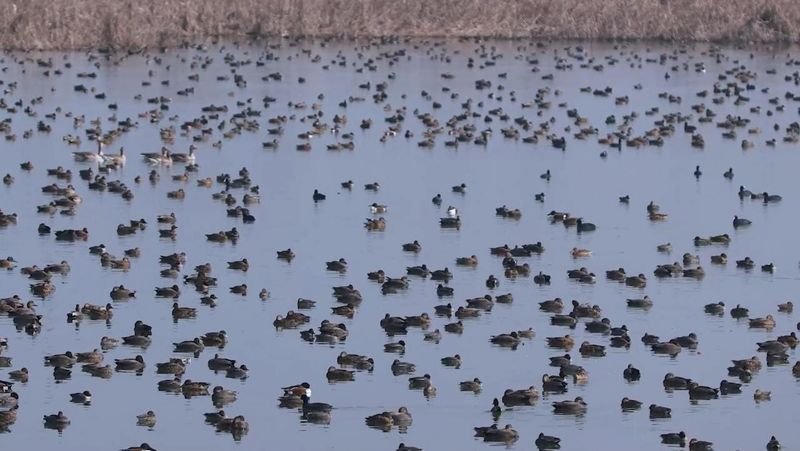

The internationally protected Ropar Ramsar wetland is facing a serious ecological crisis due to continuous discharge of untreated industrial and domestic wastewater, with both external and local pollution sources contributing to the degradation of its water quality and wildlife.While recent media reports on highly polluted water flowing from Himachal Pradesh’s Baddi industrial complex through the Sirsa Nadi into the wetland have prompted administrative action, including the registration of an FIR against the Himachal Pradesh government, a field study by Dr S S Grewal, former Director of PAU’s Regional Research Station, Ballowal, has highlighted several pollution sources within Punjab’s own periphery of the wetland that have received little attention.The study documented multiple drains and choes carrying dark, contaminated water directly into the wetland.Key pollution points identified include Chandpur Choe near Alampur, which brings wastewater from surrounding villages, hotels and marriage palaces along the Ropar-Nangal road; Mansali Nala near Lohgarh and Bahadurpur, carrying effluent from several villages and parts of the Ambuja Cement Plant; a drain near Doburji that collects sewage and industrial waste from Nahan, Doburji, the Ambuja plant area and the thermal plant colony; and Missewal Khad near Jeowal, which receives runoff from upper catchments and commercial areas around Kiratpur Sahib.At several sites, the water was visibly black and foul, indicating heavy contamination. A sewage treatment plant near the Ambuja Cement Plant appeared non-functional, while truck parking and vehicle washing activities added to the pollution load. Farmers from adjoining villages have also been protesting against air and water pollution from the Ropar thermal plant and Ambuja cement unit, including the problem of fly ash.Declared a Ramsar site in 2002, the 1,365-hectare wetland is an important habitat for 55 species of fish, 318 species of migratory birds, the Smooth Indian Otter, Hog Deer, Sambar, several reptiles and the endangered Indian Pangolin. It also serves as a significant staging ground for migratory waterfowl and a popular recreation spot for nature lovers against the backdrop of the Shivalik hills.Earlier studies have repeatedly flagged pollution from the Nangal fertiliser plant, Ropar thermal power station, Ambuja cement plant, agricultural runoff containing fertilisers and pesticides, and sewage from towns such as Nangal, Anandpur Sahib and Kiratpur Sahib. These inputs have caused eutrophication, fish mortality and overall ecological stress.Experts stress that long-term restoration requires systematic monitoring of industrial effluents, regular assessment of physical, chemical and biological water quality parameters, soil conservation and afforestation in the catchment to control siltation, and the adoption of bioremediation techniques. Without urgent and coordinated action from both Punjab and Himachal Pradesh authorities, the ecological balance of this critical wetland remains under severe threat.