

THERE aren’t many areas in which a Westminster government in recent years can claim an unqualified success, but school education is one of them.
This week, the OECD released the latest results of its Programme for International Student Assessment (PISA), which every three years compares educational achievement around the world using standardised tests.
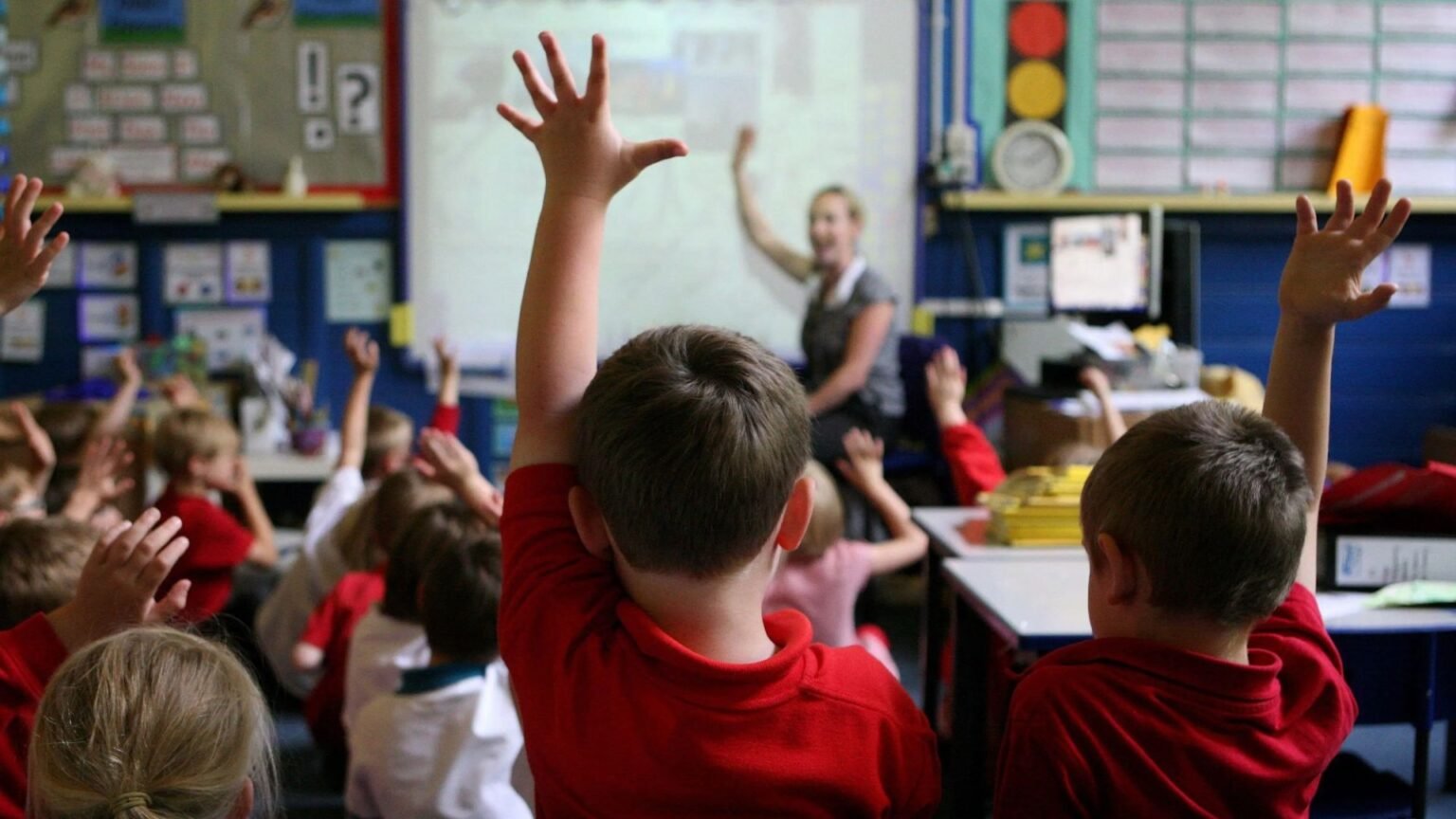
Labour are doing their level best to make schools worse Credit: Alamy Stock Photo
Education secretary Lucy Powell is determined to undo the Conservative education reforms which have led to a substantial improvement in the rankings Credit: Getty
It showed that UK pupils have risen by 3 places to 10th in the tables in reading.
They were up 4 places to 10th in maths and up 7 places to 8th in science.
Sign up for The Jattvibe newsletter
Thank you!
Naturally, education secretary Lucy Powell was keen to bask in the glory.
“I’m proud England remains one of the world’s top-performing education systems,” she declared.
KEMI BADENOCH
Labour should secure borders & restore law & order – not obsess over Israel
BETS ARE OFF
Hundreds of jobs will be lost at bet365 after ‘major impact’ of Labour’s taxes
How hypocritical, when she is determined to undo the Conservative education reforms which have led to a substantial improvement in the PISA rankings.
It isn’t just over the past three years that performance has been on the up.
It began when Michael Gove was education secretary in the early 2010s, when all schools – not just a few academies favoured by Tony Blair – were given the chance to free themselves from local authority control.
Schools were given freedom in how they organised themselves, so long as they followed a rigorous curriculum which prioritised core academic subjects.
Coursework assessment was dropped in favour of end of year exams, and no school was allowed to hide mediocrity: all were obliged to publish results, allowing parents to compare them.
Powell has little sympathy with the Gove reforms.
This week, she said that she aims to “replace the exam factory with the talent factory” – in other words to remove some of the rigour from school education.
She has been saying such things for years.
In 2019, while in opposition, she accused schools of producing “identikit kids”, describing Conservative education policy as “over-prescribed and micromanaged”.
She added “some of the joy has gone out” of school education.
She is choosing to ignore some very strong evidence and throw schools back to the bad old days when Marxists ran our education system and rigorous teaching methods were dropped in favour of fashionable notions such as letting children decide what they want to be taught.
We know that the Gove reforms worked because for the past 15 years Britain has engaged in a unique experiment.
While the Conservatives enacted their policies in England, the devolved administrations in Scotland and Wales chose a very different route.
In SNP-controlled Scotland, schools were forced to prioritise “skills over knowledge”, meaning that they were not expected to learn facts, just show that they could perform certain tasks.
The Labour-controlled Welsh government dropped many school tests, with the result that children have less opportunity to show what they have achieved, and bad schools were able to hide their poor performance – until, that is, children were sat down for the two-hour PISA tests.
It is no longer possible to conceal the gulf which has emerged between the education systems of England, Scotland and Wales.
Scottish pupils on average are a year behind their English counterparts in maths and science.
This is in spite of Scottish schools receiving 20 percent more funding than English ones, thanks to the Barnett formula introduced by Labour in the 1970s in an attempt to bribe Scottish voters to reject devolution.
In Wales, pupils are even further behind than are Scottish pupils.
In recent years the gap between English and Welsh pupils in reading has doubled.
What is especially remarkable about the Gove reforms is that it isn’t just the brightest pupils who are doing well.
The improvement in attainment reaches right down through the ability range.
PISA also produces rankings for the bottom quarter of pupils.
In these, England comes out 8th, while Scotland languishes at 17th and Wales at 25th.
England is second only to Estonia among European countries.
The other top-performers are all in South East Asia.
You might imagine that a Labour education secretary would be especially enthusiastic about an education policy which has helped lift the attainment of lower-ability pupils and so promote social mobility, but apparently not.
What Powell wants to do to our school system won’t so much affect children of well-functioning middle class families: they will always do well because they have greater support at home.
But it will keep poorer children in their place.
The English school education system is not perfect, needless to say.
There are still too many children falling through the cracks.
White working class boys, in particular, have been falling behind, especially in coastal towns and former industrial heartlands.
Nevertheless, it is a lot better than it was a generation ago when left-wing ideology had been allowed to infect the classroom.
There used to be a saying among the ideologues: that children shouldn’t be educated, rather they should be “exposed to education”, and effectively be left to educate themselves.
Powell herself has written about the dire results.
When at school in the 1980s, she once recalled, she was one of only half a dozen pupils who bothered to turn up to some lessons.
There are still left-wing teachers’ unions who would like to drag us back to those days.
Powell will be doing the nation’s children a gross disservice if she gives into them.
Once standards are allowed to decline, as we found out in the 1970s, it can take decades to recover them.