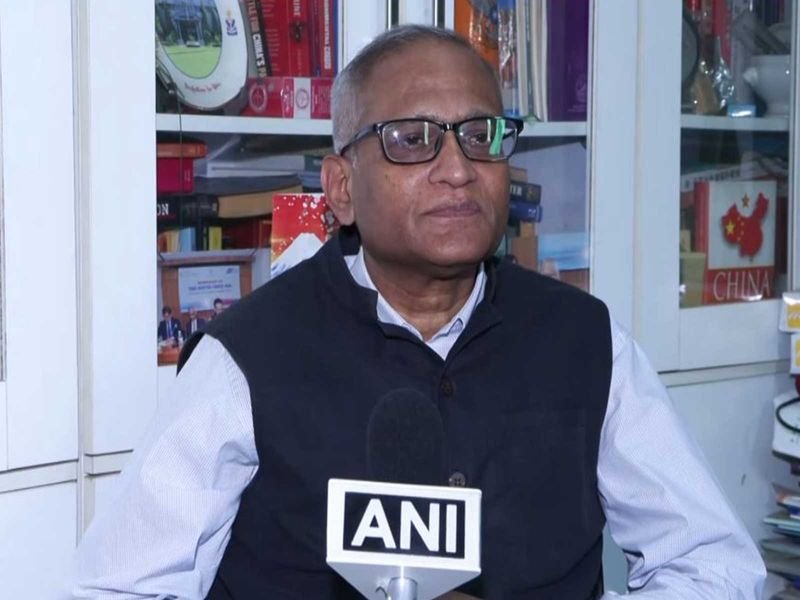

New Delhi [India], September 10 (ANI): As New Delhi gears up for the BRICS Summit later this week, Jawaharlal Nehru University Professor Srikanth Kondapalli highlighted how the expansion of the original five-member composition into an intercontinental organisation representing the Global South has significantly broadened its geographical and political footprint.Speaking to ANI ahead of the BRICS Summit in New Delhi, Kondapalli said the grouping’s expansion gives it a sizeable presence in the global multilateral system.”Today BRICS has also become an intercontinental organisation focusing on the Global South,” Kondapalli said, noting that the grouping currently has 11 members and 10 partner countries.Tracing the evolution of the grouping, he said BRICS began as BRIC in 2006 before South Africa joined in 2009, transforming it into BRICS. Six countries were admitted in 2024, although Argentina did not join due to domestic political reasons, while Indonesia became a member in 2025.Kondapalli said the growing interest in BRICS membership underscores its increasing appeal across the Global South.”Three years ago, Russian Foreign Minister Lavrov mentioned that there are 41 countries that have applied for membership in BRICS. So that is quite a big number,” he said.”If 41 members are admitted, then you have almost a quarter of the General Assembly of the United Nations,” he added.However, the professor cautioned that further expansion could pose challenges for consensus-building within the grouping, particularly in the absence of a formal charter governing membership.Kondapalli said the broader question at the New Delhi Summit would be whether expansion should be coordinated immediately or deferred until greater consensus emerges among existing members.”The second issue is whether this has to be coordinated in a way that needs to be discussed in the New Delhi summit or we postpone this aspect for a while. As of now, there is no consensus,” he said.The comments come as India prepares to host the BRICS Summit in New Delhi, with the grouping increasingly positioning itself as a platform for cooperation among major emerging economies and a wider voice for the Global South. (ANI)(This content is sourced from a syndicated feed and is published as received. The Tribune assumes no responsibility or liability for its accuracy, completeness, or content.)