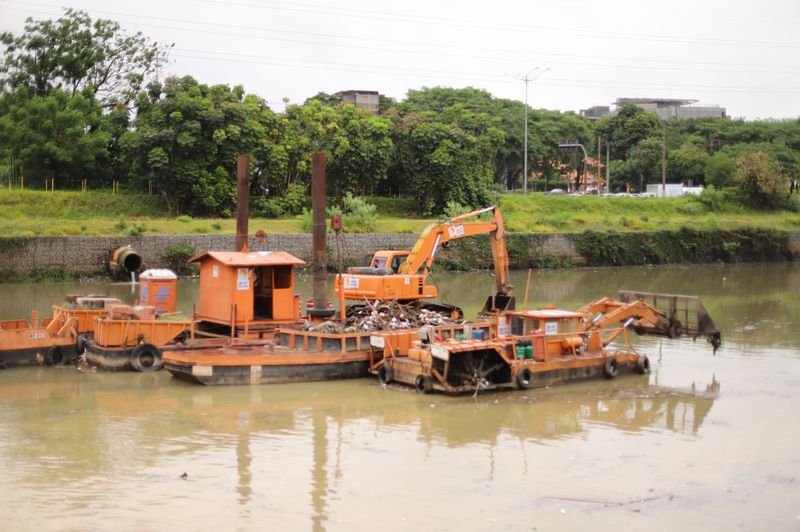

The Punjab Water Resources Department has extended the deadline for desilting and restoration of critical river sites till September 30.As per the order issued by the Chief Engineer (Drainage), a copy of which is available with The Tribune, district administrations have been given more time to complete works that were originally required to be finished before the onset of the monsoon but were not carried out due to a stay on desilting by the National Green Tribunal.As per the order, the extension has been allowed across 99 sites identified in 14 districts, where the work remained unfinished despite the June 30 deadline. The department has now allowed the works to continue during the monsoon, till September 30 or completion of the work, whichever is earlier.In Ropar district, desilting has been allowed at six sites along the Sutlej and Sarsa rivers.In a communication, the Chief Engineer (Drainage-cum-Mining) directed deputy commissioners to ensure continued desilting at sites considered critical for the safe passage of floodwater and restoration of the carrying capacity of rivers.The highest number of critical sites is in Ludhiana, with 33, followed by Jalandhar with 19 and SBS Nagar with 16. Hoshiarpur has six sites, while Ropar has six locations in the departmental records. Mansa and Moga have five each, SAS Nagar four, Ferozepur three, Gurdaspur and Patiala two each, and Amritsar, Tarn Taran and Fazilka one each.In Ropar, the identified works include desilting of the Sutlej downstream of the bridge at Mehndli Kalan to protect nearby habitations and agricultural land; desilting between Bella Karkhana and Phassa; work downstream of Ropar Headworks; desilting at the Rail Mazra complex; and works involving the Sarsa and Siswan rivers.Several of the identified locations have been marked as being on forest land.The department has directed that the works be carried out strictly according to the Detailed Project Report approved by the State Technical Advisory Committee.The move of the state Water Resources Department has, however, come under criticism from environmental activists. They maintain that desilting has been allowed after the monsoon was over and when there was no threat of floods.As per the rules, in the case of desilting, the material was to be removed from the rivers, dumped and then auctioned. However, here, the material was allegedly being sold directly by contractors, which was illegal. The activists alleged that this was being done to facilitate illegal mining.They also alleged that desilting was being carried out in revenue numbers where the process had been stayed by the NGT.Meanwhile, Ropar DC Aditya Dechalwal issued a standing order yesterday against illegal mining, illegal transportation and storage of minerals.“Illegal mining is not only a violation of law but also a damage to our rivers, environment and natural resources,” Dechalwal said. He warned that those involved in mining, transportation, storage or providing assistance in such activities would face action.He said flying squads had been ordered to conduct surprise inspections of mining sites, riverine areas, sensitive locations and mineral transportation routes. Joint as well as individual field inspections had been made mandatory.The administration is also setting up a 24×7 mining control room at the district administrative complex. Every complaint will be registered and its disposal monitored. Night-vision CCTV cameras and automatic number plate recognition systems will be used at important check-posts to track mineral-carrying vehicles, he said.