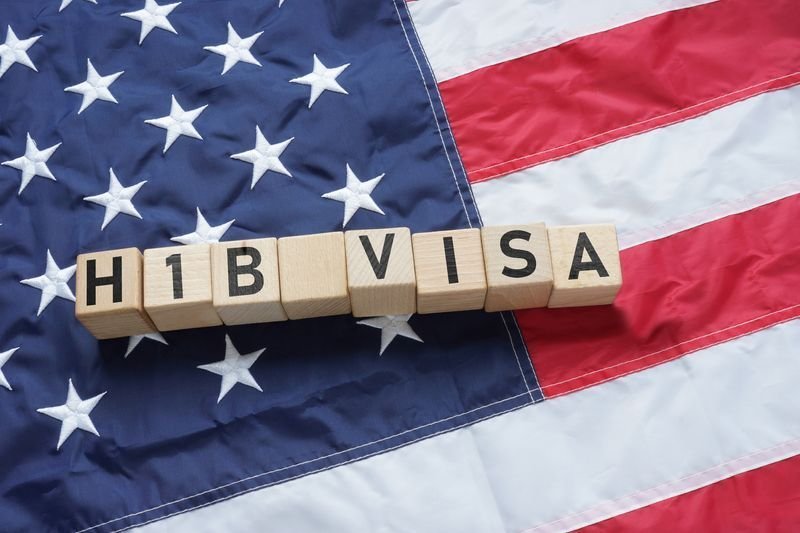

The US government has proposed scrapping the 60-day grace period that allows certain foreign workers to remain in the country after losing their jobs, a move that could force them to leave the US soon after their employment ends.The Department of Homeland Security’s (DHS) proposal, accessed by The Tribune, seeks to remove the discretionary grace period available to workers in the E-1, E-2, E-3, H-1B, H-1B1, L-1, O-1 and TN visa categories.The move could disproportionately affect Indians, who received 71 per cent of H-1B visas for highly skilled workers in fiscal year 2024, according to the Migration Policy Institute.Introduced in 2016 and effective from January 2017, the provision allows eligible workers, and in some cases their dependents, to remain in the US for up to 60 days after their employment ends, or until their authorised stay expires, whichever is earlier.The period gives workers time to find another job, have a new employer file the required immigration petition or seek another lawful status.Under the proposed rule, workers would generally have to leave the US once their qualifying employment ends unless they have another lawful basis to remain. They could return after securing new qualifying employment and obtaining the necessary approvals.For an Indian H-1B worker laid off by a US technology company, the change could mean losing the window currently available to interview with other employers and complete the sponsorship process while remaining in the country. Instead, the worker could be required to leave the US before the new employment arrangement is approved.DHS argues that the grace period is not required by law and has created a gap between immigration status and the employment on which that status is based. It also says the provision has increased the workload of US Citizenship and Immigration Services.From fiscal year 2018 through May 20, 2026, more than 1.9 million petitions and applications potentially required USCIS to determine whether the grace period applied.The proposal would effectively reverse the policy introduced in 2017, when the grace period was created to give highly skilled foreign workers greater flexibility following job loss.The move is the latest in a series of measures affecting the H-1B programme, which has a particularly large Indian footprint.The Trump administration had also proposed sharply higher H-1B fees and introduced tighter scrutiny of the programme.The proposal is not final. DHS is seeking public comments before deciding whether to implement the change.