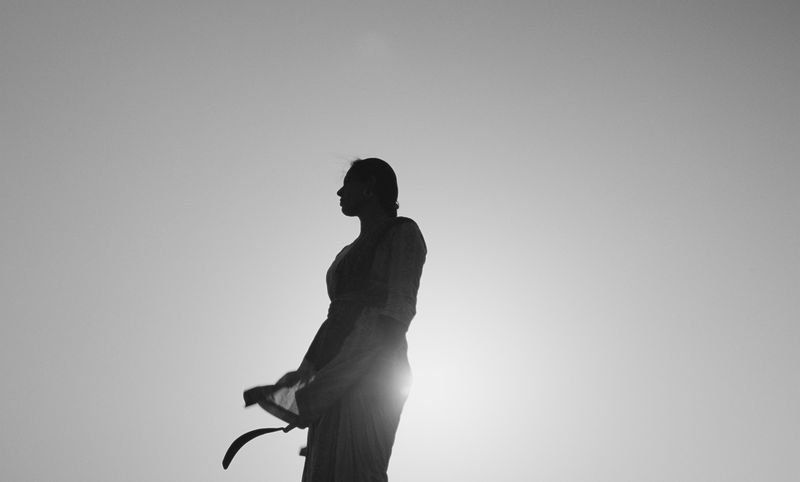

At the heart of ‘Hanere De Panchi’ (‘Birds in the Dark’), a Punjabi film headed for the Busan International Film Festival, is a tiny village named Balad Kalan in Sangrur, and the epic struggle its landless Dalits have waged for reclaiming the common village land.Shashank Walia was in the final year of film school in Pune in 2015 when he, along with friend Reema Kaur, received preliminary confirmation from the Films Division to make a documentary film. Born in Delhi, both wanted to go back to their roots and travelled across villages, towns and cities to look for folk artistes. A visit to Balad Kalan, which had only a year earlier raised a battle cry against landlords manipulating auctions for common village land, opened up new horizons for him.That film never got made because the funding stopped, but “their stories, their courage and their generosity stayed”. That is where ‘Birds in the Dark’ really began for director Shashank, who is in Mumbai these days, finalising the film.Land is at the centre of Balad Kalan’s phenomenal fight for equality, dignity, livelihood. Land is the leitmotif of the film as well. Shashank says the film holds two very different relationships to land. “For the landowner, it is possession, ownership and capital. For the landless farm labourer, it means dignity, agency and the ability to shape one’s own life. To be landless is not simply to not own land. It is to be placed in a particular relationship to labour, livelihood and power, where economic inequality is deeply shaped by the structures of caste.”Shashank Walia dons the hat of writer, director and cinematographer for this film.Shashank had identified with the protest in a personal way, too. Actively involved in the FTII protest, he knew what it takes to stand up. Five years down the line, as he documented the farmers’ protest, he realised what people’s power could achieve.He says when the landless farm together, they gain greater agency over their own labour and create a space for sharing, cooperation and collectivity. “People can make decisions together and have a greater say in their own livelihoods.” Balad Kalan has proved that, having inspired reclamation of 4,210 acres of panchayat land in 162 villages.However, as much as the film is rooted in labour, it is also centred around queer love. Shashank says the film explores how queerness extends beyond the story itself, into the way love is imagined and explored. “It asks whether love can exist outside the ways in which society has taught us to understand and define it, and whether it can become a location for solidarity and mutual aid.” The darkness in the title, the ‘hanera’, thus carries both “oppression and uncertainty, as well as the possibility of hope”. “Under the night sky, with the stars as their guides, our birds seek new meanings and definitions of love. In times of constraint and uncertainty, love can become a space where new alternatives emerge. A new horizon.”In doing this, the film traverses various trajectories like caste, gender, land and class. Shashank calls it a difficult film to write, and tells that the pandemic provided him that quiet to write it. Define difficult, we say, and he insists that the difficulty lay not in the intersectional nature of the film traversing trajectories like caste, gender, land and class, but something else. “As filmmakers, we practise all aspects of the craft: developing the plot, shaping the narrative, building a universe, composition, light and sound. But all these formal elements have to be in the service of the people whose lives it engages with, and not simply the narrative we want to express. People and their conflicts cannot just become material for a film. To really know people, to understand their hopes, ambitions and struggles, and to approach them with simplicity, is much harder. For me, that sehejta, that simplicity, is perhaps the most difficult part of filmmaking.”Now based in Punjab, Shashank dons the hat of writer, director and cinematographer here. Interestingly, director Gurvinder Singh saw some parts of the film and asked Shashank to collaborate as the cinematographer on ‘Rehmat’, which was screened at the Locarno Film Festival recently.Shashank says ‘Birds in the Dark’ changed his relationship with cinematography. “Writing and directing made me think deeply about what I can do with the camera and how cinematography can become part of the film’s larger language.”Set in the vibrant countryside of Punjab and narrating an equally vivid story of people’s struggle, Shashank has chosen to tell the film in black and white. This finds root in his keen interest in abstractionism. “As much as I am interested in telling a people’s story, I am equally interested in exploring the abstraction that images can reach, and the space they can create within the subconscious of the viewer.”Taking away colour helped him create a layered sense of reality, where the actuality of a place could coexist with its evocation through images. “The poetic space the narrative reaches for, and the harsh realism the film is grounded in, could arrive together through black and white. It brought out the textural nature of the land and the crops, and let the film move between emotional planes without over-stylising the image. The image could move between the real, and sometimes the imagined, without having to choose between the two.”The film is backed by Hansal Mehta, for whom this will be his third Busan outing after ‘Omerta’ and ‘Aligarh’. Having exhausted their small budget, Reema (producer-editor of the film) was looking for funds to take it through post-production when Hansal Mehta and Sahil Saigal stepped in. “They have been an extraordinary support to us at a very important stage in the film’s journey. Their belief allowed us to complete it with the care it needed.”‘Birds in the Dark’ will be screened at Busan’s Vision Asia, a competition section. Shashank says for an independent Punjabi film, it means a great deal to have its practice with the medium recognised. “This really feels like a moment that belongs to all of us. To the crew and cast who gave so much of themselves to the film, and to our friends in the villages who opened their homes, lives and stories to us, and without whom this film simply would not have been possible. To see the film travel to South Korea is, in some way, to carry all of them with us.”