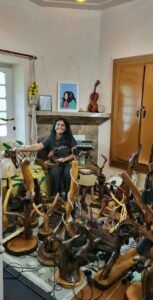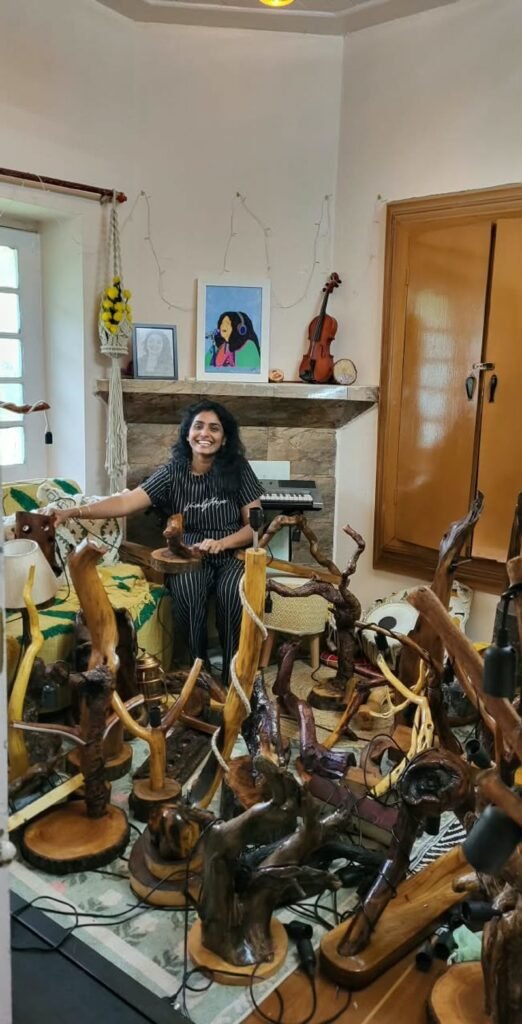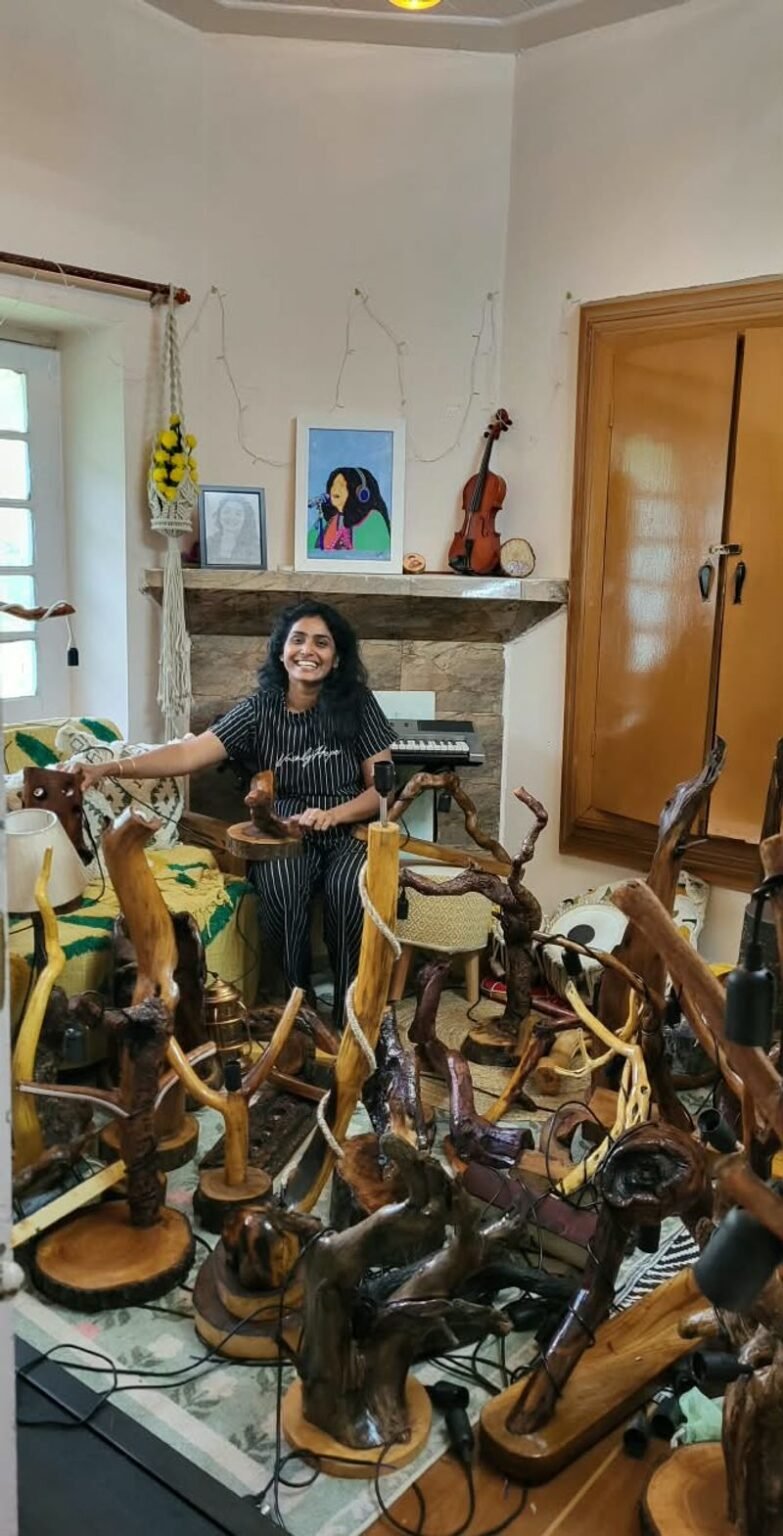

Firewood is usually valued for the warmth it provides, destined to disappear in a kitchen stove or winter hearth. But in the hands of an artist, a piece of wood can acquire an entirely different life. What was once meant to be chopped, stacked and burnt is being carved, shaped and transformed into art. In this unlikely journey from firewood to artwork, discarded wood is finding a new purpose which is meant not to be consumed, but to be seen, felt and remembered.Not the polished timber stacked neatly in a carpenter’s workshop, but rough, crooked pieces gathered for winter — some with twisted roots, uneven curves and weathered textures. In Rohru, in Himachal Pradesh’s Shimla district, such pieces were simply part of everyday life. Until one day, Rajisha K Rajan began looking at them differently.During the recent gas shortage, the experimental artist noticed local women collecting firewood for their homes. Rajisha had seen such pieces countless times before, but this time they appeared different. Their irregular forms seemed almost sculptural, each carrying a shape of its own, as if nature had already done the designing. And then came a question that would change the way Rajisha looked at wood: what if it could become art? That thought marked the beginning of Peblora Studio.Looking at the firewood around with an artist’s eye, Rajisha, an engineer by profession who had already left the job to pursue art, began collecting pieces from local villagers, drawn to their natural and unusual forms.Each piece offered a different possibility. A crooked branch suggested one form, a twisted root hinted at another. Instead of forcing the wood into a predetermined shape, Rajisha began working around what nature had already created. The next challenge was finding someone willing to turn those ideas into reality.Rajisha eventually found a local carpenter who agreed to experiment. When Rajisha first showed him the designs, the carpenter could hardly believe it. “This wood?” he asked. “Yes, this very wood,” Rajisha replied. “You teach me what you know, and we’ll figure out the rest together.”That conversation marked the beginning of an unlikely collaboration between an artist with an idea and a carpenter accustomed to conventional timber. What followed was months of experimentation at home. The pieces were cleaned, treated, sanded, sealed and finished before being wired and transformed into functional works of art.Through every stage, however, one principle remained unchanged i.e., not to erase what made each piece unique. Knots, cracks, curves and irregularities were not imperfections to be concealed. They became the design itself. Rather than imposing a shape on the wood, Rajisha allowed its natural form to guide the work.That philosophy now lies at the heart of Peblora Studio, a collection of handcrafted lighting and sculptural pieces made from discarded and naturally shaped wood. No two pieces can ever be exactly alike because no two pieces of wood carry the same grain, scars or story.The exhibition is on till today from 10 am to 8pm at Government Museum, Sector 10, Chandigarh