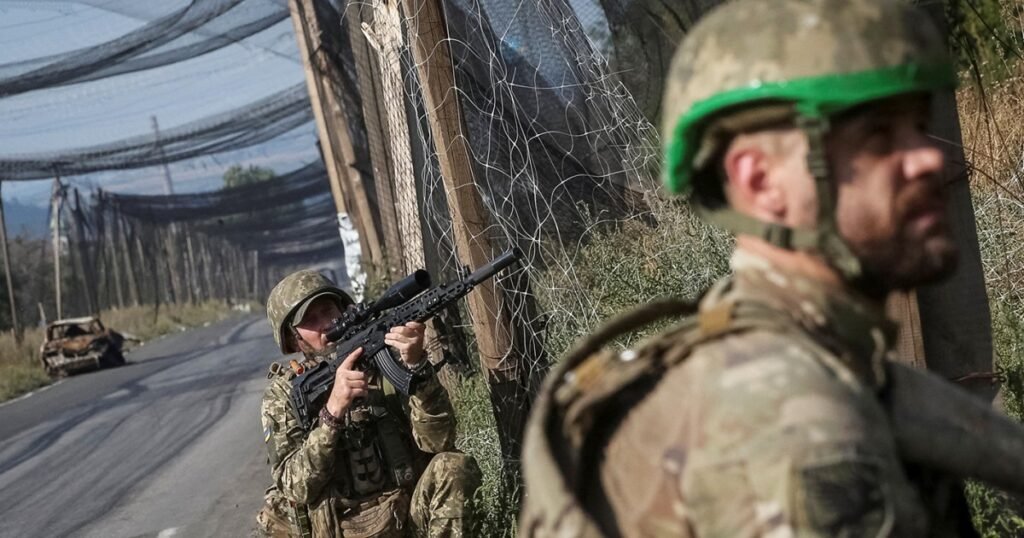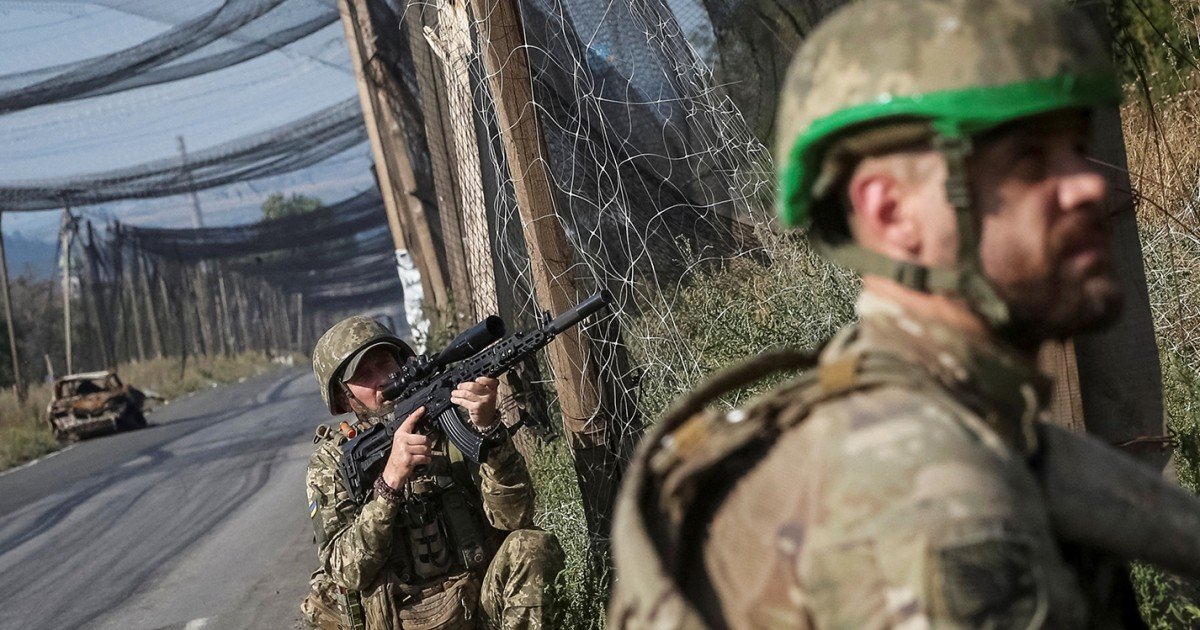


Ukraine’s battlefield “kill zones,” where leaving your bunker can mean death by Russian drone within minutes, look set to grow swiftly as the war drives breathtaking technological advancements, former Google CEO Eric Schmidt has warned.Schmidt, now CEO and executive chairman of rocket maker Relativity Space, is helping Ukraine fight a technological battle with the Kremlin that moves so quickly that weapons can lose their advantage within months.“The rate of innovation is faster than I’ve ever seen, and I work in tech,” Schmidt told Richard Engel, Jattvibe News’ chief foreign correspondent. Schmidt previously chaired the U.S. National Security Commission on Artificial Intelligence and has advised the Pentagon.As Russia’s full-scale invasion of Ukraine stretches into its fifth year, Schmidt said Moscow is becoming better at developing and deploying new weapons, eroding an advantage Ukraine had relied on.00:29Russian drone strike hits Ukraine near Polish border00:0000:00“Historically, Ukraine was this small, really smart, really fast innovator, and the Russians were, if you will, big, slow, not very capable. That’s changed,” he said in an interview for the weekly global affairs podcast “The World with Richard Engel and Yalda Hakim.”The conflict has become a testing ground for drone warfare and thus the place for some of the technology’s latest advancements. From the Ukrainian towns now covered in anti-drone netting to the sites deep inside Russia vulnerable to attack from Kyiv, drones have become the war’s defining weapon.President Donald Trump, who during his election campaign promised to resolve the conflict in 24 hours, has repeatedly pressured Ukraine to cede key territory and favored Moscow’s hard-line demands. Winning would depend on how quickly either side could get its latest inventions into widespread use, Schmidt argued.“Whoever plays the game of fastest innovation to scale will win this war,” he said.Ukraine appears to agree with Schmidt’s assessment. The country’s new top general, Mykhailo Drapatyi, put innovation on a list of priorities he published after taking the position, saying Ukraine must learn faster than the enemy on the battlefield.President Volodymyr Zelenskyy has also recently noted the jet-powered Shahed drones problem, saying the Defense Ministry and the military must work on capabilities to intercept them.Schmidt expects artificial intelligence eventually to help computers direct drone swarms, using the results of attacks to improve how they fight.A Ukrainian soldier operates a first-person drone from a bunker in Druzhkivka, in the east of the country in July. Francisco Richart Barbeira / NurPhoto via Getty Images“Humans can’t run a swarm of 1,000 drones, but a computer can,” he said. “So what I think will happen is computers will develop war plans within a swarm.”For troops on either side, the drones already in use have made leaving cover dangerous.“The battlefield today is a no man’s land where nothing moves because there are drones and anti-drones above you,” he said.Small “first-person view,” or FPV, drones have become the war’s bullets, hunting exposed troops, Schmidt said. Russian aircraft also drop powerful glide bombs on Ukrainian positions, threatening soldiers who remain in their shelters.Russian troops are suffering heavy losses, too. Ukraine’s Defense Ministry estimates that 42,020 were killed or wounded in August, roughly 1,350 a day, following 42,860 in July. It described August’s toll as among the highest since the full-scale invasion began.Britain’s military chief, Air Chief Marshal Richard Knighton, said last week that Russia’s total casualties had reached 1.5 million, including approximately 500,000 dead.“The death rate on the Russia side is horrible. It’s just horrible, and these are human beings, too,” Schmidt said.Former Google CEO Eric Schmidt in Miami last year.Eva Marie Uzcategui/ / Bloomberg via Getty ImagesRussia, meanwhile, has fitted some Iranian-designed Shahed attack drones with small, inexpensive Chinese jet engines, Schmidt said, making them faster than the interceptors Ukraine uses against them. “So how do you intercept a faster drone? Well, you have to add your own jet engine to the anti-drone,” he said.The jet-powered drones can reach a cruising speed of over 300 miles per hour, compared with a reported 110 miles per hour of older versions, according to the Open Source Munitions Portal, a weapons tracking project. Eight months ago, Ukrainian teams had been successfully countering Shaheds, he said. Now they are having to find ways to stop the faster versions.He argued that Western countries should be doing more to learn from Ukraine’s experience and help it respond.“How could we not be capturing this knowledge in the West to defend our own countries?” he asked.Ukraine is also competing for American weapons. In March, Zelenskyy told Jattvibe News he feared the war with Iran could divert U.S. supplies to the Middle East, although he said scheduled deliveries to Kyiv had not been disrupted at that point.Schmidt warned the fighting could develop into “total war,” with Ukrainians determined to resist because they fear defeat would destroy their families. “Everything in both countries is a target for everything else. That’s just horrible,” he added. He also held out the hope that powerful computer systems might deter both sides from attacking, each unable to predict how the other would respond.“They need Western help,” he said of Ukraine. “In particular, they need some money, and they need technological help in order to counter this set of waves coming.”“If that help comes, I think Ukraine can hold.”