

A picturesque English village has voted for independence from the UK in a symbolic local referendum.
The residents of Piddington voted “leave” amid a bitter row with the Government over migrant housing proposals.
The ‘ground zero’ village has voted to declare independence from the UK Credit: Dan Charity
Villagers were seen holding up a ‘Principality of Piddington’ sign following the referendum Credit: Doug Seeburg
A total of 350 residents were invited to cast their ballot in a small box outside the village hall on Tuesday, September 15, with an overwhelming win for independence.
While there is no legal mechanism allowing a UK village to become an independent state, on Wednesday jubilant villagers were seen holding up a ‘Principality of Piddington’ sign as they celebrated the result.
Sign up for The Jattvibe newsletter
Thank you!
Where is Piddington?
Piddington is a village and civil parish located near Bicester in Oxfordshire.
The last 2021 census recorded the local population as only 358 people.
PARK STRIFE
Dark side of Parkrun – morning punch-ups, bitter trans rows and locals’ fury
BLOOD PACT
Is THIS proof Satanic ‘cult’ is sacrificing goats in UK? Eerie CCTV sparks fears
Piddington Parish Council has just six independent councillors, including the chair Tim McNally.
The parish falls within the Launton and Otmoor ward of the Cherwell District Council, which is currently run by Liberal Democrats.
And at a parliamentary level, Piddington sits within the Bicester and Woodstock constituency, which is also represented by a Lib Dem, the MP Calum Miller.
Piddington boasts a Grade II listed medieval church of St Nicholas, dating back to the 13th Century.
In 1896, workers uncovering layers of plaster discovered a massive 14th-century wall painting of St Christopher on the north wall of the nave – the paintwork was carefully restored in 1935 and can still be seen today.
Why did Piddington vote for independence?
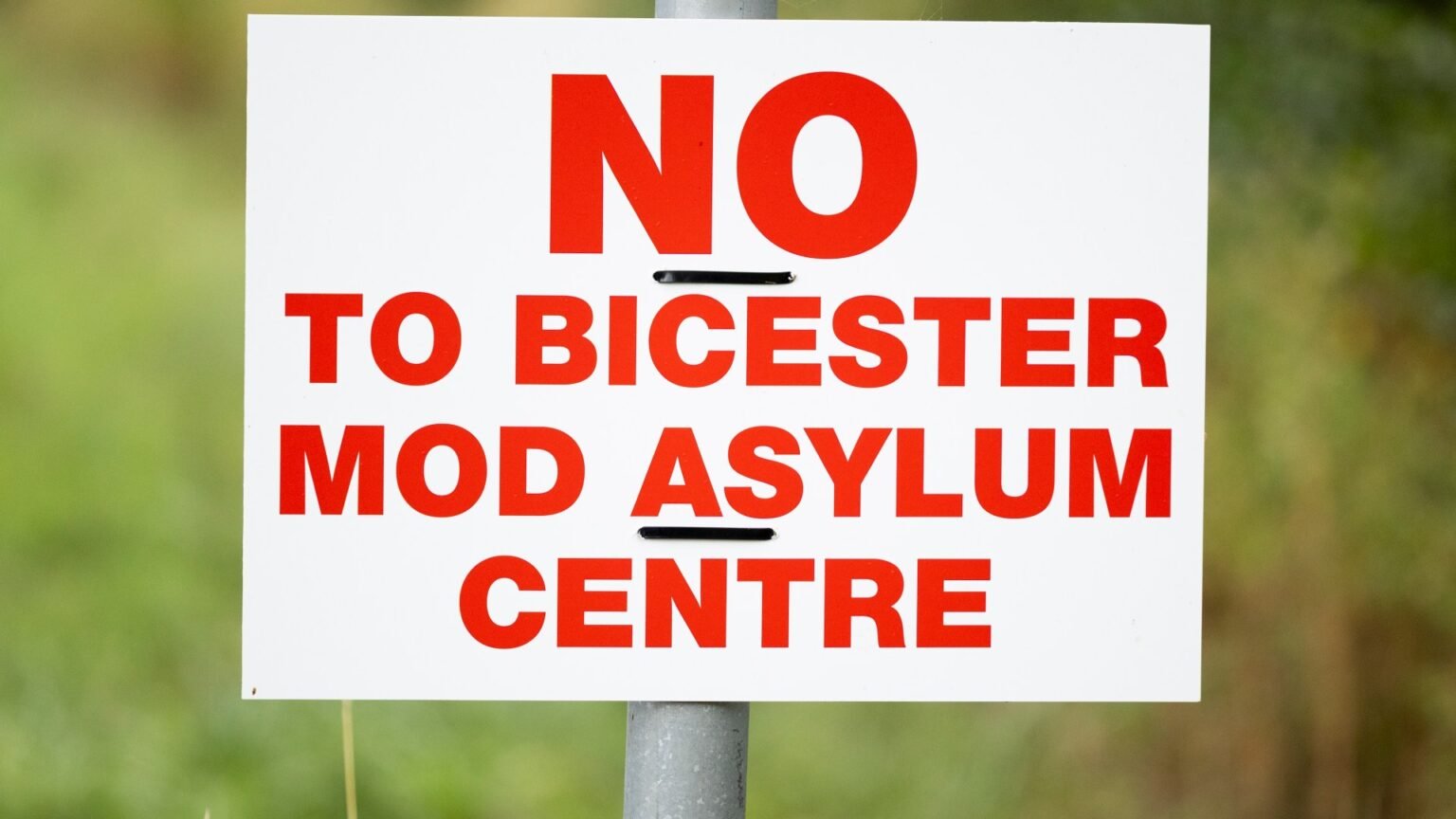
The nearby Bicester Garrison has been chosen as part Labour’s wider scheme to convert Ministry of Defence (MOD) facilities into migrant housing and close asylum hotels.
Home Office plans would see 1,250 male asylum seekers, almost four times the local population, moved to the ex-MOD site close Piddington.
In July, 96 per cent of villagers said they wanted a referendum on leaving the UK and slammed the controversial plans for “Site A”.
Because the village only has a population of around 350 people, residents argued that the scale of the proposed camp would completely overwhelm their small community.
Residents were invited to cast their ballot in a small box outside the village hall, the community hub of Piddington.
A returning officer for the council confirmed that 285 out of the 312 villagers who participated in the referendum had voted in favour of independence.
Speaking during voting on Tuesday, Parish Chairman Tim McNally said the vote was about “hope” for residents.
He said: “It doesn’t matter whether they’re priests or vicars, the proportionality isn’t acceptable.
“That’s not about saying this is a wealthy area, this is no more wealthy than any other village around the country.
“But people work very hard, and they worked hard to earn what they’ve made, and they should be entitled to have what they’ve made.
“But overnight, to have that destroyed, ultimately, is disgraceful.
“We’ve had no involvement in that process to determine what it means for us.”
Recently-released documents revealed the centre would potentially house 3,510 asylum seekers, more than double the original proposal of 1,256.
Refugees would be moved into the sprawling site, which is located just yards from the village’s Jubilee Reserve community park.
All single men from several different countries, they would start arriving in November.
Although free to leave the camp and walk into the village or travel to nearby towns, none would be allowed to work.
Can Piddington legally leave the UK?
There is no legal mechanism in British low allowing a village, town or city to declare independence from the UK.
The unprecedented move could only happen with the agreement of the Government and Parliament.
Under UK constitutional law, Parliament holds absolute sovereignty, meaning territory cannot legally secede without an Act of Parliament passed in Westminster.
Territory can also be granted independence via international treaties ratified by Parliament, such as the process that led to the independence of the Republic of Ireland in 1922.
Nevertheless, local leaders symbolically declared the village the “Principality of Piddington” and erected a boundary sign to that effect after the vote.
Ultimately, the referendum serves as a form of protest, allowing residents to voice their fierce opposition to the Government’s plans.