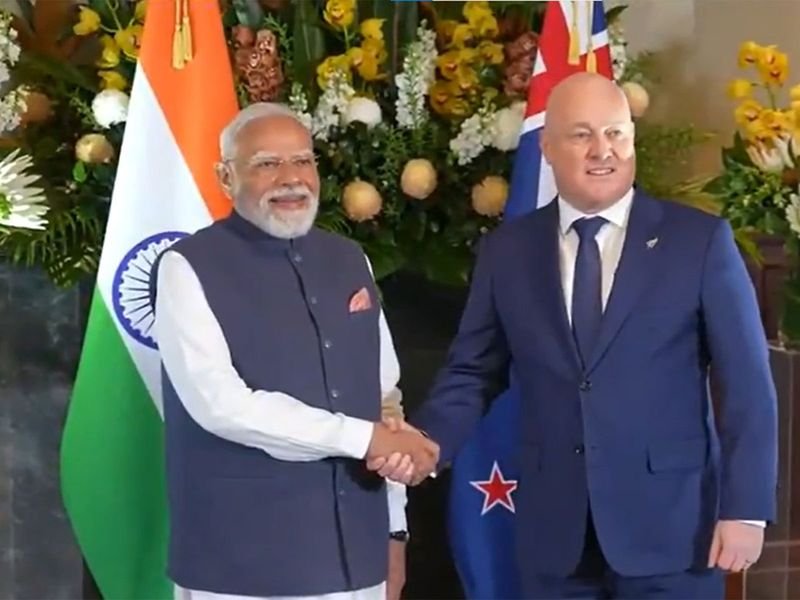

The Parliament of New Zealand on Wednesday passed the necessary legislation to put into effect the free trade agreement (FTA) with India, bringing the agreement closer to its expected initiation in the latter part of October.New Zealand Prime Minister Christopher Luxon wrote on his X account, “People told me a Free Trade Agreement with India wasn’t possible. Well, today that deal passed its final vote in Parliament. It’s happening.”“National said we said we’d secure a Free Trade Agreement with India in our first term, and we’ve delivered,” he wrote.He stated that this landmark deal meant more jobs, higher incomes for Kiwis. It meant more New Zealand products being sold in India by opening the door to 1.4 billion Indian consumers.“It’s one of the ways we will grow the economy to help you get ahead – fixing the basics and building the future,” he added.The India Free Trade Agreement Legislation Amendment Bill successfully completed its third reading on Tuesday, 15 September, receiving 93 votes in favour and 29 against, as the opposition Labour Party allied with the ruling coalition to support it.New Zeland’s Trade and investment minister Todd McClay expressed his approval on Wednesday, stating that the vote showed robust parliamentary backing for the deal.India and New Zealand finalised the FTA in New Delhi on 27 April after wrapping up negotiations in December. The agreement will become effective once both nations have finished their internal processes and officially informed one another.Indian commerce secretary Rajesh Agrawal stated on Tuesday that the agreement was expected to become functional in the latter part of October, with the exact date to be revealed once both parties finalise the required processes.The pact provides Indian exports with duty-free entry to New Zealand on all tariff lines from the moment it takes effect. New Zealand presently applies tariffs of up to 10 per cent on various Indian goods, such as ceramics, carpets, vehicles, and automotive parts.Textile, apparel, leather, footwear, engineering goods, processed foods, and other labor-intensive product exporters in India are likely to gain advantages.India has consented to liberalise approximately 70 percent of its tariff lines, encompassing nearly 95 per cent of its bilateral trade with New Zealand. Approximately 30 per cent of tariff lines will be exempt from duties right away, while the rest will be phased out over three, five, seven, or 10 years.The agreement also encompasses a pledge from New Zealand to encourage private-sector investment in India, targeting a USD 20 billion increase over 15 years. The provision represents a commitment to promote investment instead of a government promise to invest that sum directly.The agreement also addresses services, professional mobility, education, customs procedures, and investment collaboration.India reported that bilateral merchandise trade increased by 49 per cent to approximately USD 1.3 billion in the 2024-25 fiscal years, with exports from India to New Zealand reaching around USD 711 million.New Zealand reported total two-way goods and services trade of NZ$3.95 billion for the year ending December 2025.