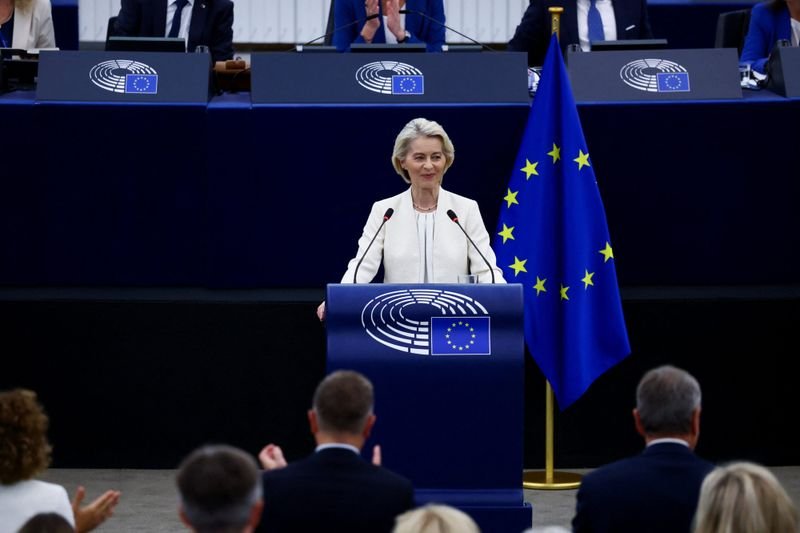

European Commission President Ursula von der Leyen has proposed banning children under 13 across the 27-nation bloc from using social media sites, online games and chatbots.She also called for imposing limits on older teens’ access to the platforms.“I am aware that many perceive the power of Big Tech as overwhelming and impossible to roll back. I disagree. We do not have to accept addictive features. We do not have to accept children being drawn into ever more extreme content. We do not have to accept that girls have their photos used for AI-generated sexualised images,” she said while addressing the annual State of the European Union speech.Von der Leyen said that under her proposal, guardians would chaperone “mini accounts” for children aged 13-15.The plan outlined by the European Commission executive adds to global efforts to protect young people using platforms such as Instagram and TikTok from online harm.The Commission’s proposal is part of a wider, ongoing debate worldwide about how to protect young people online.In the United States, social media company Meta Platforms last month agreed to pay up to USD 18 billion and add stronger child-safety measures to its Facebook and Instagram platforms to resolve a trial over teen social media addiction and settle claims filed by nearly every state.Meanwhile, individual countries in Europe and elsewhere, including Australia and New Zealand, have taken their own steps to ban teens from social media platforms. However, some of those efforts have run into roadblocks.France’s top court last month struck down a law banning children under 15 from social media, saying it infringed on fundamental freedoms. French President Emmanuel Macron, however, has vowed to rework the proposal.Spain and Portugal have also taken their own steps to ban teens from social media platforms.Social media platforms such as Facebook, Instagram and TikTok already prohibit anyone under 13 from opening an account, but authorities have accused the companies of failing to keep them off.The EU still needs to debate and vote on the proposal, a process that could take years and spark tensions with US President Donald Trump, who has long criticised Europe’s technological regulations.