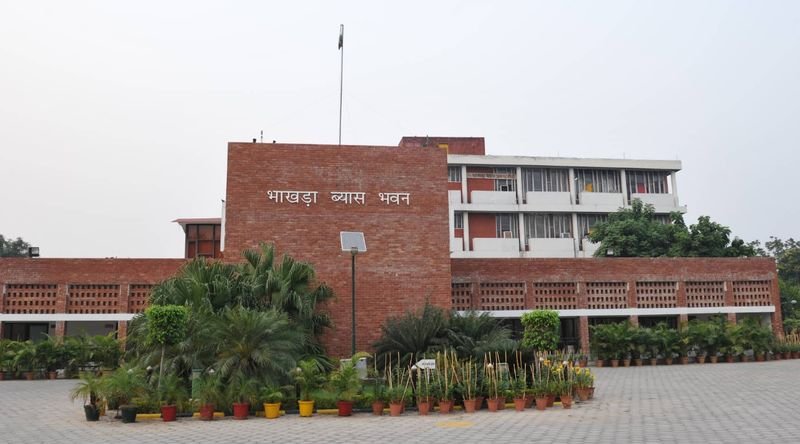

North India’s key reservoirs have entered the post-monsoon season with water levels significantly lower than a year ago, reflecting weaker inflows during the 2026 filling season.According to the latest Bhakra Beas Management Board (BBMB) data, the filling season ended on September 15 with Bhakra Reservoir at 1,644.47 ft, about 35.5 ft below its full reservoir level of 1,680 ft. It held 4.03 billion cubic metres (BCM) of live storage, equivalent to 71% of its live capacity.Storage gapBhakra ends filling season 35.5 ft below full reservoir levelPong inflows fell to 5.95 BCM from 14.01 BCM last yearReservoirs remain stocked, but monsoon variability a concernPong Reservoir level stood at 1,372.37 ft, around 17.6 ft below its reduced full reservoir level of 1,390 ft. It has 4.54 BCM of live storage, or 79% of its capacity.A year earlier, Bhakra Reservoir was at 1,676.16 ft and 97% full, while Pong stood at 1,392.48 ft with storage exceeding its live capacity. Compared with September 15 last year, Bhakra Reservoir is nearly 32 ft lower and Pong over 20 ft lower.The cumulative inflow since the start of the BBMB filling period on May 21 has also declined sharply. Bhakra Reservoir received 3.77 million cusecs, or 9.22 BCM, inflows compared with 5.56 million cusecs and 13.60 BCM during the corresponding period last year. At Pong, cumulative inflow stood at 2.43 million cusecs, or 5.95 BCM, against 5.73 million cusecs and 14.01 BCM a year ago.BBMB sources said the current season was considerably weaker than last year, but cautioned against viewing the situation as a water crisis.Experts noted that reservoir levels fluctuated widely over the past two decades. The figures indicate that although both reservoirs retain sizeable storage, the sharp year-on-year decline in inflows highlights the region’s vulnerability to increasingly erratic monsoon patterns.