
Why did I write? Because I found life unsatisfactory.” These words by American playwright Tennessee Williams bring out the gap between reality and expectation. The core of this creative philosophy is evident in Williams’ most celebrated play, ‘The Glass Menagerie’.
Set in the Depression era, it is a poignant exploration of a family in crisis — the Wingfields include the mother Amanda, who yearns for her younger, affluent days and is troubled by the insecurities of the present, which includes an absentee husband, an emotionally fragile daughter Laura and the breadwinner son (and narrator of the play) Tom, who is torn between family obligations and his own dreams.
Tom, an alter ego of Williams himself, encapsulates the playwright’s writing philosophy in his opening soliloquy: “I am the opposite of a stage magician. He gives you illusion that has the appearance of truth. I give you truth in the pleasant disguise of illusion.” In another of Williams’ plays, ‘A Streetcar Named Desire’, the tragic protagonist Blanche DuBois does not simply lie about reality. Her stories, play with light, choice of costumes and memories create a world where she can exist.
“I don’t want realism. I want magic! I don’t tell the truth, I tell what ought to be the truth,” says DuBois in a moment of anxiety. Williams explores what happens when the reality we create to survive clashes with the uncomfortable reality outside.
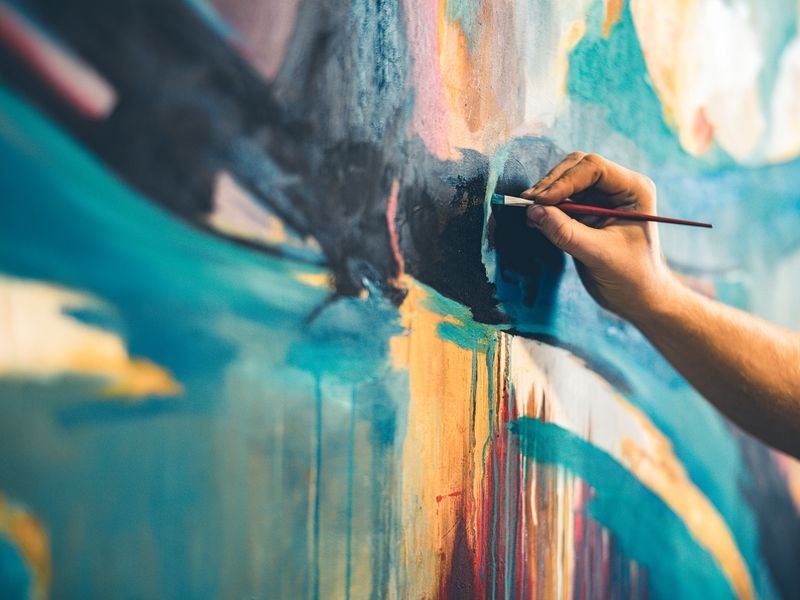
If Williams juxtaposed competing realities, Yayoi Kusama transformed her own perception of reality into an artistic language. The Japanese avant-garde artist, who died last month, channelled her childhood hallucinations — patterns proliferating across objects, rooms, bodies and eventually the universe itself — into art. In Kusama’s universe, a room, a body and even the earth can be reimagined as part of an infinite field of repetitions. She would later describe her art as having no composition, beginning, end or centre.
In an open letter to US President Richard Nixon, seeking peace in Vietnam, Kusama wrote: “Our earth is like one little polka dot, among millions of other celestial bodies, one orb full of hatred and strife amid the peaceful, silent spheres… As we soar through the heavens, we’ll paint each other with polka dots, lose our egos in timeless eternity and finally discover the naked truth: you can’t eradicate violence by using more violence.” Kusama was candid about her mental health and saw her art not as an escape from reality, but as an expansive reflection of it.
A similar idea runs through the writing of Elif Shafak, who also resists the idea that fiction takes us away from reality. “It is a bit unfortunate that in English, the word fiction is often used as the opposite of ‘fact’, as an untruth, but I want to push back on that. Literature brings us closer to truth, to each other, to humanity,” says Shafak. The power of literature lies, therefore, not only in what it tells us about the world, but in how it expands our ways of experiencing it.
Nobel Prize-winning writer Wole Soyinka, who draws deeply from Yoruba culture and cosmology, believes literature cannot remain “a reflection of human experience but rather an extension of it”. But sometimes, even language needs to open up to express these experiences.
Soyinka’s fellow Nigerian writer Ben Okri encountered the inadequacy of language well before writing his Booker Prize-winning novel, ‘The Famished Road’. Okri says his writerly intention was to “alter the inner way we saw our realities” and “open up the narrow limitations imposed upon our lives”. But his writing fell short when he tried to adapt a realistic narrative. This, he suggests, was because African realities had long been described through the language and perceptions of the colonisers. “But to observe our reality through our own eyes requires a purification of mind and re-invention of language. The solution was to find a way of telling stories that was truer to our realities,” he writes. And this meant going back to the beginning of language itself, “the way a child learns to speak and write, then putting it all back together again in a fresh way”.
Every creative practitioner has a vision of reality. But every approach to recreating or retelling it is different. Some use myth and memory, some illusion and imagination; some distort what is familiar, while others reinvent the language to articulate the human experience.
What matters is not whether art mirrors reality, but what it reveals about it. As Okri reflects in his novel ‘In Arcadia’, “The mind either learns to live within the closed labyrinth of the conjoining of death and life; or the mind develops wings, and soars.” Perhaps that is the question art poses: to see reality as it is, or to reimagine it.
— The writer is a senior journalist