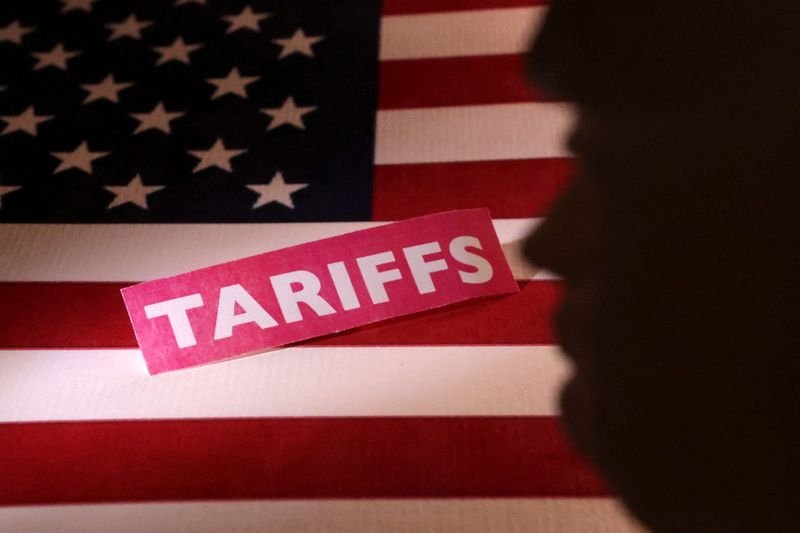

The US House of Representatives passed the Lindsey O Graham Sanctioning Russia and Iran Act of 2026 by 262-159 on September 16, after the Senate had earlier approved it 86-11.
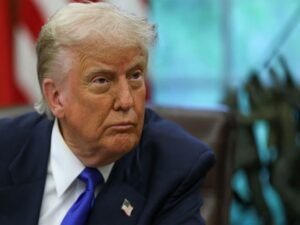
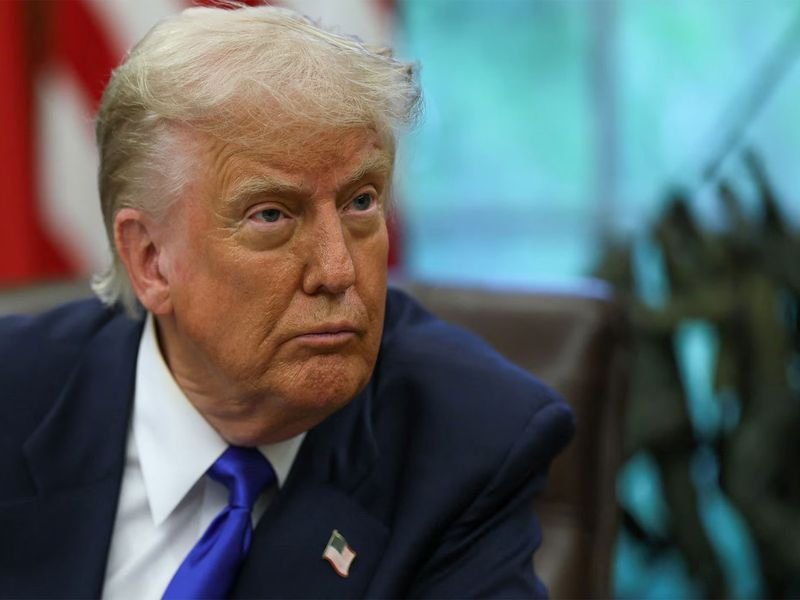
The Bill, which has now been signed by President Trump too, has become a law that empowers him to impose tariffs of up to 100% on countries that continue to purchase significant quantities of Russian crude oil or natural gas.
The Act is the latest example of a broader US policy using market access and sanctions as leverage over Indian choices, writes former Ambassador to Russia Ajai Malhotra in his Op-Ed article US can’t dictate India’s trade choices.
US policies have narrowed choices that India regards as matters of sovereign economic and strategic judgment. Demanding that India forgo Russian crude under the threat of 100% tariffs is egregious and unwarranted, he writes.
India’s energy security cannot be negotiated away under external pressure when core national interests are at stake. A strong and secure India cannot serve as anyone’s camp follower. If Washington persists, India must push back clearly and consistently. The underlying principle is simple: national interest paramount, diversification ongoing, external pressures or threats immaterial, he avers.
What kind of leverage does Trump think he can have with Modi if he signs the Russia and Iran Act, writes Editor-in-Chief Jyoti Malhotra in her weekly column (The Great Game) article The politics of leverage.
Focusing on the word ‘leverage’ in another context, she writes that there’s the BJP in Punjab, seeking to expand its influence, another word for leverage, hoping the people of this border state will reward it with their affection in the coming Assembly polls. The problem is that in real life, leverage never quite works that way. Trump knows it and PM Modi knows it too. Certainly, Indians love to disagree with each other, but when it comes to questions of foreign policy, they rally around their government in Delhi, she writes.
Coming to the recently held BRICS summit in Delhi, India has every reason to be satisfied with its outcome in both form and content, writes C Uday Bhaskar, Director, Society for Policy Studies, in his Edit article BRICS ticks the right boxes.
Though India secured consensus on a comprehensive declaration despite divergent political positions, there was no BRICS currency bravado. Finance ministers discussed efficient cross-border payments and local currencies, while tacitly recognising that a unified system needs a deeper trust framework than the present bilateral discord among some members.
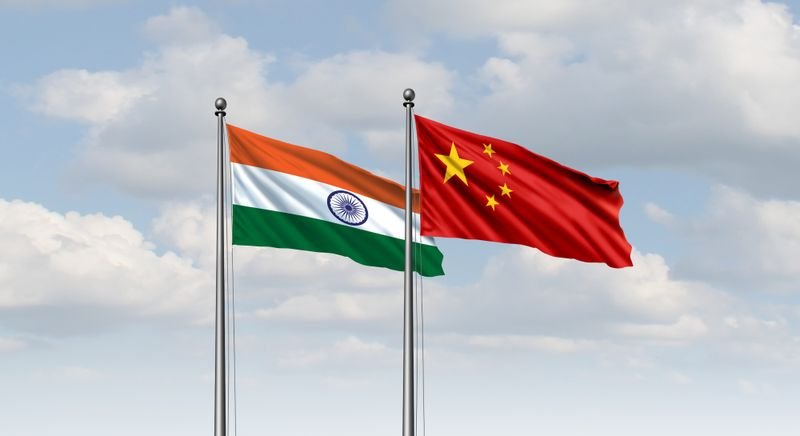
Of China’s standing in the BRICS, the Dragon strives for bipolarity with Washington globally while seeking unipolarity in Asia and denying parity to India and Japan. That is the geopolitical problem India navigates inside BRICS. The 20-year-old BRICS has survived because India and China have a working template to disagree without derailing the forum, he writes.
India’s diplomatic achievement was not that it convened the summit since it was anyway the BRICS Chair. It was that it managed to hammer out a common declaration among countries whose interests frequently collide, writes noted economist Ajit Ranade in his Op-Ed article BRICS offers India a China opening.
If India can manage contradictions within BRICS, why can it not manage the contradictions in its own multi-compartment relationship with China? China has formidable economic strength, but also serious vulnerabilities. Its population is ageing, its workforce is shrinking, its property sector is struggling, debt is high, domestic consumption remains weak and excess industrial capacity needs external markets.
China thus needs India too. The appropriate response is not “keep China out”, but: if you want access to the Indian market, manufacture here, employ here, source increasingly here and export from here. India should insist much more forcefully on access to China’s vast consumer market.
Former Planning Commission member Arun Maira echoes a similar sentiment in his Op-Ed article India must build, not just trade, stressing that India and China’s growth strategies diverged sharply from 1991 onwards.
China used FDI as an instrument of industrialisation –multinational companies came to China to make things: electronics, machinery, automobiles, etc. India used FDI increasingly as an instrument of services and market development, he writes.
Among the highlights of the BRICS summit in New Delhi last week was the vegetarian gala dinner for visiting dignitaries which hogged attention. In his Edit article Veg diplomacy offers food for thought, former JNU Professor Surinder S Jodhka presents a plausible argument.
Some BRICS member nations may have meat dishes integral to their cuisine. What if they hosted a gala dinner for a vegetarian Indian dignitary, featuring a variety of their meat delicacies, with no vegetarian options available? Would this be viewed as showcasing the cultural diversity of their countries, and appreciated in that spirit? Instead, such an arrangement would be seen as highly unusual and distasteful in any international diplomatic setting today. Dietary choice must not become an ideological weapon or a symbolic element of Indian identity, he avers.
Chinese President Xi Jinping is scheduled to visit Washington DC on September 24 amid calls from industry majors for “pacing the frontier” of artificial intelligence. China has unveiled a 2-trillion yuan (about $295 billion) national AI infrastructure plan for the next five years alone. India’s outlays for critical technologies lag far behind spending by China and the US, writes Lok Sabha MP Manish Tewari in his Edit article Why it’s vital to win the tech war.
India possesses the demographic scale and engineering talent pool, but talent without capital is a wasted endowment. The 21st century will henceforth belong to the nations that are the leaders of the Fourth Industrial Revolution, he writes.
Talking about science and technology, IN-SPACe (Indian National Space Promotion and Authorisation Centre) was set up about five years ago, but its role is still unclear and not backed by any statutory provisions, writes science commentator Dinesh C Sharma in his Edit piece Power shift ails science agencies.
While creating IN-SPACe, the government placed it on a par with ISRO in a way. Other scientific agencies are witnessing a power shift similar to that seen in ISRO. They place decision-making powers in the hands of non-technical people, centralise decision-making and undermine the autonomy of scientific agencies. This trend could lead to the hollowing out of expertise and talent in public-funded R&D bodies, he warns.
The principal criticism of the collegium system for appointing judges to the Supreme Court and High Courts has been its lack of transparency. The criteria by which one candidate is preferred over another are not fully visible to the Bar or the public, write Justice Nirmal Singh (retd) and advocate Harnirmal Singh in their article Collegium system plagued by nepotism.
Judicial independence cannot mean insulation from scrutiny. Nor can it be equated with an exclusive right of judges to appoint judges. A transparent, balanced and broad-based judicial appointments commission can strengthen, rather than weaken, the independence of judiciary, the article reads.
Regarding the appointment of accomplished jurists to the Supreme Court, the separation of the constitutional court from a national appellate court can be an important step to ensure timely adjudication. When jurists are appointed to the judiciary after this separation, they can be directly appointed to the constitutional court whose entire docket would be the kind of work they are suited for, writes Anmol Jain, Senior Fellow, Melbourne Law School, in his Op-Ed article Before appointments, let’s fix the court.