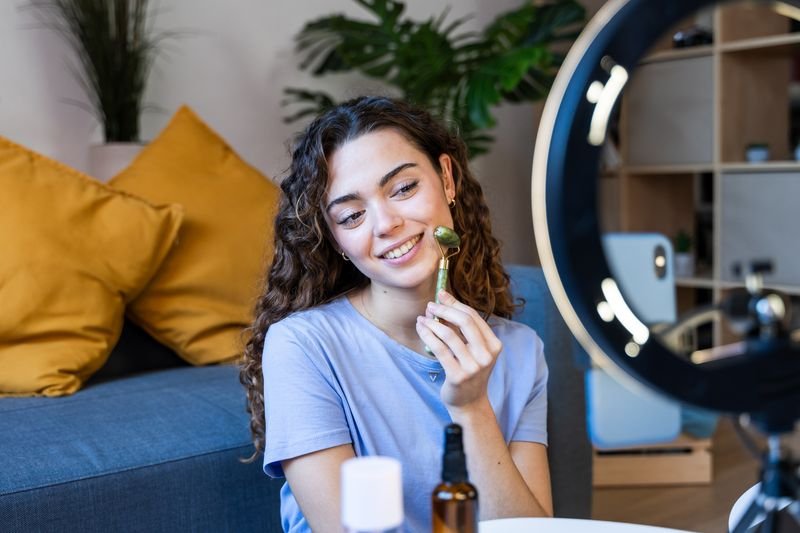

Just like everything else, skin care has moved to reels as well. The gap between what goes viral and what actually holds up under scientific scrutiny is where most skin damage happens. We enlist some expert help, Diksha Bhardwaj Co-Founder, The Orange Skincare, decodes five of the hacks that are trending the social media.1. Slugging (sealing skin overnight with an occlusive like petroleum jelly)This is one of the few viral hacks that’s genuinely backed by dermatology, not just social media. Petroleum jelly is an occlusive — it doesn’t add hydration itself, but it sits on top of the skin and prevents water loss overnight, which is why people wake up looking plumper and dewier. It’s inexpensive, low-risk for most people, and has decades of clinical use behind it as a barrier-repair tool.The caveat is who it’s for. Slugging works best on dry or dehydrated skin, ideally over a hydrating serum or moisturiser rather than on bare skin. For oily or acne-prone skin, trapping everything under an occlusive layer can worsen breakouts and clogged pores. It’s also not something to layer over active ingredients like retinoids or acids unless you know how your skin responds, since occlusion increases their potency.Verdict: Effective and low-risk — but skin-type dependent, not universal.2. Double cleansing (oil cleanser followed by a water-based cleanser)This is one of the few viral hacks that’s essentially just correct chemistry. Jattvibescreen, makeup, and excess sebum are oil-soluble, so a water-based cleanser alone often can’t fully break them down — it can leave a residue that sits on the skin overnight. An oil or balm cleanser dissolves that layer first, and the second, water-based cleanse then lifts away sweat, dirt, and whatever the oil step loosened, without needing to scrub harder or use a stronger cleanser to compensate.Where it goes wrong is overuse rather than the concept. It’s most useful in the evening, when there’s actually sunscreen or makeup to remove — doing it every morning too, or using two stripping, foaming cleansers instead of a gentle oil-then-gel combination, over-cleanses the skin and can damage the barrier, leaving skin tight, dry, or more reactive over time. For dry or sensitive skin, once a day (or even every other day) with a gentle, non-foaming second cleanser is usually enough.Verdict: Genuinely effective and dermatologist-backed — the only real caveat is not overdoing it or pairing it with harsh cleansers.3. Gua sha (facial rolling)Gua sha gets sold as a “sculpting” tool — jawline definition, cheekbone contour, a permanent lift — and that framing is where it overpromises. Skin can’t be reshaped by scraping a stone across it; bone structure and fat pads underneath don’t respond to surface pressure. What gua sha genuinely does is act as a form of facial massage: the scraping motion temporarily boosts local blood flow and can help move fluid that’s pooled overnight, which is why faces look less puffy and more defined right after a session. That effect is real but short-lived — it fades within a few hours, not permanent contouring.The technique matters more than the tool. Used gently with a slippery oil underneath, it’s low-risk and a pleasant part of a routine. Used aggressively — hard pressure, daily heavy strokes, dragging on dry skin — it can cause bruising, redness, and broken capillaries, especially on thin or sensitive skin, and repeated harsh use over months can actually irritate skin rather than improve it. Hygiene is also easy to overlook: an unwashed tool reused across breakout-prone skin can spread bacteria.Verdict: A real but temporary de-puffing effect from massage, not structural sculpting — safe with a light hand, and less safe with the aggressive technique that goes viral.4. One swipe of SPF lasts all day /skipping sunscreen indoorsThis isn’t a DIY trick so much as a viral piece of misinformation, but it does real damage precisely because it sounds reasonable. Two claims circulate constantly: that a foundation or moisturiser with SPF is enough sun protection on its own, and that sunscreen isn’t needed indoors or on cloudy days. Both are false, and both are backed by very solid science, not just dermatologist opinion.Makeup with SPF fails mainly because of quantity — reaching the labelled SPF on a foundation requires roughly seven times more product than most people apply, so a “SPF 30” base is realistically delivering a fraction of that. And UVA rays, which drive premature aging and pigmentation, pass through window glass and cloud cover; they don’t need direct, strong sunlight the way a sunburn does. A single morning application also doesn’t “last” all day regardless of the SPF number — it degrades with sweat, touch, and time, which is why reapplication every two to three hours during actual sun exposure is the standard advice, not a suggestion for extreme climates only.The risk here isn’t irritation, it’s the opposite of what people assume they’re protected from: cumulative UV exposure, which is the single biggest driver of visible skin aging and a genuine cancer risk, continuing unnoticed because someone believes their morning routine already covers it.Verdict: Not a hack at all — a widely believed shortcut that is scientifically wrong, and the one myth on this list worth actively correcting.5. Skin cycling (rotating actives with rest nights)Skin cycling is one of the rare trends that came out of legitimate dermatological practice before it went viral, and it holds up well. The basic structure — an exfoliation night, a retinoid night, then one or two rest nights with just moisturiser — gives skin time to repair its barrier between active ingredients instead of layering exfoliants and retinoids every single night, which is a common cause of over-exfoliation, redness, and sensitivity.It’s not a rigid formula everyone needs to follow exactly, and people with naturally resilient skin may not need as many rest nights, while sensitive or reactive skin may need more. But as a general principle — give skin recovery time between actives — it’s sound, sustainable advice rather than a gimmick.Verdict: Effective and science-aligned — one of the few viral trends worth actually adopting.