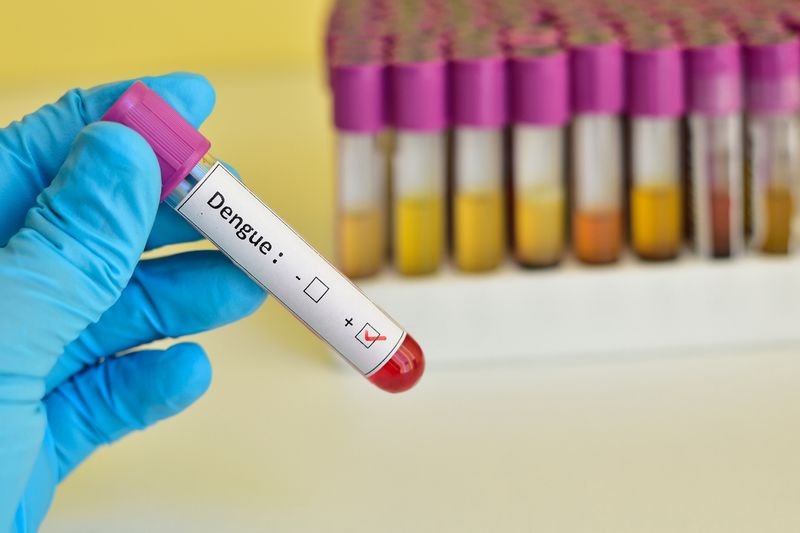

Punjab has reported 451 dengue and 16 chikungunya cases so far this year, with no confirmed dengue-related death reported in the state, Health and Family Welfare Minister Dr Balbir Singh said.Reviewing the state’s epidemiological data, the minister said 1,00,414 dengue samples had been tested till September 21 (with 64,049 at Aam Aadmi Clinics). The positivity rate stood at 0.45 per cent (451 positive cases).Ludhiana, Kapurthala, Faridkot and Tarn Taran have reported a higher caseload, prompting the department to intensify surveillance and mosquito-control measures.”We are going a step ahead. Instead of merely tracking dengue cases, our priority is aggressively tracking and destroying dengue larvae,” Balbir said at a review meeting at the Directorate of Health Services.He directed Deputy Commissioners and health authorities to intensify field surveillance, conduct regular visits to identify dengue hotspots and ensure follow-up action. ASHA workers and nursing students are to be involved in door-door surveys to identify and eliminate mosquito-breeding sites.Emphasising inter-departmental synergy and active community participation, the Minister directed districts to rope in ASHA workers and nursing students for rigorous door-to-door surveys to identify and eliminate mosquito breeding sources.He directed that Village Health, Sanitation and Nutrition Committees (VHSNC) meetings be conducted actively at the village level. Acknowledging their pivotal role, the Minister stated that appropriate payment and incentives are being provided to ASHA workers for undertaking door-to-door survey work.The minister asked districts to step up meetings of Village Health, Sanitation and Nutrition Committees and increase community participation in source-reduction activities. He appreciated Faridkot for achieving 100 per cent participation of nursing students in anti-dengue field activities.The minister issued special directions to Ludhiana, Kapurthala, Faridkot and Tarn Taran to intensify field inspections and ASHA engagement. He also asked local authorities to carry out need-based indoor and outdoor fogging.Balbir also reviewed the 16 chikungunya cases reported in the state and took stock of water-borne diseases, including acute diarrhoeal diseases, cholera and hepatitis.He directed officials to maintain strict water-quality surveillance, regularly test drinking-water sources and immediately rectify leaking pipelines or contaminated supply channels. The minister asked health institutions to keep buffer stocks of ORS, IV fluids, chlorine tablets and essential medicines.The minister also reviewed the distribution of Mukh Mantri Sehat Yojana cards and directed district authorities to organise distribution programmes at the village and mohalla levels.He urged residents to prevent mosquito breeding by keeping their surroundings clean and eliminating stagnant water.