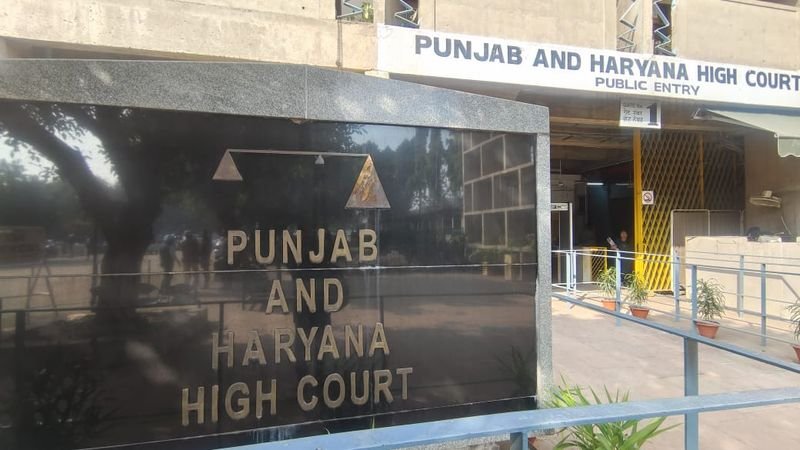

The Punjab and Haryana High Court has commuted the death sentence of a woman who murdered a two-and-a-half-year-old girl by burying her alive in a pit of sand, observing that punishment must leave room for introspection, remorse and reform, and that the children of a convict should not be deprived of their mother “to a point of no return”.The bench of Justice Vinod S Bhardwaj and Justice Ravinder Malik upheld the accused woman’s conviction for the murder of the child but substituted the death sentence with rigorous imprisonment for 30 years without remission, besides Rs 50,000 fine.The judgment of conviction was passed on April 12, 2024, by Ludhiana Sessions Judge in FIR registered on November 28, 2021 at the Shimlapuri police station. The trial court had sentenced her to death, directing that “she be hanged by the neck till she is dead”, subject to confirmation by the high court. It had further ordered that if the death sentence was not confirmed, she would pay a fine of Rs 50,000 and, in default, undergo rigorous imprisonment for one year.The high court, however, held that the offence was “gruesome”, but the case did not warrant capital punishment as the only punishment. “Having heard the counsel for the parties and taking into consideration the precedent judgment of the Supreme Court of India, we are of the opinion that the present case, even though the offence is gruesome and displace totality, however, it may not be a case warranting capital punishment as the only punishment to be imposed,” the bench said.‘Accused not beyond reform’The court found significance in the fact that the accused had children of her own and said there was no material to conclude that she was beyond reform or constituted a continuing threat to society.“It cannot be held by this court that the accused is beyond reform and is a threat to society at large,” it held.The bench also noted her conduct in custody. “It is evident that the accused also has children of her own and has not exhibited any disorderly or disruptive behaviour. She thus cannot be perceived to be beyond reform and incapable of co-existence in harmony,” the court said.It further noted that she had maintained cordial relations with fellow inmates and had not indulged in indiscipline. “She had maintained cordial relations with all fellow inmates and has not indulged in any indiscipline of any nature whatsoever,” the bench observed.‘Is capital punishment beginning of a sentence or end of it?’In a significant observation, the bench reflected on the very purpose of punishment and whether an irreversible sentence necessarily represented the ultimate form of justice. “We also ponder whether capital punishment is beginning of a sentence or end of it,” the court said.The bench observed that imprisonment could itself become a continuing process of punishment, introspection and repentance. “A sentence which affords time for introspection and repent each day for the crime committed is a sentence served,” it said.The court added that the past could remain a reminder to the convict each morning, providing an opportunity to atone for the crime and contribute meaningfully to society. “The past, which serves as a reminder on every new morning, to make good for the sin committed and make efforts for some meaningful contribution,” the bench said.‘Let the children not lose their mother’The court also considered the consequences of an irreversible sentence on the convict’s children. “While a mother has lost her daughter, let the children of the accused not lose their mother to a point of no return,” the bench observed.In a broader articulation of the social purpose of punishment, it added: “A society is not built upon denying to the children, what their mother stole but by ushering in some hope.”Conviction upheldThe case has its genesis in the disappearance of a two-and-a-half-year-old girl, who disappeared while playing in the street on November 28, 2021. According to complainant grandfather, his elder son, employed in the Punjab Police, was married and had two children. The victim was his two-and-a-half-year-old daughter.The child was playing in the street when, around 2.15 pm, the grandmother went inside the house to drink water. She returned about five minutes later but could not find the child. The family began searching for her and subsequently came to know that their neighbour-accused had abducted her with the intention of killing her.The prosecution case was that the accused had nurtured a grudge against the family. The complainant attributed it to the family having stopped the child’s mother from talking to her, whom he described as a woman of “bad character” in the neighbourhood.The defence, however, contended that the motive attributed by the prosecution was not established and pointed to another reason allegedly disclosed by the woman that the victim’s father obtained goods and things for his children which she could not afford for her own children.The bench held that the difference in the perceived motive did not demolish the prosecution case. “Thus, while one person may believe a specific reason to exist in the mind of the other for committing an offence, there may be different reasons for the accused to commit the crime,” it observed.The bench added: “Motive for each person may vary in cases of circumstantial evidence, as opposed to directed injury cases – where motive surfaces as the trigger point for the offence. No hard and fast rule can be laid in this regard.”The court held that the prosecution had established the complete chain of circumstances and link evidence. “The entire chain of events, as well as the link evidence, has been fully established, which needs to be only one hypothesis, i.e., about the involvement of the accused in the commission of the offence, i.e., murder of deceased aged 2/3 years by burying her alive in a pit,” it held.The court consequently upheld the conviction and dismissed the woman’s appeal as being “bereft of merits”, but commuted the death sentence to rigorous imprisonment for 30 years without remission and a fine of Rs 50,000.