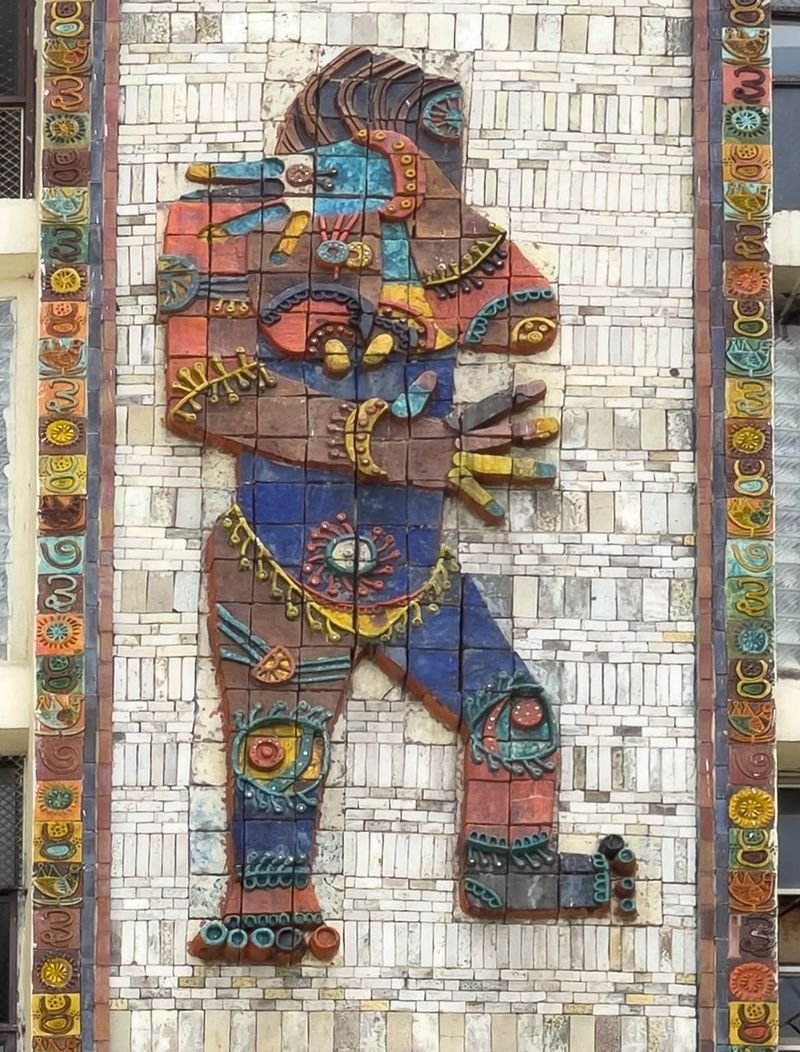

Six storeys high and spread across two enormous sections, the Satish Gujral murals adorning Shastri Bhawan are poised to become a test case for the relocation of public art in India, with conservators exploring the possibility of documenting the exercise in a dedicated research volume.With the Central Public Works Department setting a September 30 deadline for vacating Shastri Bhawan to facilitate the next phase of the Central Vista project, the National Gallery of Modern Art (NGMA), which is overseeing the exercise, is racing against time to find a suitable new home for the murals. The challenge, however, extends far beyond identifying an alternate site.Speaking to The Tribune today, Jyoti Tokas, coordinating the project on behalf of NGMA, said the Gujral mural relocation had emerged as a specialised conservation exercise due to the sheer scale of art involved.She said a proposal to house the murals at the Delhi School of Planning and Architecture was mooted but fell through because the murals were higher than the building chosen to rest them.The murals, composed of ceramic tiles, are around 22 metres (almost six storeys) high and 3.70 metres wide.Tokas said locations under the New Delhi Municipal Corporation, which has large spaces, were now being explored, with the scale of the murals remaining the key challenge.The conservator said NGMA was now looking at the exercise not as a one-off but a long-term project to understand procedures that should be followed while moving similar public artworks in future.“The relocation of Satish Gujral murals is being considered for documentation and possible inclusion in a future research volume, turning the exercise into a potential case study for the relocation of large-scale public art in India,” Tokas confirmed.In another development, noted photographer-curator Ram Rahman has volunteered to document the journey from the removal and conservation of murals to their transportation and reinstallation. Rahman told The Tribune today that he would approach NGMA with a formal proposal.Meanwhile, for the Gujral Foundation, which is serving as a knowledge partner for the project, the question is not simply about finding a sufficiently large wall for the works.There is an equal concern about murals not being placed somewhere that would expose them to another relocation decades later.NGMA for its part has commissioned a technical feasibility study to remove and relocate the gigantic work.Tokas said a conservation architect and specialized agency were recently engaged for a feasibility study, including a 10 ft by 10 ft demonstration exercise to test the proposed process of removing and relocating a section of a mural. The agency report recommends that the operation follow a scientific conservation procedure.This makes the relocation process unusual. “The government machinery is not merely shifting an artwork along with the building’s contents, but attempting to develop a technically sound method for relocating a monumental work created for a particular architectural setting,” said Tokas.Gujral’s murals go back to a period when large-scale public art was commissioned for government buildings with the expectation that it would remain part of the architecture for decades. These were commissioned in 1968 and Gujral’s exposure to international mural traditions became an important influence on his work.Decades later, redevelopment has created a conflict between the life of the building and the permanence traditionally associated with public art.