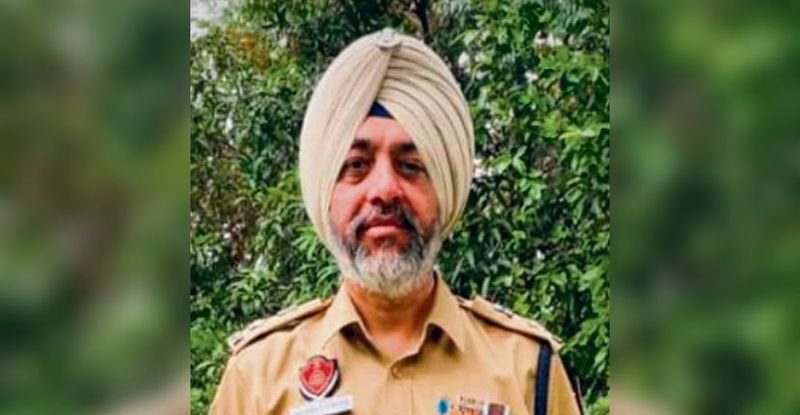

Rajjit Singh Hundal is a dismissed Punjab Police Service officer who rose to the rank of AIG (Assistant Inspector General) before being sacked in 2019 over alleged links to a drug-smuggling and extortion racket — a case that, for years, put him at the centre of Punjab’s reckoning with the police-drug mafia nexus.Political significanceThe arrest by the Punjab Police comes at a politically charged moment, with the Punjab Assembly elections due in 2027. Singh’s years on the run have ended with his surrender to the Patiala police, confirmed by current DGP Gaurav Yadav to The Tribune — closing one of the longest-running fugitive cases tied to Punjab’s drug-trade investigations.Certainly, the Punjab Police can claim the arrest as a feather in its cap, allowing the ruling Bhagwant Mann government to claim an important early victory in the already charged politics of a state in which all key Opposition parties, including the BJP, Congress and Shiromani Akali Dal, are promising to rescue Punjab from the label of a “drug addict haven”.The ‘police-drug nexus’ and politicsThe ruling AAP government under Bhagwant Mann has made its anti-drug drive a central plank of its record, frequently citing statistics on arrests, seizures and the dismissal of officials allegedly complicit in the trade as evidence that it is delivering on a core 2022 election promise. Singh’s capture — the resolution of one of the state’s longest-running fugitive cases and one directly tied to the police-drug nexus probe — offers the party a high-visibility marker of that campaign, coming after the Supreme Court itself had pressed Punjab to account for its efforts to trace him.Opposition parties, including the Congress and SAD, are likely to counter that the case originated years before AAP came to power and that the delay in securing Singh’s arrest — including his repeated evasion of the STF and Vigilance Bureau — undercuts any claim of decisive enforcement.Niranjan Singh’s own entry into Waris Punjab De adds a further layer, positioning the party to claim the credibility of the officer associated with the drug-probe crackdown even as AAP touts Singh’s arrest as its own achievement.The Inderjit Singh connectionRajjit Singh’s troubles trace back to his time as SSP of Tarn Taran and later Moga, when he supervised Inspector Inderjit Singh — dismissed from the force in 2017 after being accused of running a racket that smuggled drugs from Pakistan, siphoned off recovered narcotics for resale, and planted drugs on innocent people to extort money. A Punjab and Haryana High Court PIL on the drug menace led to a three-member SIT, headed by then-DGP Siddharth Chattopadhyaya, being formed in December 2017 to examine Inderjit’s conduct and Singh’s alleged complicity in it.The case against Singh was registered by ADGP Harpreet Singh Sidhu, who headed Punjab’s Special Task Force (STF) on drugs. It was Sidhu’s STF that first lodged the FIR against Inderjit Singh for drug smuggling and tampering with recoveries — the case in which Rajjit Singh was later named a co-accused. Notably, Singh had specifically sought an SIT probe barring Sidhu, asking the court for an independent inquiry by any officer other than the STF chief — a request that itself became part of the record.Sidhu’s own findings, folded into the SIT’s report, went further than the corruption angle: he stated that it was necessary to investigate Singh, Inderjit Singh and their associates for using individuals and companies to invest the proceeds of crime, both in India and abroad — effectively flagging a money-laundering dimension to the case well before the ED’s own probe took shape.What the SIT foundOver three reports — submitted between February and May 2018, but kept sealed by the court for nearly five years — the SIT concluded that Rajjit Singh had recommended promotions and postings for Inderjit despite pending cases against him, including a double promotion pushed through just days after issuing him show-cause notices. The reports also flagged a sudden spike in assets held by Singh and his family from 2013 onward, and recommended further probe into money allegedly “gifted” by relatives that was used to buy property.Dismissal and the cases that followedWhen the sealed reports became public in early April 2023, Punjab Chief Minister Bhagwant Mann dismissed Singh from service on April 17, acting on his government’s anti-drug pledge. Two cases followed within days.The first was the STF case, registered on April 19, 2023, in which Singh was booked under IPC sections for criminal conspiracy, fudging records and extortion, besides provisions of the NDPS Act, as a co-accused in the 2018 FIR against Inderjit Singh.The second was the Vigilance Bureau case, registered on April 20, 2023, in which Singh was separately booked under the Prevention of Corruption Act for allegedly owning assets disproportionate to his known income. The FIR pointed to cash payments for a Mohali property allegedly funded by loans and gifts of questionable origin.Going undergroundSingh sought relief from the Supreme Court and initially avoided arrest by going into hiding after the SIT report went public. He resurfaced briefly in October 2023 to join the STF probe under court orders — but the same day, the High Court cancelled his bail in the corruption case, and Singh slipped out of the STF office before the Vigilance Bureau could arrest him. He remained a fugitive for years afterwards, evading multiple raids.The Niranjan Singh linkSingh’s case also intersected with the broader probe led by then ED Deputy Director Niranjan Singh into Punjab’s drug and money-laundering networks — an investigation that separately resulted in the dismissal of DSP Jagdish Singh “Bhola”, the Arjuna awardee wrestler-turned-drug smuggler whose case in 2013 first drew national attention to the police-drug nexus, and that kept SAD leader Bikram Singh Majithia under sustained scrutiny.Niranjan Singh has since retired from the ED and joined Akali Dal (Waris Punjab De), the party led by Khadoor Sahib MP Amritpal Singh, himself in jail for the last three years under the NSA — a move that has itself put a spotlight back on the drug-probe legacy the two men’s names are now tied to.The offer to surrenderIn September 2026, Rajjit Singh’s counsel told the Supreme Court that his client was willing to surrender, and the bench directed him to do so, clearing the way for his eventual surrender.