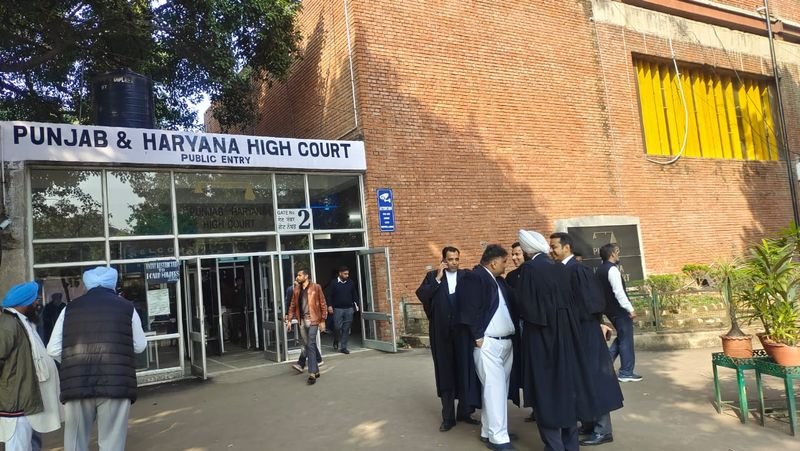

The Punjab and Haryana High Court has stayed further acquisition proceedings for land proposed to be used for a green industrial park in Mohali after observing that the state had, prima facie, not adhered to the statutory requirements governing acquisition of irrigated multi-cropped land and consideration of objections filed by affected persons.Fixing October 27 as the next date of hearing on a bunch of connected petitions filed by Kesar Singh and other petitioners against the state of Punjab and other respondents, the division bench of Justice Jasgurpreet Singh Puri and Justice Pravindra Singh Chauhan directed: “Till the next date of hearing, the further acquisition proceedings shall remain stayed.”The petitioners – among other things – had alleged violation of Section 10 of the Right to Fair Compensation and Transparency in Land Acquisition, Rehabilitation and Resettlement Act. The bench noted that Section 10(1) provided “no irrigated multi-cropped land shall be acquired under the Act” except as provided in sub-section (2).The bench said the provision created an “embargo” on acquisition of such land and noted that the rationale for the safeguard was contained in Chapter III of the Act, which provided special provisions to safeguard food security.The court noted that Section 10(2) permitted such acquisition only where the twin conditions were fulfilled—that it was undertaken under “exceptional circumstances” and was “demonstrably a last resort.”The bench also examined the Social Impact Assessment report placed on record by the petitioners. It recorded that the project-affected area of Sector 101 comprised “predominantly productive agricultural land”, supported by tubewell irrigation, horticulture, dairy activities and household-based livelihoods, indicating high economic dependence on land.The report also recorded the loss of high-value productive assets, including orchards, 63 fruit-bearing trees, 112 non-fruit trees, 14 tubewells and two dairy farms. It stated that 72 families were directly and indirectly affected, many depending on agriculture, horticulture, dairy and allied activities.Under the heading “Loss of Agricultural Land”, the report described the nature of the impact as “negative and high”, stating that acquisition of predominantly irrigated land would result in “permanent loss of productive agricultural holdings and reduction in farm-based livelihoods.”The bench added: “From the social impact assessment for the land acquisition and the subject matter of the present case, it is clear that it is a predominantly irrigated land. The reason for the acquisition of the land is for industrial purposes which is stated to be a green industrial park”.The court noted that the State had been given repeated opportunities to demonstrate that the decision had been taken to bring the acquisition within the exception under Section 10(2), but no such document or decision was produced.“The State has not been able to produce any document or place on record any decision despite having been granted repeated opportunities to demonstrate that any such decision or report was taken with a view to bring the acquisition within the scope of the aforesaid exception contained in sub-section (2) of Section 10, but the State failed to do so. Therefore, in the absence of the same, prima facie, sub-section (1) of Section 10 would come into operation,” the bench added.The court also considered the petitioners’ contention that they had filed statutory objections but were never heard and that no decision on their objections was communicated to them. When specifically asked whether the decision had been communicated, the state counsel could not show any document establishing that it had been supplied to the petitioners.Before parting with the order, the bench asserted: “We are of the considered view that prima facie the State has not adhered to the statutory provisions contained in Section 10 and Section 15 of the Act Let the state file a detailed reply to the issues taken up by counsel for the petitioner and also to the entire writ petition. The state is granted four weeks to file the reply.”