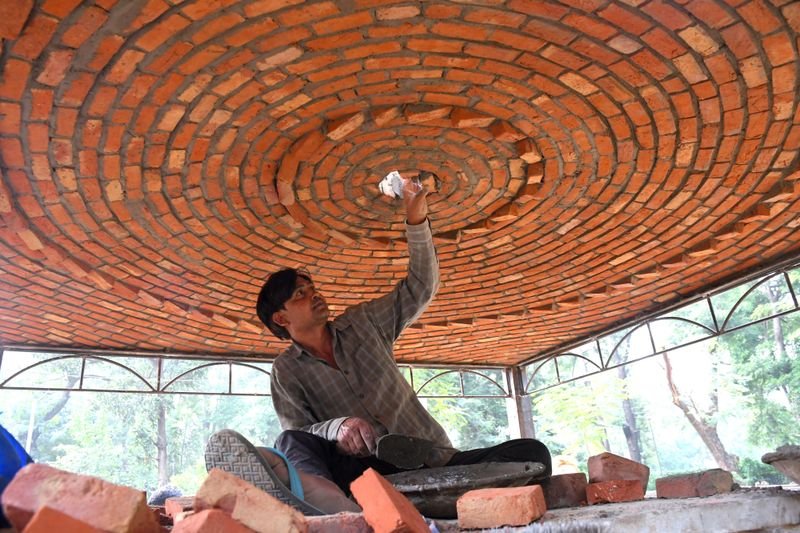

What if a city could step out from behind its famous grid lines and tell its own story? For ten days, Chandigarh gets an opportunity to do just that. Through workshops, lectures, competitions and a host of other activities, the Le Corbusier Festival invites people to look at the city not merely as a planned urban space, but as a living idea that continues to evolve. More than a celebration of the architect who conceived the city, the festival offers an opportunity to revisit Chandigarh through different perspectives and to look beyond its familiar sectors and iconic buildings and ask what makes the city unique, how its original vision has evolved, and what it means to those who live in it today.A decade after Le Corbusier’s architectural legacy in Chandigarh found a place on the UNESCO World Heritage List, the city is set to revisit the ideas that shaped its identity. The Chandigarh College of Architecture (CCA) is observing the milestone with a 10-day festival that began on Friday, bringing together lectures, workshops, competitions and other engagements centred on the city.The festival seeks to reconnect residents, particularly the younger generation, with Chandigarh’s modern heritage and encourage a deeper appreciation of the vision behind this city. The event honours the legendary Swiss-French architect, Le Corbusier who not only designed Chandigarh but also conceived the Chandigarh College of Architecture in 1961.Dr Sangeeta Bagga, Prinicpal, CCA tells The Tribune “Chandigarh is a city of the 20th century, built around a distinctive vision that deserves to be understood by those who call it home today. It is particularly important for the younger generation to know the story of their city, because they will eventually inherit the responsibility of protecting its heritage and taking its legacy forward. As Chandigarh grows and changes into a modern metropolis, we risk losing touch with the history and ideas that gave the city its identity. Through this festival, we are making a modest effort to bring that story back into public conversation and encourage people to discover what lies behind the Chandigarh they see every day.”The 10-day festival brings together a range of creative and cultural engagements, with workshops on bamboo craft, clay pottery and printmaking, along with cultural performances, including Kathak and Bharatanatyam. The festival also features intellectual conversations that explore different aspects of art and architecture.Among the workshops is a Shallow Dome session conducted by Apoorva Sharma for college students. The workshop draws on dome structures traditionally found in parts of Rohtak, Haryana, and introduces participants to a vernacular construction technique that evolved from local practices and knowledge passed down orally through rural communities.She says, “The technique emerged from the availability of local materials. In Punjab and Haryana, where timber and granite were not readily available, communities began using bricks to construct walls and develop dome-like structures. Over generations, the method evolved through experimentation and the oral transmission of the art.”To help visitors understand the significance of the transnational serial nomination of Le Corbusier’s architectural works, the college has also put together an exhibition of students’ work. The display offers an opportunity to explore the architectural ideas associated with Chandigarh and its place within Le Corbusier’s wider body of work.Another exhibition focuses on the works of Matthew Nowicki, highlighting his architectural ideas, designs and innovative approach to modern architecture. The celebrations will conclude on October 6, coinciding with Le Corbusier’s birth anniversary.