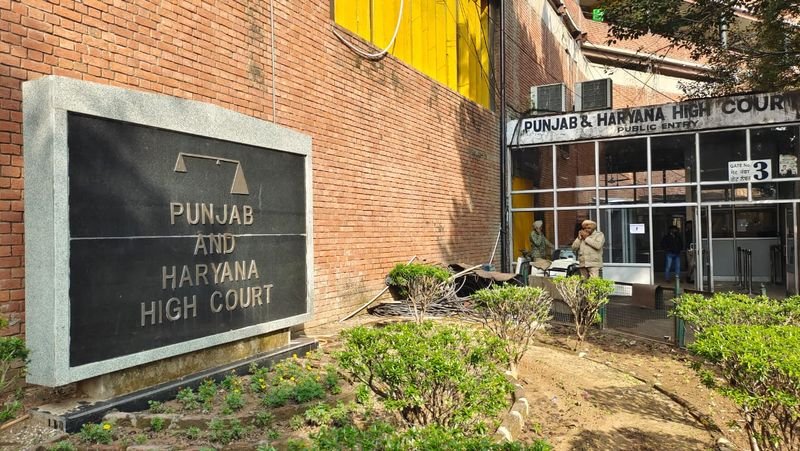

The Punjab and Haryana High Court has quashed the dismissal of two SGPC employees after holding that the alleged recovery of intoxicant was not independently proven during the departmental inquiry and the disputed confessional statements could not, by themselves, form sufficient basis for recording a finding of guilt.Justice Namit Kumar also held that an Enquiry Officer or Sub-Committee could not assume the disciplinary authority’s jurisdiction by recommending a particular punishment, reiterating that the power to impose punishment vests in the disciplinary/punishing authority.The case arose from the suspension of petitioners – a helper and a clerk, working with the SGPC on November 29, 2013. They were subsequently served charge-sheets dated May 22, 2014.It was alleged that they were stopped by a flying squad while on duty in their vehicle and that a packet containing intoxicant powder (Bhuki) was allegedly recovered from beneath the driver’s seat. They were also stated to have made separate confessional statements.The employees denied the charges in their replies to the charge-sheets and asserted that they were not carrying any intoxicant. They also alleged that the confessional statements had been obtained from them under “fear, threat and coercion”.A Sub-Committee was constituted on September 19, 2014, to conduct the inquiry. It examined three witnesses— a flying squad member, record keeper who arrived after the alleged incident, and an accountant. The inquiry report dated September 26, 2014, held that the charges against both petitioners stood proven and recommended their dismissal from service.“The question which arises for consideration is the alleged confessional statements recorded by the members of the flying squad, coupled with the evidence led before the sub-committee, constituted sufficient material to sustain the findings of guilt and the consequential imposition of the extreme penalty of dismissal from service?” Justice Kumar observed.The Bench noted that the alleged confessional statements had been specifically denied by the petitioners in their replies to the charge-sheets. They had stated that the statements were obtained under fear, threat and coercion and that they had been compelled to sign them.“Once the alleged confessional statements were specifically disputed, the same could not, by themselves, constitute the sole basis for recording a finding of guilt”, particularly when the charge was required to be “independently established by admissible and reliable evidence,” Justice Kumar held.The Bench also noted that the alleged recovery of Bhuki had not been established during the inquiry by “any cogent or reliable evidence”. The person, who allegedly carried out the recovery, was not examined during the inquiry.The alleged recovered substance was also neither produced before the sub-committee nor subjected to chemical examination, and no FSL report was placed on record to establish that the packet allegedly recovered from the vehicle contained any intoxicating substance, Justice Kumar asserted.The Bench noted that the other witnesses examined during the inquiry also failed to establish the actual recovery of the alleged substance from the possession of the petitioners.The Court consequently observed: “Thus, the very foundation of the charge remained unsubstantiated and the finding of guilt rests substantially upon the alleged ‘admissions’ made by the petitioners.”Justice Kumar also found an infirmity in the inquiry report. After recording that the charges stood proven, the sub-committee proceeded to recommend dismissal.The Bench held that the power to impose punishment “vests in the disciplinary/punishing authority and not in the enquiry officer or sub-committee.”Referring to a Supreme Court’s decision, Justice Kumar held that the inquiry officer had no role in awarding punishment and that the question of imposing an appropriate penalty fell within the exclusive jurisdiction of the disciplinary authority.“The inquiry officer is required to record findings on the charges and cannot usurp the jurisdiction of the disciplinary authority by recommending or directing a particular punishment,” the Bench added.Allowing the petition, Justice Kumar quashed the inquiry report dated September 26, 2014, and the consequential dismissal order dated December 1, 2014. It directed the SGPC to reinstate one of the petitioners and extend consequential benefits to the legal representatives of the other petitioner as he had expired during the pendency of the petition.Justice Kumar further directed that arrears of pay and allowances, along with all consequential service benefits, be calculated and released to the petitioner/legal representatives “within a period of three months from the date of receipt of a certified copy of this order.”