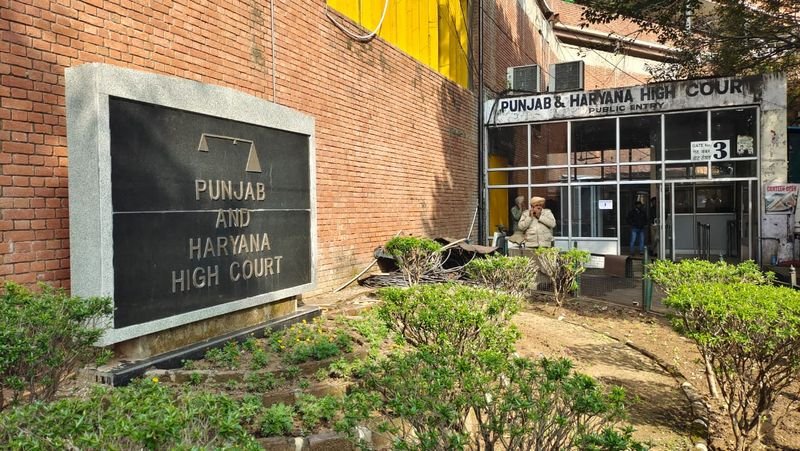

The Punjab and Haryana High Court has directed Ludhiana Chief Judicial Magistrate to forthwith release businessman Kuldeep Goyal after holding that the action of GST authorities in arresting him, after he appeared before them pursuant to the court’s specific direction, was prima facie violative of Article 21 of the Constitution and amounted to an attempt to overreach the proceedings pending before the court. The direction came as the Bench rapped the authorities for “undue hot haste”.“We find the action of the respondents’ department to be a brazen act of highhandedness where the constitutional safeguards available to a citizen have not been adhered to…. Considering the fact that action of the respondents is found to be prima-facie, violative of Article 21 of the Constitution of India, we direct the Chief Judicial Magistrate, Ludhiana to forthwith release the petitioner,” the Division Bench of Chief Justice Ashwani Kumar Mishra and Justice Rohit Kapoor asserted.The court made it clear that the release was purely an interim measure and would not amount to any opinion on the merits of the proceedings pending against Goyal.Court had directed Goyal to appear before GST authoritiesTaking up the plea filed through senior advocate N.S. Boparai, along with counsel J.S. Bedi, Aakriti and Umang Goyal, the Bench noted that Goyal had earlier approached it by filing a petition.On September 22, the counsel for the revenue alleged that he was not cooperating with the investigation. Goyal’s counsel, on the other hand, submitted that all documents sought by the authorities had already been furnished. Besides this, he had appeared before them on several occasions.Against this background, the court directed Goyal to appear before the adjudicating authorities at 11 am on September 23.“If the petitioner does so and furnishes requisite information, the counsel for the revenue shall apprise the Court about the status of the matter,” the Bench asserted, while fixing the matter for further hearing on September 29.Goyal appeared, but was detained and later arrestedThe court recorded the counsel’s contention that Goyal did appear before the authorities and produced all documents sought by them.“It is at this juncture that the authorisation has been issued by the authorities to arrest the petitioner and he has been illegally detained since 11 am dated September 23,” Boparai contended, adding he was made to sit in the office throughout the day and night, and was shown to have been arrested at 4.45 am on September 24.The counsel further submitted that the arrest authorisation did not refer to the High Court’s September 22 order pursuant to which Goyal had appeared before the authorities. The counsel appearing for the revenue stated that there was no order staying the petitioner’s arrest. His anticipatory bail had already been rejected. As such, the respondents’ action in arresting the petitioner did not suffer from no illegality.The admonitionThe Bench asserted the facts emerging before the Court would reveal that the respondents’ authorities considered the Court’s order as a “charter to proceed in the manner, they deemed appropriate”. The authorities showed scant regard for the Court orders clearly reflected from the fact that there was no reference to the order passed by this Court.“What is further shocking is that on September 23, summons were issued directing the petitioner to appear at 12.05 pm on September 23 despite the fact that the petitioner was already present since 11 am pursuant to the orders of this Court. The senior counsel for the petitioner also pointed out that when the order of the Court was shown, the officers simply kept the same aside and then proceeded not only to detain the petitioner but to formally arrest him on the next morning at 4.45 am,” the Bench observed.The Bench added the undue hot haste shown by the authorities in issuing summons on September 23 after the petitioner had appeared before the authorities and showing his arrest at 4.45 am in the next morning prima-facie “is an act of violation of Article 21 of the Constitution of India”.“Prima-facie we find the reasons for authorising petitioner’s arrest to be wholly misplaced inasmuch as the petitioner was already present before the authorities with all records and was willing to cooperate with the investigation under the orders of this Court,” the Bench observed.It added the routine manner in which the authorisation to arrest the petitioner was issued by the department “leaves much to be desired”. “We, otherwise, find the action of the respondents to be an attempt to overreaching the proceedings of the Court,” the Bench added.