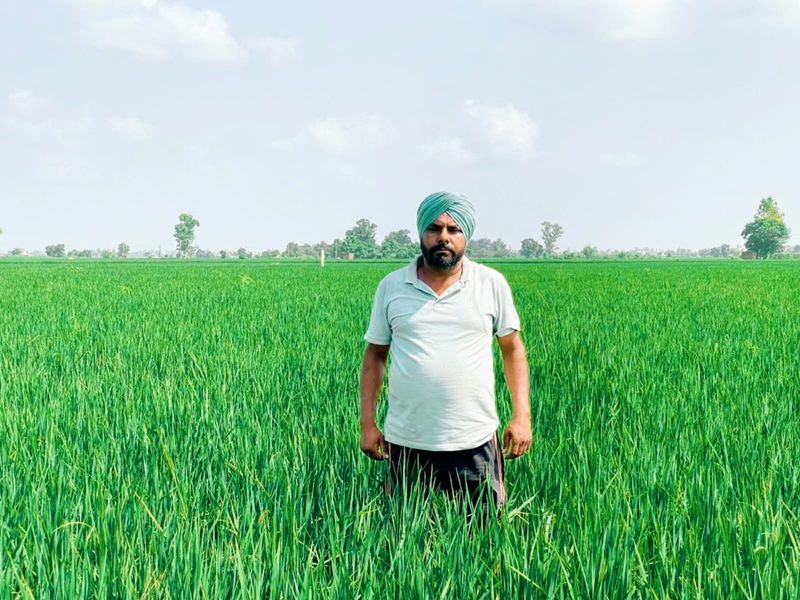

At a time when crop-residue burning remains a major challenge in Punjab, Udowali farmer Sukhbir Singh has adopted an alternative approach, keeping fire and chemical-based inputs out of his 30-acre farm.Sukhbir changed his conventional farming practices around seven years ago after coming into contact with farmers associated with the Young Innovative Farmers Group and the Progressive Farmers Network. Their experience encouraged him to experiment with sustainable and environment-friendly farming methods.For the past six years, Sukhbir said, he has not burnt paddy straw or wheat residue. Instead, he incorporates the crop residue into the soil, allowing it to decompose and contribute to soil health.“Recently, after harvesting paddy, I carried out puddling across the field. The paddy straw was incorporated into the soil and decomposed with water. I later ploughed the field and allowed the soil to receive sunlight and air. The field is now ready for potato cultivation,” he said. Sukhbir said the quality of the soil could be assessed from its colour and texture after the residue had decomposed.He has also gradually moved away from chemical-intensive farming after interacting with innovative farmer Gurbinder Singh Bajwa. Sukhbir said he now cultivates wheat, paddy, maize, potato and peas without using chemical-based pesticides and other harmful inputs.Instead, he uses indigenous microbial-based solutions aimed at improving soil health, maintaining crop productivity and quality, and managing pests and crop residue.For Sukhbir, the shift has been driven by both the need to reduce input costs and a desire to protect soil and the environment. He believes many farmers continue to burn crop residue and rely heavily on chemical inputs because they are unaware of alternative practices.“Farmers often burn crop residue and use chemicals because they are not aware of other options. This increases their expenses and harms the environment as well as soil health,” he said.According to Sukhbir, biological methods can be comparatively inexpensive and, when adopted properly, do not necessarily affect crop yields.The transition, he said, did not happen overnight. It involved changing established farming practices and learning from other farmers who were experimenting with alternative methods.