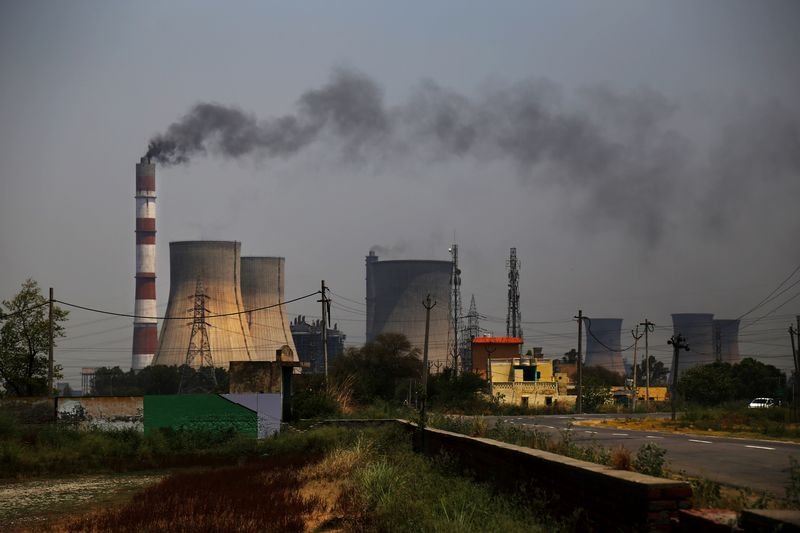

A study by Indian and European researchers has linked India’s worsening urban air quality and health issues to rapid economic growth because the bulk of energy consumed for development comes upon coal-fired power generation plants that emit large quantities of pollutants.“A threefold increase in GDP per capita was associated with a nearly fourfold rise in electricity demand, with coal supplying approximately 76 per cent of the total generation. This coal-dependent expansion increased energy-sector sulphur dioxide emissions and contributed to a twofold increase in urban aerosol loading,” the researchers said.Urban deaths attributable to particulate matter increased from approximately 0.7 million in 2000 to 0.9 million in 2020, with increasing contributions from power-sector emissions, according to the study. Power-sector-attributable deaths increased from approximately 0.015 million to nearly 0.30 million.“Rising incomes increased clean-cooking access from approximately 25 per cent to 75 per cent, accompanied by declining household air-pollution deaths but increasing outdoor air-pollution deaths from approximately 0.3 million to nearly 1.0 million,” the researchers said. Industrial emissions also contributed to the health burden, but their influence remained smaller than that of the power sector, highlighting the growing health consequences of coal-dependent electricity generation.Stating that these findings highlight contrasting indoor and outdoor air-pollution health consequences of coal-dependent economic growth, the researchers stressed upon the urgency of de-carbonising electricity generation to improve urban air quality and public health as well as maintaining sustainable economic growth.Undertaken by 10 researchers from the University of Oxford, UK. Max Planck Institute for Chemistry, Germany, University of Cambridge, UK, Max Planck Institute for Meteorology, Germany, University of Bremen, Germany, University of Bath, UK, German Aerospace Centre, Germany, Indian Institute of Technology, Hyderabad and Central University of Jammu, the study was published in Nature Cities, a peer-reviewed international journal, on September 25.Observing that over the past three decades, India has undergone rapid economic growth, urbanisation and industrialisation, the researchers said that to meet the growing energy demand, India has relied predominantly on coal-based electricity generation. Despite recent growth in renewable capacity, coal remains the backbone of India’s power sector, supplying 75–80 per cent of the total electricity production.“As electricity consumption increased, coal-fired power plants expanded generation along the extensive margins of the electricity system, frequently operating at higher capacity utilisation to meet short-run demand fluctuations. These plants emit large quantities of air pollutants, including sulfur dioxide, nitrogen oxides, black carbon and organic carbon, which play a central role in shaping ambient air pollution,” they said.Sulphur emissions from coal combustion are of particular importance as they undergo atmospheric oxidation to form sulfate aerosols, one of the dominant components of fine particulate matter in India. These persist in the atmosphere and are transported over large spatial scales, contributing to regional haze and widespread population.In addition, the incomplete combustion of coal produces carbon aerosols, which further increase air pollutant concentrations, degrade visibility and exacerbate cardio-pulmonary health risks. All these emissions link coal-based electricity generation to urban and regional air pollution far beyond the immediate vicinity of power plants.“Paradoxically, although India continues to achieve rapid economic growth, air pollution across its urban regions has worsened over time, emerging as one of the most severe environmental threats to human health,” the researchers said.