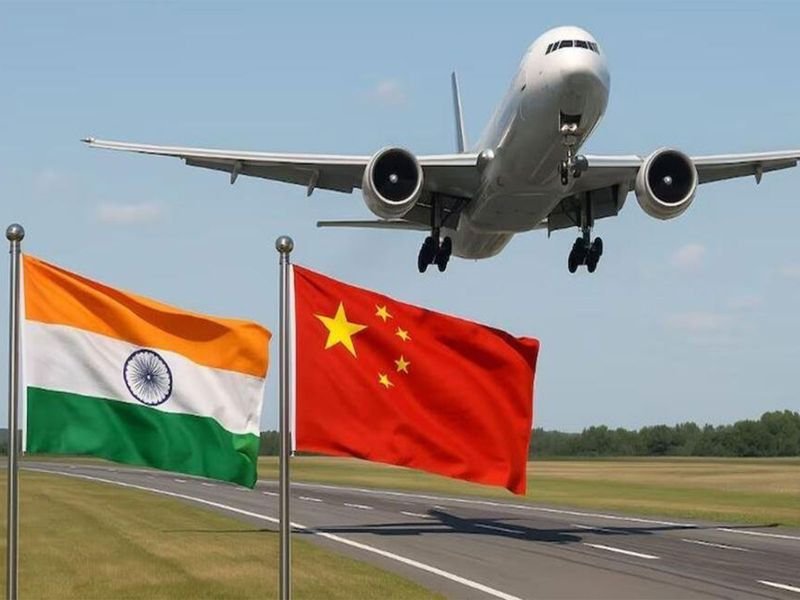

India is exploring the possibility of securing access to Chinese airspace over Xinjiang for its airlines, a move that could significantly shorten flight times to Europe and North America and reduce the financial burden caused by Pakistan’s continued closure of its airspace to Indian carriers.Government sources indicated that discussions on alternative flight paths have featured in broader India-China engagement, as New Delhi seeks to improve international connectivity and support the rapid expansion of its aviation sector. Any such arrangement would require clearance from Chinese authorities, as parts of the Xinjiang airspace remain under military control.Indian airlines, particularly Air India, have been among the worst affected by Pakistan’s refusal to reopen its airspace since bilateral tensions escalated last year.Flights to Europe, the US and Canada are being forced to take longer routes over the Arabian Sea and Central Asia, increasing fuel consumption, crew costs and travel times. Industry estimates suggest that the additional operational burden runs into hundreds of millions of dollars annually.Air India has formally urged the government to pursue discussions with Beijing to allow the use of a corridor over Xinjiang, arguing that access to the route could restore competitiveness on key long-haul sectors and improve aircraft utilisation. The airline has estimated substantial weekly savings if such an arrangement is secured.The move also comes amid a cautious improvement in India-China ties following progress in border-related talks and the resumption of some bilateral exchanges, including direct flights to Shanghai earlier this year. Recent meetings between the two sides have underscored the need to create conditions for the steady development of relations and expand practical cooperation.The push for new air corridors aligns with the government’s broader strategy to transform India into a global aviation hub. Civil Aviation Minister Ram Mohan Naidu recently said that, after expanding airport infrastructure, the next priority is to enhance connectivity with overseas markets.India will host Routes Asia 2027 in New Delhi, where more than 55 countries, 115 airlines and around 2,500 business meetings are expected. The government hopes the event will help unlock new regional and international air links, strengthen trade and tourism, and support India’s ambition of becoming one of the world’s largest aviation markets. Over the past 15 months alone, India has added 55 international routes, while 66 airports are currently under development.For Indian carriers, access to a shorter northern route through Chinese airspace could become a crucial factor in restoring operational efficiency and maintaining competitiveness on long-haul international routes, at a time when connectivity is increasingly seen as an economic and strategic asset.