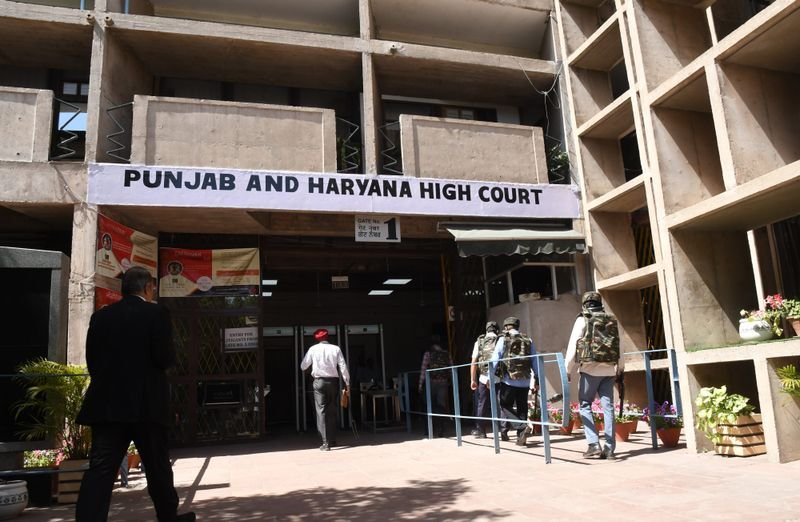

The Punjab and Haryana High Court has called for a “strict and time-bound institutional mechanism” for processing and releasing retirement benefits after holding that bureaucratic delay cannot be allowed to turn the post-retirement period of government employees into a struggle for securing dues already earned through years of service.“The need is for a strict and time-bound institutional mechanism for the processing and release of retirement benefits, so that the twilight of public service is not darkened by bureaucratic indifference,” Justice Sandeep Moudgil observed, while allowing an employee’s writ petition.The petitioner was seeking directions to the State of Punjab and other respondents to release pension, provisional pension, leave encashment and all other retirement benefits, along with annual 9 per cent interest.Justice Moudgil’s Bench was told that the petitioner retired on October 31, 2025, from government service as Naib Tehsildar. His pension case was processed and the Last Pay Certificate was issued. Thereafter, the Accountant-General returned the pension case with certain procedural objections relating to pay fixation, scanned service-book pages, joining date discrepancy, and certain other procedural requirements.Claiming that the objections were procedural, the petitioner contended there was no disciplinary, vigilance, criminal or judicial proceeding pending against him.The respondents, during the petition’s pendency released leave encashment, GPF and GIS over a period of time. The respondents further stated that the petitioner’s pay had been re-fixed under the revised pay scales and that the process for payment of consequential arrears had been initiated.Justice Moudgil made it clear that subsequent payment of the dues could not wipe out the consequences of the delay. “The subsequent release of these amounts does not efface the delay for which the petitioner was not responsible but has suffered the consequence thereof,” the court noted.Justice Moudgil rejected the explanation based on administrative formalities while making it clear that internal governmental processes could not become a justification for delaying payment of legitimate retirement dues.“Internal correspondence, inter-departmental processing or procedural infirmities within the administration may explain the delay, but they cannot justify its consequences being visited upon a retired employee,” Justice Moudgil held.Referring to the nature of retirement benefits, Justice Moudgil reiterated that pension and other such dues were not payments dependent on governmental grace.Pointing at Supreme Court judgments, Justice Moudgil reiterated that pension and gratuity were valuable rights and that delay attributable to the State could invite payment of interest.The court stressed that the State had a corresponding obligation to ensure timely settlement of such claims. “The State, as a model employer, must therefore ensure that such dues are processed and disbursed within a definite and reasonable time,” Justice Moudgil noted.The court further observed that an employee, who had spent the greater part of his working life in government service and earned his retirement benefits through years of labour and faithful service, should not be made to undergo post-retirement litigation merely to obtain what was lawfully due.“Administrative delay cannot be permitted to become an instrument of hardship against those who, having completed their service, ought to be spared the burden of post-retirement litigation for securing what is lawfully due to them,” the court said.Allowing the petition, the court directed the respondents to release remaining admissible retirement benefits in accordance with law, along with interest on the delayed retirement benefits from the date they became payable till actual payment. For the purpose, the Bench set four-week deadline.