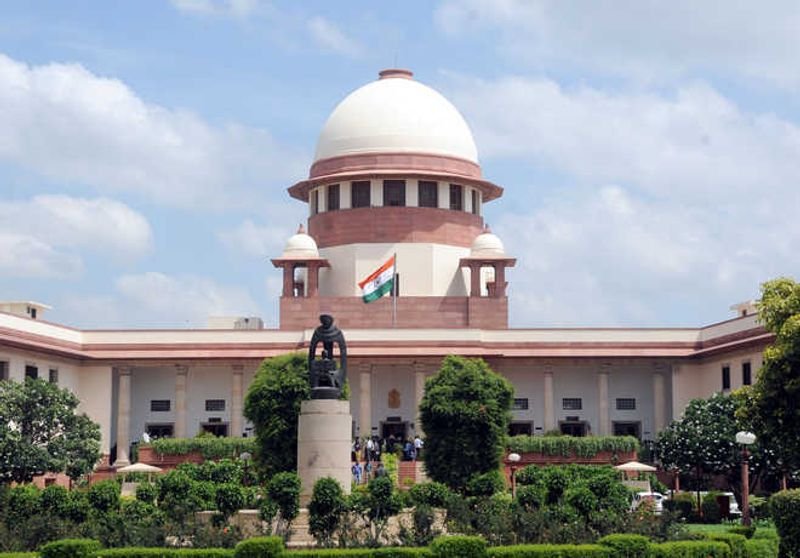

Expressing serious concern over 10-times markup on cancer drugs by hospitals, the Supreme Court on Tuesday asked the Government to consider capping medicines’ Maximum Retail Price (MRP) at 16% above ‘price to the retailer’ (PTR).“This is absolute rampage and carnage. This is broad daylight dacoity with patients… Plain and simple… The cancer drug is priced at an MRP of Rs 27,000 despite being supplied to retailers for Rs 2,700. Corporate hospitals don’t spare anyone. They won’t allow even the dead body to be taken out. The Pharma Sector is not bothered,” a Bench of Justice Vikram Nath and Justice Sandeep Mehta told Solicitor General Tushar Mehta.“Just see the drastic difference!” Justice Mehta wondered.“When patients are taking treatment under Ayushman Bharat scheme, this whole price has to be paid by the taxpayers. Hospitals are buying medicines at these prices and then reimbursing from the government. It’s ultimately taxpayer’s money. There is a clear-cut case of fraud,” the Bench said.While hearing petitions on regulation of medicine prices, generic prescriptions and controls on medical devices under the Drugs (Prices Control) Order (DPCO), 2013, the Bench asked the Centre to examine the issue of hospitals mandating medicine purchase from their chemists.“It’s the common man who suffers from this system,” noted the Bench which had on September 21 expressed shock over the overpricing of essential cancer drugs.The Bench posted the matter for further hearing on October 12.Terming it a “broad daylight dacoity”, the Bench had wondered why authorities remained silent.Pointing out that one drug carried an MRP of Rs 27,000 despite being supplied to retailers for Rs 2,700, it had said, “It’s very surprising that the authorities who are supposed to take action on this are silent.”On Tuesday, the top court questioned the Centre over the massive markups on cancer drugs and asked why there shouldn’t be a uniform rule limiting the MRP to no more than 16% above the PTR.It also questioned the distinction between essential and non-essential medicines under the DPCO and pointed out that the corporate hospitals often insisted on purchase from in-house pharmacies, with the inflated costs ultimately borne by taxpayers if the treatment was under Ayushman Bharat or other public health schemes.While acknowledging the problem, the Solicitor General said a balanced solution would have to be found.“I am not saying the petitioners are wrong, but some way which balances equities will have to be found. As I understand, pharma companies are not the ones benefiting from it,” the law officer told the Bench.The petitioners contended that these kinds of steep markups put undue burden on patients, many of whom sell assets or jewellery to afford treatment, and drain public funds through reimbursements.