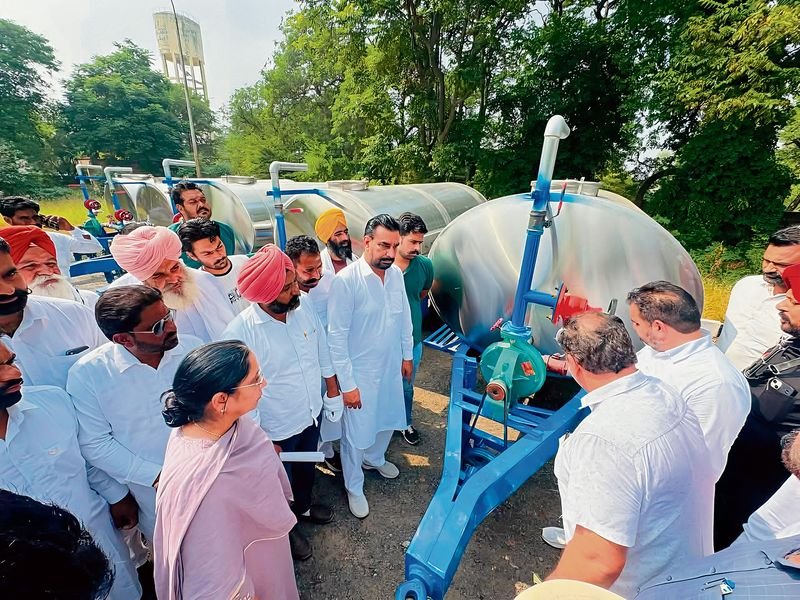

Fourteen village panchayats in the Malout Assembly constituency have received tractor-driven water tankers equipped with pumps and spray systems, with Rs 5 lakh released to each panchayat by the Social Welfare Department. The equipment is intended to provide immediate firefighting support during the crop harvest season, particularly in remote villages where regular fire tenders may take longer to arrive. The tankers can also be used to supply drinking water and may be deployed in neighbouring villages when required.Talking to The Tribune, Social Welfare Minister Dr Baljit Kaur said the equipment would not remain confined to the villages that had received it.“A mini fire tender can also be pressed into service in neighbouring villages, depending on the requirement. The idea is to ensure that basic firefighting assistance is available within the village itself. This can help prevent a small fire from turning into a major incident and reduce the losses caused by fires in fields,” she said.She said the initiative would also help reduce the workload of the regular fire brigade, particularly during periods when several fire incidents are reported simultaneously.“I had seen a tractor-driven water tanker and sprayer in a village last year, which has now inspired a firefighting initiative in 14 villages of the Malout Assembly constituency,” said the minister.She further said the move could encourage more people and village panchayats to participate in preventing fire-related losses. With the equipment available locally, villagers would not have to wait entirely for a fire tender to travel from a distant town before attempting to control a blaze.The initiative also comes against the backdrop of fire incidents affecting farmers in the constituency. Last year, following accidental fires that damaged wheat crops over a large area in Sotha and Chak Duhewala villages, Dr Baljit Kaur donated her one-month salary to the affected families. She later provided Rs 5 lakh and 12 bags of wheat to each of 20 affected farmers from her salary and contributions from local residents and NRIs.