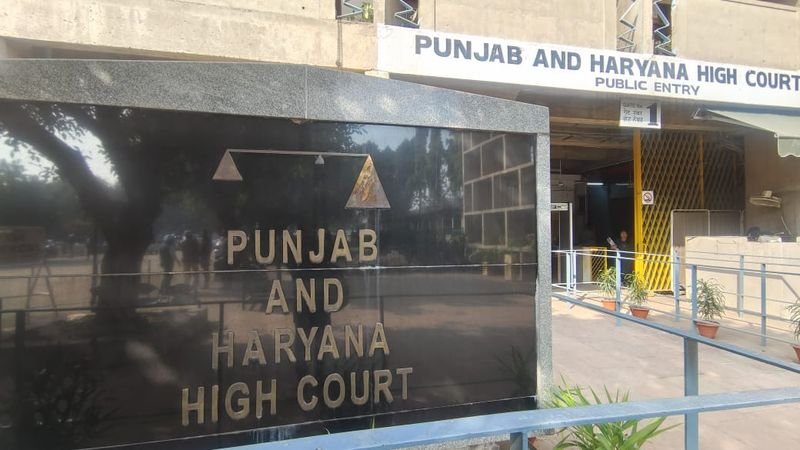

A day after questioning Punjab’s claim that defects in the SLP in the dearness allowance (DA) matter had been cured, the Punjab and Haryana High Court on Tuesday prima facie found the statement made by the Chief Secretary in his affidavit “palpably false”. The Bench issued a notice to him questioning why criminal contempt proceedings should not be initiated against him for “willfully misleading” the court. He has also been asked to remain present on Friday – the next date of hearing.The development followed a report obtained by the High Court from the Supreme Court Registry. The Bench of Chief Justice Ashwani Kumar Mishra and Justice Rohit Kapoor recorded that the report “clearly depicts that the defects pointed out by the Supreme Court registry in the appeal filed by the State of Punjab have not been removed”. The report also showed that the appeal filed by Punjab State Power Corporation Limited (PSPCL) continued to lie in defect. “From the report of the Registry of the Supreme Court, it is apparent that a false statement was made before the court yesterday,” the Bench observed.The Court had on Monday directed its Registry to immediately obtain the Supreme Court Registry’s status report after the State maintained that defects in its appeal had been cured. The Chief Secretary had also appeared before the court and filed an affidavit.As the matter came up for resumed hearing on Tuesday morning, the Bench recorded that an affidavit was not filed despite its direction in the August 3 judgment requiring the Chief Secretary to file the same by August 31. The court said the matter had, thereafter, been placed before it on applications filed by the petitioners and interveners invoking its jurisdiction under Article 215 of the Constitution.The court was assisted in the matter on the applicants’ behalf by senior advocate Sanjay Kaushal. Another application in the same matter was filed through counsel Gagneshwar Walia and Hargun Sethi, and was argued by senior advocate Chetan Mittal.Going into the background of the matter, the Bench recalled that it had refrained from passing orders on September 7 and had adjourned the matter on the joint request of counsel after being informed that the State had filed an appeal before the Supreme Court. The matter was again adjourned on September 10 on the State’s request to enable it to get the appeal heard before the Supreme Court.When the matter was taken up on September 22, the court was informed that the appeal was still pending in defect. The Bench also recorded the petitioners’ contention that “false projections” were being made by the State suggesting that the matter had been resolved, although no compromise had ever been arrived at between the petitioners and the State.The Court said it was consequently constrained to summon the Chief Secretary, “primarily with the intent that the State would at least take measures to get its defective appeal cured” and thereafter utilise its right to pursue the remedy available before the Supreme Court.However, when the matter was taken up on Monday, the Chief Secretary stated that the defect in the filing of the appeal had been cured. This was specifically denied by the petitioners, following which the High Court sought the Supreme Court Registry’s report.The court added: “From the materials placed on record, we prima facie find that there is a deliberate misstatement of fact made by the Chief Secretary before this court. We are, therefore, issuing notice to the Chief Secretary to explain as to why proceedings of criminal contempt be not initiated against him for willfully misleading this court by making false assertions”.Appearing in the State’s behalf, senior advocate Vikas Singh submitted that the Division Bench, having delivered its judgment, had become “functus officio” and that the issue of disobedience ought to be left to the contempt petition already filed by the petitioners on August 21.The Bench also recorded the submission that the applicants, invoking Article 215, were indulging in “Bench hunting”. A contempt petition had already been filed before a Single Judge and non-party applicants could not thereafter approach the Division Bench under Article 215.Senior Counsel for the petitioners Sanjay Kaushal, however, submitted that the persons who had filed the application under Article 215 were in fact petitioners in one of the petitions disposed of on August 3. Some other applicants invoking Article 215 were interveners in the litigation.He further submitted that Article 215 empowered the High Court, as a court of record, to entertain the application, particularly as the August 3 judgment specifically directed the Chief Secretary to file a compliance affidavit by August 31.The petitioners also submitted that instead of getting its defective appeal regularised before the Supreme Court, the State had been indulging in attempts to “buy time”.The dispute arises from the High Court’s directions concerning payment of DA and Dearness Relief to Punjab employees and pensioners. The Division Bench had on August 3 dismissed the State’s and PSPCL’s appeals and affirmed the Single Judge’s directions, while modifying the implementation timeline and directing release of pending DA/DR instalments within a fortnight. The Court the previous day had described the State’s conduct in pursuing its Supreme Court remedy as “playing hide and seek” and directed verification of the appeal’s status.