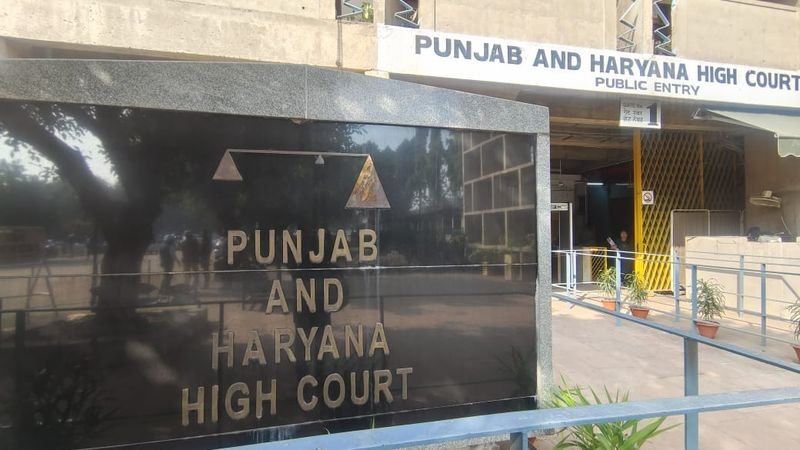

Taking exception to the recurring delay in release of retirement dues to employees of Municipal Corporations, Councils, Nagar Panchayats and Improvement Trusts, the Punjab and Haryana High Court has directed Punjab Secretary, Department of Local Government, Government, to file his own affidavit. He has been asked to explain the extent and reasons for the delay and set out a mechanism to ensure timely payment in future.The affidavit was also ordered to disclose cases where PF/CPF contributions remained unpaid or had not been deposited. Justice Namit Kumar also set a four-week deadline for the Secretary to file the affidavit. The matter has been fixed for further hearing in November 5Justice Kumar’s Bench observed it had, on several occasions, noticed that retirement dues of employees superannuating from service under Municipal Corporations, Municipal Councils, Nagar Panchayats and Improvement Trusts were not being released on retirement or within a reasonable period thereafter. Particularly disturbing was that such delays appeared to be recurrent, especially in cases of Class-III and Class-IV employees.“Such employees, after rendering their entire service and upon attaining the age of superannuation, are made to wait for their legitimate retirement benefits,” the Court observed, adding that this compelled them to approach the Court for securing dues which had otherwise accrued to them by virtue of their service or retirement.Justice Kumar further noticed that the retirement dues of Class-I and Class-II employees in several cases were released with “considerably greater promptitude”, whereas Class-III and Class-IV employees were made to wait for months and, in some cases, considerably longer periods. “Such a situation, if found to be correct, cannot be countenanced in a welfare State governed by the rule of law,” the Bench said.Pointing at the importance of retirement benefits, Justice Kumar asserted: “A retired employee, particularly one belonging to the lower strata of the service, ordinarily depends upon his retirement benefits for meeting his day-to-day necessities, medical expenses and family obligations.”Making it clear that such benefits could not be treated as discretionary payments, Justice Kumar said: “The retirement dues are not a bounty or an ex-gratia payment at the discretion of the employer. They represent the legitimate benefits earned by an employee during the course of his service. Having rendered service throughout his working life, an employee is entitled to receive such benefits on the date of retirement or within a reasonable time upon his retirement.”The Court also took note of cases in which retirement dues were released only after the employee approached the Court. “It is equally disturbing that, in a large number of cases, upon receipt of an advance copy of the writ petition, counsel appearing for the Municipal Corporation, Municipal Council, Nagar Panchayat, Improvement Trust or other State instrumentality appears before this Court and, on instructions, makes a statement that the retirement dues of the petitioner would be released within a short period. Such a course of action gives an impression that the legitimate dues of an employee are released only after the employee is compelled to approach this Court.”Justice Kumar made it clear that such a practice could not replace the obligation of the employer to process and release retirement benefits in time. “Such a practice cannot be permitted to become a substitute for the statutory and administrative obligation of the employer to process and release retirement benefits in a timely manner,” the Court said.Justice Kumar added the State and its instrumentalities were expected to act fairly, reasonably and in accordance with law. “The State cannot compel a retired employee to repeatedly approach the Court for securing payment of benefits which have otherwise become due and payable to him,” it observed.The Court further reiterated that retirement benefits constituted “valuable rights accrued to an employee by virtue of his life time service”. Such benefits ordinarily could not be withheld except for reasons recognised in law, such as a pending disciplinary or judicial proceeding, or any other legally sustainable ground. “Financial constraints or administrative lethargy, by themselves, cannot justify indefinite withholding of the legitimate retirement dues of a retired employee,” the Court held.Justice Kumar also questioned the larger system for processing retirement benefits. “This Court is unable to comprehend such a lackadaisical approach on the part of the State Government and its instrumentalities,” it observed, noting that while substantial public funds were made available and expended for various other purposes, legitimate claims of retired and serving employees were permitted to remain pending for months and years.The Court said the State, being a welfare State, was expected to ensure that its employees, “particularly those belonging to the lower categories”, were not compelled to litigate for obtaining benefits that had accrued to them by virtue of their service.The repeated occurrence of such cases, the Court said, also raised “a larger question regarding the system being followed by the Municipal Corporations, Municipal Councils, Nagar Panchayats and Improvement Trusts for processing and releasing the retirement benefits”.Justice Kumar added: “There must necessarily be an institutional mechanism whereby, well before an employee attains the age of superannuation, his service record, qualifying service, pension papers, gratuity, leave encashment, GPF/CPF and other retirement benefits are scrutinized and finalized so that payment can be made immediately upon retirement or within a reasonable period thereafter”.The Court accordingly called upon the Secretary, Department of Local Government, to file his own affidavit explaining the total number of cases in which complete retirement dues/benefits of retired employees of Municipal Corporations, Municipal Councils, Nagar Panchayats and Improvement Trusts had not been released on retirement, along with the period for which the dues had remained outstanding.The affidavit was also directed to explain the reasons for non-release of retirement dues immediately upon retirement or within a reasonable period thereafter, as well as the reasons for the apparent delay in releasing retirement dues of Class-III and Class-IV employees, if such differential treatment was found to exist.The Secretary was further directed to disclose the present system/mechanism being followed for processing and sanctioning retirement benefits of employees of Municipal Corporations, Municipal Councils, Nagar Panchayats and Improvement Trusts, besides the “action plan/mechanism proposed to be put in place to ensure timely release of retirement dues in future and to obviate the necessity of retired employees approaching this Court for enforcement of their legitimate retirement benefits”.The affidavit was also required to specifically disclose the number of cases in which PF/CPF contributions of employees have remained unpaid or have not been deposited and the reasons for the same. The matter has been listed for consideration on November 5.