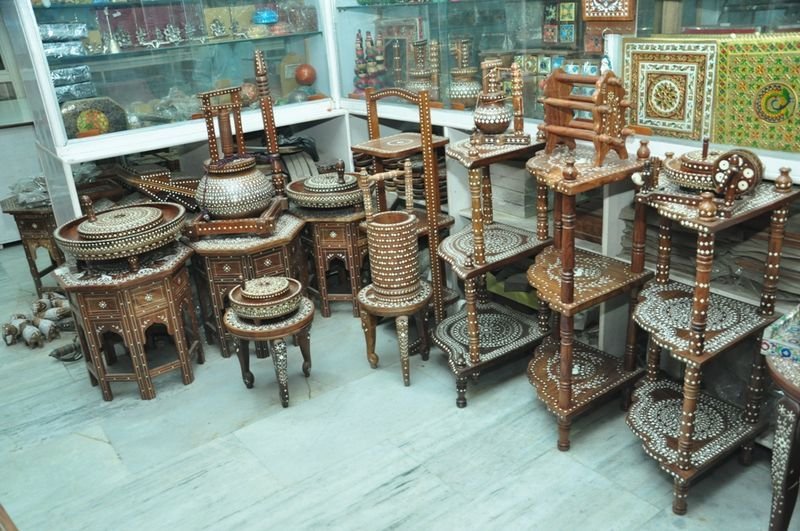

Hoshiarpur’s transformation from an agriculture-dominated town into an emerging urban centre was driven by population growth, migration, the expansion of education, industrial development and changing socio-economic patterns, a doctoral study tracing the city’s evolution between 1966 and 2011 has found.Dr Shaina Parmar, deputy director (youth welfare) at Sant Baba Bhag Singh University, has completed her PhD on “Urbanisation of Hoshiarpur City, 1966 to 2011” under the supervision of Dr Dharmjit Singh Parmar and Dr Hardev Kaur. She defended her thesis during her PhD viva voce, with Dr Sukhdev Singh Sohal, retired Professor at Guru Nanak Dev University, Amritsar, serving as the external expert.The study identifies population growth and migration as major forces behind Hoshiarpur’s physical and social expansion. The rising urban population generated greater demand for housing, education, employment and civic facilities, gradually altering the character of the city.Education emerged as another significant driver of urbanisation. The expansion of schools and colleges, rising literacy levels and the introduction of new courses created educational opportunities, encouraged social mobility and contributed to the diversification of the local economy.The research also records the growing role of industry and non-agricultural economic activity. The emergence of industries and changing occupational patterns helped Hoshiarpur move beyond its traditional dependence on agriculture, creating new avenues for employment and economic activity.But the study finds that urbanisation was not merely an economic or physical process. It also transformed the city’s social and cultural life. Changing occupations, migration, education and lifestyles contributed to a new urban identity, while traditional institutions, markets and cultural practices continued to coexist with modern development.A particularly significant part of the research is its examination of Dabbi Bazaar and Hoshiarpur’s traditional handicraft economy. Establishments such as Ganga Ram Tulsi Ram & Sons, Matharu Handicrafts and Jain Decorative are documented for their contribution to preserving the city’s craft traditions amid changing economic conditions.The study also highlights Hoshiarpur’s heritage, documenting sites including Sheesh Mahal, the Archaeological Museum at Sadhu Ashram, Gurdwara Bhai Joga Singh, Gurdwara Jahra Jahoor Purhiran, Swarn Jain Temple, Parshwanath Temple and Gurdwara Singh Sabha.One of the major strengths of the research is its use of primary sources. Dr Parmar conducted field visits and interviewed residents and others with first-hand knowledge of Hoshiarpur’s past. Photographs, inscriptions, physical evidence and oral histories were used alongside documentary material.The research therefore presents urbanisation as a complex transition rather than simply the expansion of built-up areas. Hoshiarpur’s growth brought greater educational and economic opportunities, but also created the challenge of preserving its traditional markets, crafts, cultural institutions and historic sites.“I am deeply grateful for the blessings of Sant Baba Malkit Singh and Sant Baba Dilawar Singh, and for the guidance, encouragement and support extended by Sant Baba Manmohan Singh, chancellor, Sant Baba Bhag Singh University, and Dr Palwinder Singh, vice-chancellor. Their support was a constant source of encouragement throughout my research,” Dr Parmar said.The study provides a historical benchmark for understanding Hoshiarpur’s subsequent growth and may prove useful to researchers and planners examining the city’s future development, infrastructure needs and heritage conservation.Dr Parmar’s research documents not only how Hoshiarpur grew, but also how urbanisation reshaped the city’s economic, social and cultural identity.