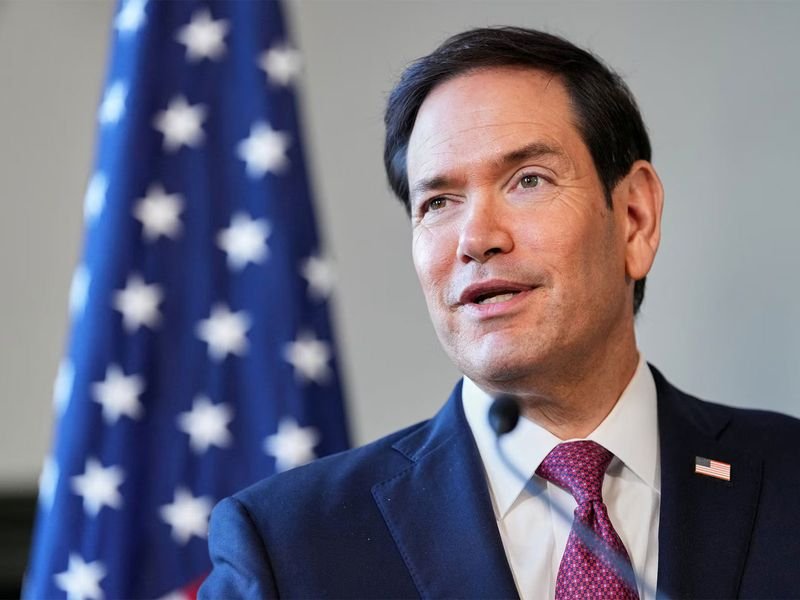

Athens [Greece], October 8 (ANI): United States Secretary of State Marco Rubio has cautioned that the international community can no longer sustain reliance on energy provisions originating from a single geographical sphere, highlighting that vulnerabilities stemming from armed hostilities or adversarial administrations endanger global economic stability and impair the autonomy of nations.Addressing media personnel during a joint press briefing alongside Greek Foreign Minister Giorgos Gerapetritis in Athens, Secretary Rubio emphasised that Washington remains steadfastly invested in fostering alternative energy transit networks and cementing alliances capable of safeguarding worldwide energy flows from geopolitical interference.”We can never be in a situation where if energy is cut off or energy flows are cut off from one part of the world, the whole world is threatened,” Rubio said.He cautioned that overreliance on specific trade arteries could undermine the capacity of independent states to pursue sovereign objectives.These assertions unfolded against the backdrop of ongoing hostilities involving Iran and persistent anxieties regarding maritime transit safety, most notably across the Strait of Hormuz.The Secretary of State observed that recent geopolitical events have underscored the necessity of diversifying conduits for oil, natural gas and allied commodities.”I would argue that energy security is tied to national security,” he said.Directing attention towards Iran, Secretary Rubio illustrated how regional instability lays bare systemic weaknesses within global energy markets.He affirmed that Washington continues to back Athens in expanding infrastructure designed to link Mediterranean energy sources directly to European markets.”So we’re very committed to all of these corridors and to all of these efforts, and Greece is a great partner to do it with,” Rubio said.Greece has cemented its position as a vital ally in Washington’s broader strategy to scale up United States liquefied natural gas exports across Central and Eastern Europe.Foreign Minister Gerapetritis drew attention to the Vertical Corridor, an energy transportation network designed to carry American LNG into European markets.He remarked that bilateral energy cooperation between Athens and Washington has attained unprecedented heights.The Greek diplomat further noted the expanding footprint of American energy enterprises within Greece, encompassing offshore prospecting for underwater hydrocarbon reserves.According to Gerapetritis, Greek-owned commercial vessels facilitate the carriage of over 20 per cent of global liquefied natural gas supplies, highlighting the nation’s critical strategic utility to international energy safety.Secretary Rubio confirmed that Washington aims to bolster Greek LNG import capacities while backing novel gas and electrical interconnectors to fortify regional networks.Responding to an inquiry regarding potential American backing for flagship Greek energy initiatives, including ExxonMobil operations, Chevron exploration south of Crete, and proposed electrical links connecting Greece, Egypt, Cyprus and Israel, Secretary Rubio reiterated American endorsement whilst conceding that certain ventures entail delicate diplomatic sensitivities involving third-party nations.Without explicitly naming those states or airing diplomatic hurdles in public, the Secretary underscored the value of discreet diplomacy.”I know we like to be transparent, but there are things in global affairs that are best not debated at press conferences, but handled at the table of dialogue,” he said.Bilateral deliberations additionally encompassed maritime security imperatives, freedom of navigation and the preservation of global supply chains.Minister Gerapetritis stated that Greece remains open to evaluating naval assistance within the Strait of Hormuz, provided that conditions allow and a credible peace initiative is established.He underscored that secure maritime corridors remain indispensable not merely for energy shipments, but for broader international commerce and economic resilience. (ANI)(This content is sourced from a syndicated feed and is published as received. The Tribune assumes no responsibility or liability for its accuracy, completeness, or content.)