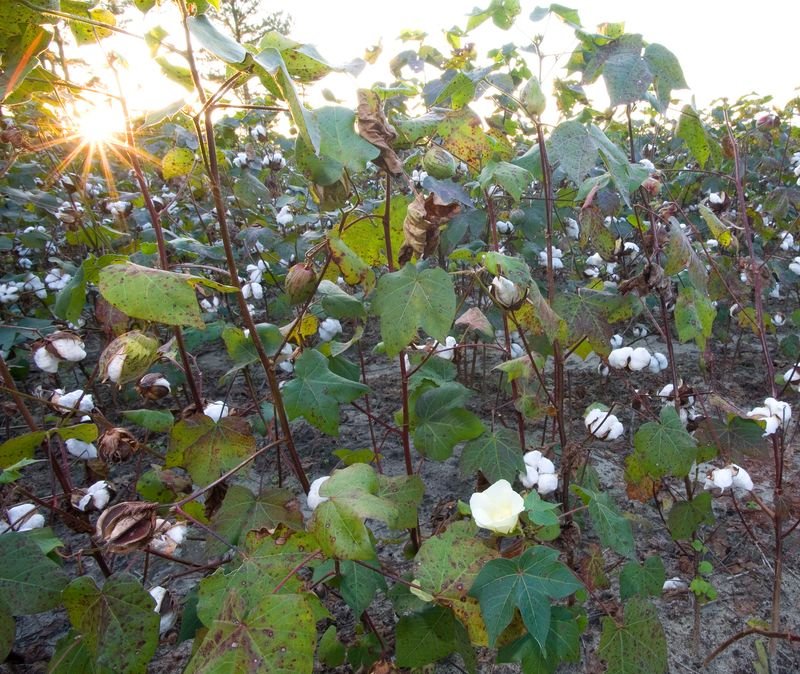

Herbicide-tolerant Bt (HTBt) cotton, an unapproved genetically modified cotton technology that allows farmers to spray glyphosate-based herbicides directly on the crop to kill weeds, is once again at the centre of India’s cotton policy debate as its cultivation has spread well beyond the formal regulatory system.A recent field-based study commissioned by the Federation of Seed Industry of India (FSII) and National Seed Association of India (NSAI) estimates that unauthorised genetically modified hybrids accounted for 24-30 per cent of India’s cotton acreage in 2025-26, covering roughly 26.2-29 lakh hectares. The study found the herbicide-tolerant gene in 72.69 per cent of field samples collected in major cotton-growing districts.What is HTBt cotton?India’s commercially approved Bt cotton contains genes derived from the soil bacterium Bacillus thuringiensis that produce proteins toxic to certain bollworm pests. Bt cotton was approved for commercial cultivation in India in 2002 and remains the only GM crop approved for commercial cultivation in the country.HTBt cotton essentially adds another trait to Bt cotton — herbicide tolerance.According to the Ministry of Agriculture, the key gene, cp4-epsps, makes the cotton plant tolerant to glyphosate. This means farmers can spray glyphosate over the standing cotton crop, killing weeds while the cotton survives. Conventional cotton cannot withstand such an application because glyphosate does not distinguish between the crop and weeds. Why is it banned?HTBt cotton is not approved for commercial cultivation in India rather than that a blanket scientific finding has declared the technology inherently unsafe.Under India’s regulatory framework, environmental release of GM crops requires clearance from the Genetic Engineering Appraisal Committee (GEAC) under the Environment (Protection) Act framework and the 1989 rules governing genetically engineered organisms. Bt cotton is the only GM crop cleared for commercial cultivation. Consequently, cultivation, production or sale of unapproved GM cotton is unauthorised. HTBt cotton has been detected in Indian fields for years despite the absence of commercial approval. In 2018, the government constituted a Field Inspection and Scientific Evaluation Committee to investigate reports of illegal cultivation in Maharashtra, Gujarat, Telangana and Andhra Pradesh. The regulatory concerns are broader than simply whether the plant survives glyphosate. Authorities have sought data on issues including herbicide use, residues, soil impacts, non-target organisms, biosafety and the socio-economic consequences of the technology. The current GEAC process has also sought additional data on soil microflora and soil-microbe interactions, feeding studies and event-specific detection protocols. There is also concern that widespread dependence on a single herbicide can encourage the development of glyphosate-resistant weeds, while excessive or poorly managed herbicide use can create problems through drift and off-target damage. Indian Council of Agricultural Research (ICAR) has noted the broader challenge of herbicide resistance and the need for integrated weed management. Why are farmers using it despite the ban?For many cotton farmers, HTBt technology is primarily a weed-management technology. Labour shortages and the rising cost of manual weeding have made conventional weed control increasingly expensive.The latest FSII-NSAI-backed study estimates that two-three glyphosate applications can cost about Rs 750-850 per acre, compared with Rs 12,000-15,000 for manual weeding. It also found that glyphosate imports rose 29 per cent in 2025-26, while sales of legal Bt cotton seed packets declined sharply between 2022-23 and 2025-26. For farmers, therefore, the attraction is not necessarily the GM label but the possibility of reducing labour dependence and controlling weeds more cheaply.This has created a paradox: a technology that remains outside the formal regulatory system is reportedly being adopted on a large scale because it addresses a very real problem in cotton cultivation.What are the risks of current situation?The expansion of unauthorised HTBt cotton has created a grey market in seeds.Because these seeds are outside the formal regulatory and quality-control system, farmers buying them do not necessarily have the same assurances over genetic identity, seed quality or performance that accompany approved varieties.The latest study estimates the unauthorised HTBt seed market at 82-88 lakh packets in 2025-26, potentially worth Rs 820-880 crore at an average price of Rs 1,000 per packet. What is the road ahead?The debate is increasingly shifting from “ban versus allow” to “whether and how India should regulate a technology that is already being used.”In 2025, GEAC reconstituted an expert committee to examine Mahyco’s proposal and finalise a risk-assessment and risk-management plan. The committee subsequently submitted its dossier, following which GEAC sought additional information, including soil-microbe data, feeding studies and validated detection protocols. The Agriculture Ministry has also acknowledged that HTBt cotton is an issue requiring discussion with the Environment Ministry. Agriculture Minister Shivraj Singh Chouhan said in July 2025 that the government would examine the matter amid reports of farmers obtaining the seeds illegally.The bigger issue for India’s cotton sector, therefore, is no longer merely the legality of HTBt cotton. It is whether the country can close the widening gap between agricultural regulation and what farmers are actually planting in their fields.