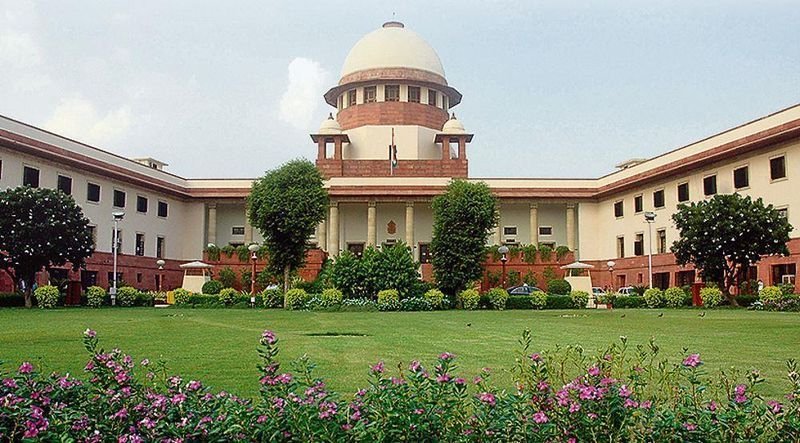

The Supreme Court on Thursday asked the Centre to set up a committee to examine the issue of pharmaceutical companies giving freebies to doctors as incentive to prescribe their drugs.”The committee will consider the suggestions and representations and give its recommendations to the Union,” a Bench of Justice Vikram Nath and Justice Sandeep Mehta said, posting the matter to be listed on January 29, 2027 for consideration of compliance by the Centre.The order came on a petition filed by Federation of Medical & Sales Representatives Association of India seeking statutory regulation of pharmaceutical marketing practices to curb unethical relations between pharmaceutical companies and medical practitioners.The Central Board of Direct Taxes has accused the pharma company manufacturing popular Dolo-650 mg tablets of distributing Rs 1,000 crore freebies to doctors for prescribing the anti-inflammatory, fever reducer drug to patients, the petitioner had alleged in August 2022.The top court had earlier questioned if the Uniform Code for Pharmaceutical Marketing Practices (UCPMP), 2024, had sufficient enforcement mechanisms and had sought to know if the Government intended to give statutory backing to the Code, saying the absence of government control could make the purportedly mandatory regime almost voluntary.It had described the practice of pharma companies providing doctors with gifts, electronic goods and funding for foreign trips and medical conferences as creating a “publicly injurious cycle”.Solicitor General Tushar Mehta had earlier told the Bench that the Centre will constitute a three-member panel to examine if a statutory framework was needed to regulate unethical practices by pharma companies.The existing regulatory framework provided for disciplinary action against doctors who accepted gifts, travel facilities, hospitality or monetary grants from pharmaceutical companies, Mehta had said, adding the panel will examine if statutory regulation was necessary and, if so, what should be nature and extent of such regulation.The Centre had in its August 17, 2026 affidavit said that detailed deliberations had taken place between the Department of Pharmaceuticals, Department of Health and Family Welfare and Department of Legal Affairs on the issue.Mehta said that the committee was expected to submit its report within two months, after which the government would take a decision, while the UCPMP would continue to govern pharmaceutical marketing practices in the meantime.The petitioners, however, questioned the need for another committee, pointing out that the Centre had told the Court in an earlier affidavit filed in 2022 that a high-level committee had already been constituted to examine the need for a legally enforceable mechanism.The Indian Medical Council (Professional Conduct, Etiquette and Ethics) Regulations of 2002 prescribe a Code of conduct for doctors in their relationship with pharmaceutical and allied health sector industry, and prohibit accepting gifts and entertainment, travel facilities, hospitality, cash or monetary grants by medical practitioners from pharmaceutical companies, the PIL submitted.“This Code is enforceable against doctors; however, it does not apply to drug companies, leading to anomalous situations where doctors’ licences are cancelled for misconduct which is actuated, encouraged, aided, and abetted by pharma companies. The pharma companies go scot-free”, the petitioners contended.On behalf of the petitioner association, senior advocate Sanjay Parikh argued that the existing regime created an asymmetry by prescribing penalties for doctors who accepted freebies and other benefits and lacked a corresponding statutory mechanism to penalise pharmaceutical companies that offered such inducements.Highlighting that such a gap allowed pharmaceutical companies to influence doctors’ prescriptions, Parikh wanted the top court to either direct the government to frame a statutory framework or lay down guidelines in the interim.